Owner’s manual
 Error Codes


How many cubic feet is a Kenmore model 25326452100 freezer?
The Kenmore 25326452100 upright freezer’s exact cubic-foot capacity is listed on the model’s rating label and in the product literature; for the fastest confirmation, match the capacity shown there to your freezer’s full model and serial information in the 25326452100 owner's manual.
How to find the exact capacity on your freezer
Use these quick checks to get the precise cubic feet for Kenmore 25326452100:
- Look for the model/serial plate on the upper left wall inside the freezer (upright models).
- Record the full model number (25326452100) and serial number.
- Check the specifications section in the 25326452100 owner's manual.
- If your label lists capacity in liters, convert to cubic feet (1 cu ft = 28.3 L).
- Confirm you are reading the freezer label (not a separate ice maker or accessory label).
Typical capacity range for Kenmore 253-prefix upright freezers
Many Kenmore upright freezers with a 253 prefix (commonly built by Frigidaire for Kenmore) fall into a few common size groups. Use this as a reasonableness check after you read your label.
| Common upright-freezer size group | Typical capacity (cu ft) | Best for |
|---|---|---|
| Compact | 5 to 9 | Apartments, overflow storage |
| Mid-size | 12 to 17 | Small families |
| Full-size | 18 to 21 | Bulk shopping, large households |
Why it matters
Cubic-foot capacity affects how you organize food, how quickly the freezer recovers temperature after door openings, and what storage accessories fit best (baskets, shelves, and door bins). It also helps when comparing energy use and planning placement.
Related troubleshooting tip
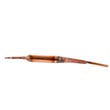
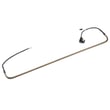
If you are checking capacity because the freezer is not holding temperature, start with airflow and defrost basics (frost buildup, fan operation, and door sealing). A failed defrost component such as the freezer defrost heater 5304496687 can cause heavy frost that reduces usable space and cooling performance.
Last updated: February 2026
How to clean coils on Kenmore upright freezer?
For the Kenmore 25326452100 upright freezer, cleaning the condenser coils means safely removing dust and pet hair so the compressor can shed heat efficiently. We recommend unplugging the freezer first, then vacuuming and brushing the coil area and nearby vents until airflow is clear.
Before you start (safety and access)
- Unplug the freezer to avoid electrical shock.
- Move the freezer out far enough to work comfortably.
- Protect the floor with cardboard or a towel.
- Use a coil brush and a vacuum with a crevice tool.
- Avoid bending tubing or puncturing refrigerant lines.
If you need help identifying panels and fasteners for your exact configuration, use the 25326452100 owner's manual.
How to clean the coils (step-by-step)
- Unplug the freezer.
- Locate the condenser coil area (commonly behind a lower rear cover or near the bottom).
- Vacuum loose debris first (this prevents blowing dust deeper into the unit).
- Brush the coils and surrounding area, working in the direction of the fins.
- Vacuum again to remove what the brush loosened.
- Clean nearby airflow paths (base grille, rear vents, and the floor under the cabinet).
- Restore power and let temperatures stabilize for several hours.
What to use (and what to avoid)
| Item | Good for | Avoid because |
|---|---|---|
| Coil brush | Lifting packed lint from fins | Metal brushes can damage fins |
| Vacuum (crevice tool) | Removing loosened dust | Blowing dust with compressed air indoors |
| Soft cloth | Wiping covers and grille | Wet cleaning near wiring or motors |
How often should we clean freezer coils?
- Every 6 months in most homes
- Every 3 months if you have pets, heavy dust, or the freezer sits in a garage
- Anytime you notice the cabinet running longer than normal or the sides feel unusually warm
Why it matters
Dirty coils trap heat, which makes the compressor run longer, wastes energy, and can lead to warmer freezer temperatures. Keeping the coil area clean helps the freezer cool down faster after door openings and reduces strain on sealed-system components.
Last updated: February 2026
Is there a reset button on a Kenmore upright freezer?
Kenmore upright freezers like model 25326452100 typically do not have a single dedicated “reset” button. Most reset actions are done by using the temperature control panel (if equipped) or by power-cycling the freezer; the exact control style and steps are shown in the 25326452100 owner's manual.
What “reset” usually means on this freezer
On this Kenmore freezer, “reset” commonly refers to one of these actions:
- Silencing a temperature alarm (pressing an alarm-related button if your control has one)
- Re-centering temperature settings by returning the control to a normal mid-range setting
- Rebooting the electronic control by unplugging the freezer briefly and restoring power
- Clearing a temporary control glitch after a power failure
Quick reset steps (safe, no tools)
- Check which control you have (electromechanical knob vs. electronic buttons) as shown in the 25326452100 owner's manual.
- If you have electronic UP/DOWN buttons, set the freezer back to a normal setting and wait several hours for temperatures to stabilize between adjustments.
- If you have an alarm condition (blinking light or buzzer on some upright frost-free models), press the ALARM OFF button to silence the buzzer; the indicator can continue blinking until a safe temperature is reached.
- For a full control reboot, unplug the freezer for 5 minutes, then plug it back in and allow cooling to resume.
Control types and what you can reset
| Control type | Where it is | What you can “reset” | What to expect after |
|---|---|---|---|
| Electromechanical (dial/knob) | Inside the freezer on many upright models | Temperature setting only | Cooling changes gradually; allow hours to stabilize |
| Standard electronic (UP/DOWN) | Inside the freezer on some upright models | Temperature setting; minor glitches via power-cycle | Display/indicators return; cooling stabilizes over hours |
| Deluxe electronic (with alarm) | Inside the freezer on some frost-free uprights | Alarm silence; settings; power-cycle reboot | Alarm light may blink until safe temp returns |
Why it matters
A “reset” does not instantly fix warm temperatures. If the freezer is recovering from a door left open or a power interruption, it can take several hours to stabilize, and alarm indicators may stay active until the cabinet returns to a safe freezing temperature.
Last updated: February 2026
What are the parts of a standing freezer?
A standing (upright) freezer like the Kenmore 25326452100 cools by moving heat out of the cabinet through a sealed refrigeration system, then circulating cold air inside. The core components are the compressor, condenser, metering device (capillary tube), and evaporator, supported by fans, controls, and the defrost system.
Main systems and what they do
- Sealed system (makes cold): compressor, condenser coil, capillary tube, evaporator
- Air movement (spreads cold air): evaporator fan motor and fan blade
- Defrost system (prevents ice buildup): defrost heater and defrost thermostat (bi-metal)
- Controls and sensing (maintains temperature): electronic control and sensors
- Cabinet and door sealing (keeps cold in): door gasket/liner fasteners, door liner, baffles
For model-specific diagrams and component locations, use the 25326452100 owner’s manual.
Common parts you may replace on this model
These are examples of serviceable components we commonly see tied to cooling, airflow, or frost issues:
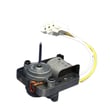
- Motor 297309000 (evaporator fan motor)
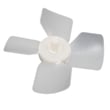
- Blade 5308000010 (evaporator fan blade)
- Freezer defrost heater 5304496687
- Chest freezer defrost thermostat 297216600
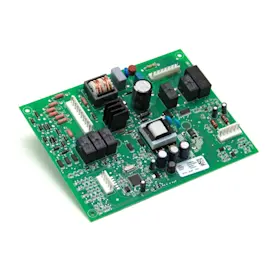
- Freezer electronic control board 297282800
Quick “what does what” table
| Part or system | What it affects | Common symptom when it fails |
|---|---|---|
| Compressor and sealed system | Overall cooling | Warm freezer, long run times |
| Evaporator fan (motor/blade) | Air circulation | Warm spots, weak airflow |
| Defrost heater + thermostat | Frost control | Heavy frost, poor cooling |
| Electronic control | Temperature regulation | Erratic temps, won’t respond to settings |
| Door seal and liner | Heat/moisture intrusion | Frost near door, sweating, frequent cycling |
Why it matters
Knowing which system you are dealing with helps you troubleshoot faster. For example, the manual notes that restricting airflow (such as lining shelves) reduces efficiency, and it also explains safe defrosting steps and how frost buildup impacts performance. Checking airflow, door sealing, and defrost operation often points to the right repair path.
Last updated: February 2026
Where is the model number on a Kenmore upright freezer?
On the Kenmore upright freezer model 25326452100, the model and serial number label is typically on the upper left wall inside the freezer compartment. This is the primary location used on upright models; check there first before looking elsewhere. See the 25326452100 owner's manual.
Quick places to check (in order)
- Upper left interior wall of the freezer (most common for upright models)
- Near the temperature control housing inside the cabinet
- Along the door opening frame (hinge side area)
- Behind the lower kick plate or front grille area
- Rear exterior panel (less common, but possible)
What the label looks like
Most Kenmore freezer ID labels include:
- Model number (often starts with 253. on this style of Kenmore freezer)
- Serial number
- Electrical ratings (volts/amps)
- Manufacturing information
Why it matters
We use the model number to match the correct parts and diagrams for your exact freezer configuration (controls, defrost system, shelves, and door components). It also helps avoid ordering a look-alike part that will not fit.
Model vs. serial number (what to write down)
| Item | What it tells us | Example format |
|---|---|---|
| Model number | Which design and parts fit | 253.XXXXXXXX |
| Serial number | Production run details | Letters and numbers |
Last updated: February 2026
Why is my Kenmore upright freezer not freezing?
If your Kenmore upright freezer model 25326452100 is running but not freezing, the most common causes are incorrect temperature settings, poor airflow from overloading or blocked vents, a door that is not sealing, or a failure in the defrost system, evaporator fan, or compressor. Use the steps in the 25326452100 owner's manual to narrow it down safely.
Quick checks we recommend first
- Confirm the control is set colder; after any change, allow several hours for temperatures to stabilize.
- Make sure shelves are not lined with foil, wax paper, or paper towels; liners restrict cold air circulation.
- Avoid overloading; too much warm food forces long run times and slows freezing.
- Check the door closes easily and seals all the way around; leveling affects door alignment.
- Verify there is enough space around the cabinet for air circulation, especially in hot areas.
What the symptoms usually mean
| What you notice | Most likely cause | What to do next |
|---|---|---|
| Freezer runs a lot, temps stay warm | Door not sealing, warm air leaks | Inspect gasket contact, clean sealing surfaces, re-level cabinet |
| Frost builds up heavily, cooling gets worse | Defrost system problem | Test defrost components; consider replacing the chest freezer defrost thermostat 297216600 or freezer defrost heater 5304496687 if failed |
| Warm temps and little or no airflow inside | Evaporator fan issue | Check for ice blocking the fan; if motor is dead, replace the motor 297309000 |
| Clicking from rear, compressor not starting | Start device or compressor problem | Follow a start-relay diagnosis process; compressor replacement is a sealed-system repair |
Why leveling and airflow matter on this model
This freezer relies on steady airflow and a tight door seal to maintain freezing temperatures. If the cabinet is not level, the door can sit slightly open or seal unevenly, which causes warm air intrusion, frost, and poor cooling. Restricted airflow (blocked vents, shelf liners, overcrowding) also makes the freezer less efficient.
When to stop and schedule service
- You suspect a sealed-system issue (compressor, refrigerant restriction, or leak).
- The freezer will not cool at all after basic checks and a full defrost.
- You see repeated heavy frost returning quickly after defrosting.
Last updated: February 2026
Why is my upright freezer leaking water on the floor?
Water on the floor around your Kenmore 25326452100 upright freezer usually comes from defrost water that is not draining correctly (a clogged or frozen drain path) or from warm, moist air leaking in around the door and turning into condensation. Use the steps in the 25326452100 owner's manual to locate and manage the defrost drain and drain tube.
Most common causes (and what to check first)
- Defrost drain left open or drain plug missing: Warm air can enter and create excess moisture.
- Ice blocking the drain opening: Defrost water backs up and spills.
- External drain tube not routed into a pan or floor drain: Water ends up on the floor.
- Drain pan overflow during manual defrost: The pan under the drain tube fills faster than expected.
- Door not sealing well (often from poor leveling): Moisture forms outside the cabinet and can drip.
Quick fix checklist
- Unplug the freezer before any defrosting or internal inspection.
- If your model has a defrost drain, pull the drain plug from the inside floor and clear any ice.
- Remove the base panel (if equipped) and confirm the external drain tube is positioned over a shallow pan.
- During defrost, check the pan often so it does not overflow.
- When finished, reinstall the drain plug so warm air does not enter.
- Level the freezer so the door closes and seals properly.
Parts that can help (when the drain keeps freezing or dripping)
If you find the drain tube is damaged, loose, or not directing water correctly, replacing it is a solid next step.
| Symptom | What you’ll usually see | Likely next step |
|---|---|---|
| Water appears after defrosting | Pan overflow or drain tube misrouted | Reposition pan or tube; reinstall drain plug |
| Water appears during normal use | Condensation from air leak | Level unit; check door seal contact |
| Water keeps returning | Drain path repeatedly icing | Clear ice; inspect/replace drain tube |
Relevant model part: freezer drain tube 5304512272.
Why it matters
A blocked drain or poor door seal can lead to recurring puddles, ice buildup, and temperature swings that increase frost and reduce cooling performance.
Last updated: February 2026