 Installation guide
 Owner’s manual
 Error Codes
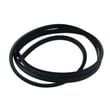



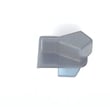
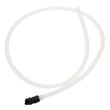
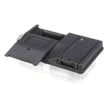
How to fix leaking GE Cafe dishwasher corner baffle replacement?
On the GE PDT750SSF1SS dishwasher, a leaking lower corner baffle is fixed by removing the old baffle, cleaning the corner sealing surface, and pressing the new baffle fully into place so it seats evenly. After replacement, run a short cycle and check for door-area leaks.
- Turn off power at the breaker before working around the door and tub edge.
- Pull the lower rack out for access and visibility.
- Wipe the corner area dry so you can see the leak path clearly.
- Confirm the leak is from the tub corner area, not the drain hose or inlet.
- Open the door and locate the leaking lower corner baffle at the tub edge.
- Remove the old baffle by pulling it straight out (work slowly to avoid tearing pieces off in the channel).
- Clean the corner thoroughly; remove soap film, grease, and debris so the new baffle can seal.
- Align the new baffle with the channel and slide it into position.
- Press firmly along the full length until it is fully seated and flush.
- Close the door and verify the door closes without rubbing.
The installation procedure for this style of dishwasher calls for a wet test and checking for leaks around the door; if a leak is found, correct the cause and retest. Use the same approach after a baffle replacement by running a cycle and inspecting the door perimeter. See the installation guide for the wet test and door-leak check process.
| What you see | Most likely cause | What to do next |
|---|---|---|
| Water at lower corner of door/tub seam | Corner baffle not seated or sealing surface dirty | Reseat baffle; reclean corner and reinstall |
| Water under dishwasher | Hose/connection leak or drain issue | Inspect plumbing and drain routing; retest |
| Drips only when door is closing | Door rubbing cabinet or misalignment | Reposition dishwasher so the door seals evenly |
A corner baffle helps direct spray and seal the tub edge at the door opening. If it is loose or the channel is dirty, water can escape at the corner and mimic a door gasket failure.
Last updated: February 2026
What are the commonly replaced parts in a dishwasher?
In a GE dishwasher like model PDT750SSF1SS, the most commonly replaced parts are the door-latching parts, seals, hoses, and rack hardware because they handle daily wear, heat, and water exposure. Pumps and electronic parts are also common replacements when you have draining, washing, or power issues.
- Door latch and strike: dishwasher will not start, stops mid-cycle, or won’t stay closed
- Door/tub seals and gaskets: water leaking at the door or along the tub edge
- Drain hose and clamps: leaking under the sink, slow drain, or no drain
- Rack rollers, rails, and rack assemblies: racks fall off track, bind, or won’t slide smoothly
- Detergent dispenser/module: detergent cup won’t open, poor cleaning
- Pump and diverter components: weak wash, unusual noise, poor spray coverage
- Control panel/control board-related parts: dead keypad, random beeping, cycle won’t select
Here are a few parts we see replaced often on this model family:
| Symptom | Likely part to check | Example part for this model |
|---|---|---|
| Won’t start or stops when door moves | Door latch/lock or strike | GE dishwasher door latch lock WD21X10490, dishwasher door latch strike WD13X10071 |
| Water on floor near front | Tub gasket or door sealing surfaces | Dishwasher tub gasket WD08X23477 |
| Not draining or leaking at drain connection | Drain hose routing/condition | Dishwasher drain hose WD24X10062 |
- Confirm the dishwasher is square and level; an out-of-level tub can affect door closing and sealing.
- Make sure the drain hose is not pinched behind the unit.
- Pull racks halfway out; they should stay put and not roll forward or backward.
- Inspect the door strike area for looseness or misalignment.
- If you recently installed the dishwasher, verify the install steps and clearances in the installation guide.
Replacing the right part the first time prevents repeat leaks, no-start problems, and rack damage. Installation details (leveling, hose routing, and door fit) also reduce unnecessary service calls and help parts like latches and gaskets last longer.
Last updated: February 2026
What is the most common problem with GE dishwashers?
The most common problems we see on GE dishwashers like model PDT750SSF1SS are not draining, leaking, and not starting. In many cases, the fix is a basic cleaning or alignment check; when it is a part failure, the door latch and drain path are frequent culprits.
- Not draining: food debris in the filter area, a kinked/pinched drain hose, or a restriction at the sink/disposal connection.
- Leaking: door seal or tub gasket wear, door not closing squarely, or the unit not level.
- Won’t start or stops mid-cycle: door not latching fully, latch switch problems, or control-related faults.
- Poor cleaning: clogged filter, blocked spray arms, or loading that prevents water from reaching dishes.
- Odd cycle behavior or beeps: stored fault codes that point to a specific system.
- Confirm the dishwasher is square and level and that the door opens and closes smoothly (misalignment can cause leaks and latch issues). See the installation guide.
- Inspect the drain hose routing for pinching between cabinets or the dishwasher (a common drain problem after installation). The install guide specifically calls out avoiding a pinched hose.
- Check the door latch engagement: if the door feels loose or the cycle won’t begin, inspect the latch and strike alignment.
| Symptom | What to inspect | Example part for PDT750SSF1SS |
|---|---|---|
| Won’t start, lights on | Latch not closing or switch not made | GE dishwasher door latch lock WD21X10490 |
| Door won’t stay closed | Strike bent/misaligned | Dishwasher door latch strike WD13X10071 |
| Leaks at door edge | Door seal/tub sealing surface | Dishwasher tub gasket WD08X23477 |
If your PDT750SSF1SS shows an error code, match it to the likely system (drain, fill, heating, control) before replacing parts. Use our GE electronic dishwasher error codes reference to narrow the cause.
Drain restrictions and door-latch problems can look like “the dishwasher is bad,” but they often come down to installation alignment, a pinched hose, or a worn latch or gasket. Fixing the root cause prevents repeat leaks, no-starts, and poor wash results.
Last updated: February 2026





