Owner’s manual
 View engine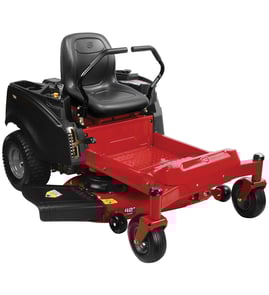

What brand engine does Craftsman use?
For Craftsman model 12728875, the operator’s manual identifies it as a B&S (Briggs & Stratton) engine (the manual lists a 26 HP B&S engine for this model). For other Craftsman mowers, the engine brand can vary by model and year.
Your mower is built around a Briggs & Stratton engine platform, so most engine maintenance and tune-up specs (oil type, spark plug gap, air filter service) should be followed using the engine information referenced in the 12728875 operator’s manual.
- Look for the engine brand and model on the engine shroud or valve cover label
- Use the engine model and type numbers when ordering engine-specific parts
- Follow the mower’s maintenance schedule for intervals (oil changes, filter checks)
- Use fresh, clean unleaded gasoline and store fuel properly to avoid starting issues
- Keep cooling fins and intake screens clear to prevent overheating
Craftsman has used multiple engine suppliers across different riding mowers and tractors. The most common engine brands you may see include:
| Craftsman engine brand | Where you’ll typically see it | Notes |
|---|---|---|
| Briggs & Stratton | Many residential riders and zero-turns | Very common on Craftsman models |
| Kohler | Some riders and zero-turns | Often found on mid to higher tiers |
| Kawasaki | Some zero-turns | Common on performance-focused models |
Engine brand affects the correct spark plug, air filter, oil filter, and sometimes the starter and carburetor/fuel system parts. Using the right engine identification helps prevent mismatched parts and hard-start or poor-running problems.
Last updated: January 2026
Is it worth replacing a lawn mower engine?
Replacing the engine on a Craftsman 12728875 rear-engine riding mower is worth it when the rest of the mower (deck, transaxles, frame, wiring) is in solid shape and the total repair cost stays well under the cost of a comparable replacement mower. Use the 12728875 operator’s manual to confirm maintenance and safety steps before deciding.
- The mower deck is not rusted through and spindles are not excessively noisy or loose
- The hydrostatic drive/transaxles pull strongly forward and reverse (no slipping or whining)
- The electrical system is intact (key switch, PTO switch, seat switch, wiring)
- You can identify why the engine failed (low oil, overheating, fuel contamination, internal damage)
- You can source the correct replacement engine and any required mounting or pulley parts
- The total cost (engine + labor + incidentals) makes sense versus replacement
If the all-in repair cost is more than about 50% of what you would spend on a similar replacement mower, replacement usually makes more sense.
| Scenario | Typical recommendation |
|---|---|
| Engine is worn out but mower is otherwise solid | Replace engine |
| Engine failure plus weak drive/transaxle issues | Replace mower |
| Engine failure plus major deck/frame damage | Replace mower |
| Minor engine issue (fuel, spark, carburetion) | Repair engine |
On the Craftsman 12728875, we focus on the big-ticket systems that can turn an engine swap into a money pit:
- Hydrostatic drive performance: loss of power, overheating, or persistent noise can signal expensive drive work
- Deck and belt system condition: worn pulleys, damaged idlers, or chronic belt problems add cost fast
- Cooling and maintenance history: clogged cooling fins and missed oil changes often cause repeat failures
An engine replacement can restore years of service, but only if the mower’s drive system and cutting deck are still dependable. Otherwise, you can end up paying for an engine and still facing major repairs soon after.
Last updated: January 2026
What kind of engine does a Craftsman riding lawn mower have?
The Craftsman model 12728875 uses a Briggs & Stratton (B&S) gasoline engine; the operator’s manual for this model family lists it as a 26 HP B&S engine. For the exact engine model number (the code on the engine shroud), you will still need to read the engine ID label on your mower.
From the 12728875 operator's manual, this mower is a Craftsman Professional zero-turn with a Briggs & Stratton engine, and the manual identifies the 127.28875 configuration as 26 HP B&S.
Briggs & Stratton engines are best identified by the engine’s Model-Type-Code (sometimes shown as Model-Family-Code). We recommend checking the engine label directly because the mower model number does not always uniquely identify the engine build.
- Look on the engine shroud, valve cover area, or blower housing for a sticker or stamped plate
- Write down the full Model, Type, and Code
- Use that engine ID when ordering tune-up parts (spark plug, air filter, fuel filter)
- If the label is missing, check the manual’s engine maintenance section for guidance on service items
| Item | Where to find it | What it tells you |
|---|---|---|
| Mower model 12728875 | Mower ID tag (commonly under the seat area) | Which Craftsman zero-turn you own |
| Engine Model-Type-Code | Label/stamp on the Briggs & Stratton engine | Exact engine parts and specifications |
The horsepower rating helps describe the mower’s capability, but the engine Model-Type-Code is what ensures you get the correct maintenance and repair parts (especially air cleaner elements, spark plugs, and fuel system parts).
Last updated: January 2026
Where can I find my lawn mower engine model number?
On the Craftsman 12728875, the engine model number is on the Briggs & Stratton engine identification label or stamping on the engine itself (not on the mower frame). Common locations include the blower housing/shroud area and areas near the spark plug or muffler; see the 12728875 operator's manual for mower ID tag details.
Clean off grass and oil first so the label is readable. Then check:
- On the engine blower housing or top shroud (often a sticker)
- Near the spark plug area on the engine shroud
- On the muffler side of the engine, sometimes on a metal tag
- On a flat, stamped metal pad on the engine block (if the sticker is missing)
- Under the engine cover/shroud (after the engine is cool)
Your mower has its own model/serial tag, and the engine has a separate model/type code.
| ID you’re looking at | Where it’s found | What it’s used for |
|---|---|---|
| Mower model/serial (12728875) | On the mower frame (serial tag is under the seat area) | Deck, chassis, controls, belts, and mower-specific parts |
| Engine model/type/code (Briggs & Stratton) | On the engine label or stamped pad | Engine parts like air filter, spark plug, carburetor, and fuel system parts |
- Write down all lines on the engine label (model, type, and code if shown)
- Take a clear photo and zoom in; labels can be small
- Copy characters exactly (including dashes)
- If the label is unreadable, look for a stamped number on the engine block
The Craftsman 12728875 identifies the mower platform, but the Briggs & Stratton engine model identifies the exact engine version. Having both helps us match the correct maintenance and repair parts and avoid returns.
Last updated: January 2026
What are the common problems with Craftsman lawn mowers?
Common problems we see on the Craftsman 12728875 zero-turn riding mower include no-crank or sudden shutoff from safety interlocks, rough running from fuel or air-flow issues, uneven cutting from tire pressure or deck setup, and belt issues caused by incorrect PTO engagement or worn components. For model-specific checks, use the 12728875 operator's manual.
- No crank: parking brake not ON, PTO not OFF, traction levers not in neutral lock, weak battery or loose cables
- Starts then dies: operator presence interlock system not satisfied (seat switch logic, brake position, traction lever position)
- Runs rough or stalls: restricted air cleaner, dirty fuel filter, fouled spark plug, contaminated or oxidized fuel
- Uneven cut or scalping: tire pressure mismatch (this model specifies 14 lb/in²), deck not leveled, dull or damaged blades
- Belt wear or slipping: engaging PTO at full throttle, worn belt/pulleys, or debris buildup near belt cover (fire risk)
- Verify start conditions: parking brake ON, PTO OFF, traction levers in neutral lock.
- Check tire pressure: set all tires to 14 lb/in² to help prevent uneven cutting.
- Inspect and clean: remove grass and debris from the deck area and around belt covers and the muffler.
- Fuel handling: use clean unleaded regular gasoline; fuel should be used within 30 days of its purchase date.
- Basic tune-up items: inspect the air cleaner, fuel filter, and spark plug; service or replace if dirty or worn.
| Symptom | Likely cause on model 12728875 | What to do next |
|---|---|---|
| Engine won’t crank | Interlock not satisfied, weak battery | Recheck brake, PTO, neutral lock; inspect battery cables |
| Starts then dies when you rise from seat or move levers | Operator presence interlock system | Perform the interlock functional check steps in the manual |
| Cuts uneven | Tire pressure, deck leveling, blade condition | Set 14 lb/in²; level deck; sharpen/replace blades |
| Belt squeal or harsh engagement | PTO engaged too fast, worn belt | Engage PTO at low throttle, then increase RPM |
Correcting interlock, deck, and fuel issues early helps prevent no-start situations, poor cut quality, and avoidable wear; keeping debris cleared also reduces fire risk around hot engine and belt areas.
Last updated: January 2026