Installation guide
 Owner’s manual
 Error Codes


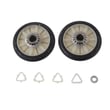
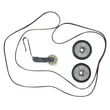
Can you get parts for a Kenmore dryer?
Yes. We carry replacement parts for Kenmore dryers, including the Kenmore model 11066862500, so you can fix common problems like a drum that will not turn, no heat, poor airflow, or a door that will not start the cycle. Use the 11066862500 owner's manual to confirm symptoms and safe service steps.
These are some of the most frequently replaced items for Kenmore dryers like model 11066862500:
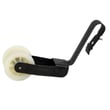
- Drum drive parts such as the dryer drum belt 341241 and idler pulley
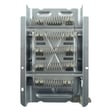
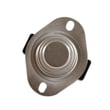
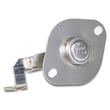
- Heating parts such as the heating element and thermostats
- Safety parts such as thermal cut-off fuses
- Start and door-interlock parts such as the door switch
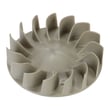
- Airflow parts such as the lint screen and blower wheel
| Symptom | Most likely area | Example part for 11066862500 |
|---|---|---|
| Drum will not tumble | Belt, idler, motor | Dryer Drum Belt, dryer motor |
| Runs but no heat | Heater circuit | Heating element, thermal cut-off fuse kit |
| Takes too long to dry | Venting, lint restriction | Lint screen, blower wheel, venting materials |
| Will not start when door closes | Door switch/latch | Dryer door switch, strike |
A few quick checks help you buy the right part the first time:
- Confirm the full model number from the dryer’s ID tag: 11066862500
- Match the symptom to the system (heat, drive, airflow, controls)
- Check venting requirements and installation basics in the 11066862500 installation guide
- Clean the lint screen before or after each load (helps prevent overheating and long dry times)
- Keep the area around the exhaust opening free of lint and dust buildup
Using model-matched parts helps restore proper drying performance and protects key safety systems (like thermostats and thermal fuses) that prevent overheating. Correct venting and routine lint cleaning also reduce repeat failures.
Last updated: February 2026
How do I tell what model my Kenmore dryer is?
Your Kenmore dryer’s model number is printed on the model and serial number label; on model 11066862500, it’s located at the top inside the dryer door well. Once you have that full number, we can match the correct parts, diagrams, and specifications.
Check these common label locations (start with the first one for this model):
- Top inside the dryer door well (most common for Kenmore 110-series dryers)
- Inside the door opening on the cabinet frame
- On the back panel
- Near the lint screen housing (varies by design)
For the exact label location and how it’s shown for this dryer, use the 11066862500 owner’s manual.
Write the model number exactly as shown, including all digits.
- Model number identifies the dryer design (used to match parts like a heating element or door switch)
- Serial number helps identify production details (useful for service and some part lookups)
- If the model starts with 110, it’s a Kenmore 110-series style identifier (helpful when narrowing down diagrams)
| What you see on the label | What it’s used for |
|---|---|
| Model: 11066862500 | Parts lookup and correct diagrams |
| Serial: (letters/numbers) | Service identification |
Using the exact model number prevents ordering the wrong part. For example, the correct drum belt and drive components for this dryer are matched by model, such as the dryer drum belt 341241 and related maintenance parts.
- Copy the model number digit-for-digit (no spaces)
- Don’t use the control panel name (like “Elite”) as the model
- If the label is worn, take a photo with good lighting and zoom in
Last updated: February 2026
How much does it cost to replace a temperature sensor on a dryer?
For a Kenmore dryer model 11066862500, replacing a temperature-sensing part typically costs $20 to $60 for the part, plus $100 to $250 for labor if you hire service; total installed cost is commonly $120 to $310. Exact cost depends on which sensor (thermostat vs thermistor) your dryer uses.
On many Kenmore dryers, temperature control is handled by thermostats and safety cutoffs rather than a single “sensor.” Common temperature-related parts include:
- Operating thermostat (controls normal cycling temperature)
- High-limit thermostat (protects against overheating)
- Thermal cut-off fuse kit (opens if the heater area overheats)
- Heating element (can fail and mimic a sensor problem)
For this model, examples of temperature-control parts we commonly see replaced are the dryer operating thermostat WP3387134 and the dryer high-limit thermostat WP3977767.
| Cost item | Typical range | Notes |
|---|---|---|
| Part only | $20 to $60 | Thermostat/thermistor style parts are usually in this range |
| Labor | $100 to $250 | Varies by region and access time |
| Service call/diagnostic | $0 to $120 | Sometimes waived if you proceed with the repair |
We usually recommend testing and replacement when you see symptoms like:
- Dryer runs but heat is inconsistent (too hot or not hot enough)
- Dryer shuts off early on sensor cycles
- Clothes take much longer to dry (often paired with airflow issues)
- Dryer overheats or trips a thermal device
- No heat even though the drum tumbles (can also be the heater or airflow)
A failing thermostat or thermal device can cause long dry times, overheating, or repeated shutdowns. Just as important, restricted venting can create the same symptoms; the installation guidance calls out maintaining proper exhaust clearance and venting for safe, correct operation. Use the 11066862500 installation guide to confirm venting requirements and clearances.
Last updated: February 2026
How to hard reset a Kenmore dryer?
To hard reset your Kenmore dryer model 11066862500, we recommend disconnecting power for 1 to 5 minutes, then restoring power and starting a new cycle. This clears many temporary control and cycle issues and is the safest reset method for this dryer.
- Turn the cycle selector to OFF.
- Unplug the dryer (or switch the breaker OFF).
- Wait 1 to 5 minutes.
- Restore power.
- Close the door fully.
- Select a cycle and press PUSH TO START (see the 11066862500 owner's manual).
These checks come straight from common start-up troubleshooting for this style of Kenmore dryer:
- Confirm the controls are set to a running position (not OFF).
- Press PUSH TO START firmly.
- Verify the dryer is plugged into a grounded outlet.
- Check the home electrical supply; many dryers use 2 fuses or 2 breakers, and both must be on.
- Make sure the dryer door is fully closed; a failed door switch can prevent starting.
| What you see after reset | Most likely area to check first | Common related part |
|---|---|---|
| No response at all | Power supply, breaker/fuses | (house supply) |
| Runs but no heat | Breakers/fuses, heating circuit | Dryer element 279838 |
| Won’t start unless door is pushed | Door switch/door alignment | Dryer door switch WP3406107 |
| Stops due to overheating | Venting, thermal protection | (venting, airflow) |
A hard reset clears a “stuck” cycle state, but it does not fix underlying problems like poor airflow, a failed door switch, or a heating circuit issue. If the dryer repeatedly needs resetting, we focus next on power, door closure, and venting.
Last updated: February 2026
Is it worth repairing an old Kenmore dryer?
Yes, repairing an older Kenmore dryer like model 11066862500 is usually worth it when the problem is a common wear item (belt, thermostat, thermal fuse) and the dryer is otherwise drying well and running safely. Replacement makes more sense when multiple major components are failing.
- The drum turns, but performance is poor: start with airflow and heat checks.
- The dryer will not run: verify power, door closure, and start procedure.
- The repair is a single, known wear part (belt, idler, blower wheel): repair is typically cost-effective.
- The dryer overheats, trips, or smells hot: fix the venting issue first, then replace failed safety parts.
- Multiple symptoms at once (no heat plus no run plus loud noise): plan for a deeper diagnosis.
For model-specific operating and troubleshooting steps, use the 11066862500 owner's manual.
These Kenmore 110-style dryers are built around straightforward mechanical and heating systems, so many fixes are practical:
- Broken belt: replace the dryer drum belt 341241.
- No heat due to a failed heater: replace the dryer element 279838.
- Overheating or repeated thermal failures: correct restricted venting, then check thermostats and thermal cut-off.
- Door won’t start the cycle: check the door switch and door strike alignment.
| Situation | What it usually means | Best next step |
|---|---|---|
| One clear failure (belt, heater, switch) | Normal wear | Repair |
| Dryer runs but clothes take too long | Airflow restriction or heat control issue | Clean venting, then diagnose |
| Repeated blown thermal cut-off | Venting problem or overheating | Fix venting first |
| Multiple major parts needed (motor + controls + heat) | High total cost | Consider replacement |
A dryer that is not venting correctly can overheat, waste energy, and shorten the life of parts like the heating element and thermal cut-off. The manual also emphasizes routine care such as cleaning the lint screen every load and keeping the exhaust area clear.
- Clean the lint screen and confirm strong airflow at the outside vent.
- Confirm the door closes firmly and the START button is pressed with a cycle selected.
- Check the home power supply; many electric dryers use two fuses or breakers (the drum can turn even with no heat).
- Review venting and exhaust requirements in the 11066862500 installation guide.
Last updated: February 2026
Is it worth replacing a dryer heating element?
Yes, it’s usually worth replacing the heating element on a Kenmore 11066862500 when the dryer is otherwise in good shape; a failed element is a common, contained repair that restores heat and extends the dryer’s useful life.
Before you buy parts, we recommend confirming the basics from the 11066862500 installation guide. Many “no heat” complaints are power or airflow issues, not the element.
- Make sure the dryer has full power; many electric dryers use two fuses or two breakers, and one can trip while the drum still turns.
- Run the dryer 5 minutes, then open the door and feel for heat.
- Check for strong airflow at the outside vent hood.
- Clean the lint screen and clear any lint buildup in the vent path.
- Fix crushed, kinked, or overly long venting.
A heating element replacement is a good value when the dryer still tumbles normally and the cabinet, drum, and controls are in decent condition.
| What you see | Likely direction | Typical next step |
|---|---|---|
| Drum turns, no heat | Heat circuit issue | Verify power and venting; then test heat components |
| Long dry times, weak airflow | Vent restriction | Clean/replace venting before replacing parts |
| Burning odor on first heat after repair | Normal in some cases | Monitor; odor typically fades after initial use |
If you confirm the element is open (failed), the correct replacement for this model is the dryer element 279838.
A restricted vent can overheat the heater housing and safety devices, leading to repeat failures and poor drying performance. Fixing airflow first protects the new heating element and helps the dryer dry faster.
Last updated: February 2026
What are common problems with Kenmore dryers?
Common problems with Kenmore dryer model 11066862500 include no heat, dryer will not start, long dry times, drum not turning, and unusual noises. Most issues trace back to power supply problems, restricted airflow (lint and venting), or worn heating and drive components; our 11066862500 owner's manual troubleshooting section covers the quickest checks.
- Dryer will not run: door not fully closed, START not pressed firmly, no cycle selected, tripped breaker or blown fuse (many electric dryers use two breakers/fuses)
- No heat but drum turns: one breaker/fuse tripped, wrong cycle (Air/No Heat), failed heater circuit component
- Takes too long to dry: clogged lint screen, crushed/blocked vent, weak airflow, overheating safety devices cycling
- Drum not turning: worn/broken belt, seized roller or idler, motor issue
- Squealing, thumping, grinding: worn drum support rollers, idler pulley wear, blower wheel damage
- Confirm a heat cycle is selected (not Air/No Heat).
- Check the dryer door closes firmly and the START button is pressed firmly.
- Verify power: reset both breakers (or check both fuses) for an electric dryer.
- Clean the lint screen; wash it if you see residue buildup.
- Inspect the vent path for restrictions (lint buildup, crushed flex duct, blocked exterior hood).
| Symptom | Likely part | What you typically notice |
|---|---|---|
| Drum won’t turn | Dryer drum belt 341241 | Motor runs but drum stays still, or belt is broken/slipping |
| No heat | Dryer element 279838 | Runs but never warms on heat cycles |
| Won’t start when door closes | Dryer door switch WP3406107 | Light behavior changes, start is intermittent, door must be held |
| Overheats or shuts off heat | Dryer thermal cut-off fuse kit 279816 | Heat stops mid-cycle, often after vent restriction |
Most “no heat” and “long dry time” complaints are airflow related. Restricted venting can trigger high-limit protection, shorten heater life, and make cycles run much longer than normal. Fixing airflow first prevents repeat failures.
Last updated: February 2026
What are signs of a failing dryer element?
A failing heating element in your Kenmore dryer model 11066862500 usually shows up as no heat (dryer tumbles but clothes stay cool and damp) or weak, inconsistent heat that makes cycles run long. Confirm heat output using the steps in the 11066862500 installation guide.
- Dryer runs but there is no heat after several minutes
- Clothes take much longer than normal to dry
- Heat seems to cycle on and off more than usual (inconsistent drying)
- A burning smell on first use of a new element (this is normal for a new element and should fade after the first cycle)
- Repeated overheating symptoms often point to airflow restriction or a thermostat issue, not just the element
We use this simple check to separate a heating problem from a control or motor problem:
- Run the dryer on a full heat cycle (not Air/No Heat).
- Let it run about 5 minutes.
- Open the door and feel for heat.
If you do not feel heat, check power supply next (many electric dryers use two fuses or two breakers).
| What you see | Most common cause | What we do next |
|---|---|---|
| Tumbles, no heat | One breaker tripped, blown fuse, or failed heater | Verify both breakers/fuses; then test heater circuit |
| Long dry times, heat present | Vent restriction, lint buildup | Clean lint screen and venting |
| Overheats or shuts off | Restricted airflow or thermostat issue | Inspect venting; test thermostats and thermal cut-off |
If power and airflow are good, these parts are frequent fixes on electric dryers:
- Dryer element 279838 (the heater that produces heat)
- Dryer thermal cut-off fuse kit 279816 (opens if the heater area overheats)
- Dryer operating thermostat WP3387134 (regulates normal drum temperature)
- Dryer high-limit thermostat WP3977767 (safety limit for overheating)
Running with poor heat or overheating symptoms can lead to repeated shutdowns, blown thermal fuses, and longer dry times. Verifying airflow and electrical supply first helps you replace the right part the first time.
Last updated: February 2026
What size is a Kenmore Model 11066862500?
The Kenmore dryer model 11066862500 is a full-size 27-inch class dryer. For installation planning, allow typical full-size dryer space plus rear clearance for the exhaust vent; our 11066862500 installation guide shows the required clearances and venting layout details.
Most Kenmore 27-inch class dryers measure about 27 inches wide, about 43 inches tall, and about 27 to 30 inches deep (depth varies with the door style and vent connection). Plan extra room so the door can open fully and so you can service the dryer.
- Leave space for the dryer door swing and lint screen access
- Plan rear clearance for the exhaust vent and elbow (many installs need about 5-1/2 inches behind the dryer)
- Add about 1 inch on the sides when possible to reduce noise transfer
- Use the straightest vent route possible to improve drying performance
- Avoid long vent runs and too many elbows
| What you’re measuring | What to include | Typical planning tip |
|---|---|---|
| Width | Cabinet width | Plan for a 27-inch opening plus a little side clearance |
| Height | Floor to top | Confirm if you have shelves or cabinets above |
| Depth | Front to back | Include door thickness and vent connection space |
| Rear clearance | Back of dryer to wall | Allow room for vent elbow and clamp |
Correct sizing prevents crushed venting, poor airflow, and longer dry times. Good clearance also makes it easier to clean the vent, replace wear parts like the dryer drum belt 341241, and service the motor or heater if needed.
Last updated: February 2026