 Owner’s manual
 Error Codes


What is the average lifespan of an LG fridge?
Most LG refrigerators average 10 to 15 years of service life with normal use and basic maintenance. For the LG LSXS26386D side-by-side refrigerator, the sealed system and compressor warranty terms in the LSXS26386D owner’s manual also reflect that the compressor and sealed system are designed for long-term operation when the unit is installed and maintained correctly.
Refrigerator lifespan depends most on compressor run time, airflow, and door-seal condition.
- Average: 10 to 15 years
- Common “good run” with strong maintenance: 15+ years
- Shortened lifespan drivers: dirty condenser area, frequent door openings, warm room temps, poor door sealing
| Scenario | What you’ll usually see | What helps most |
|---|---|---|
| Normal household use | 10 to 15 years | Keep airflow clear, stable temps |
| Heavy use (large family, frequent dispensing) | Closer to 10 to 12 years | Filter changes, door seal care |
| Well-maintained, good ventilation | 15+ years | Coil-area cleaning, quick repairs |
These steps reduce compressor strain and help the sealed system run efficiently.
- Keep the refrigerator level so doors close fully and consistently.
- Maintain good airflow around the cabinet; avoid blocking vents inside.
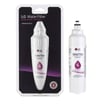
- Replace the water filter on schedule; a restricted filter can reduce dispenser flow and increase valve cycling (see LG refrigerator water filter ADQ73613401).
- Watch for door seal gaps, moisture, or frost; address gasket issues early.
- If you notice dust buildup around the back or bottom area, clean it out carefully to support heat removal.
A refrigerator usually “ages out” because the cooling system works harder than it should. When airflow is restricted or doors do not seal, the compressor runs longer, temperatures swing more, and wear increases across key parts like the compressor, condenser, and control system.
Last updated: February 2026
How to reset an LG fridge freezer?
To reset the LG LSXS26386D refrigerator and freezer controls, disconnect power for at least 5 minutes, then restore power and allow temperatures to stabilize for 24 hours. This clears many control glitches, but you may need to re-enable settings like Lock or Door Alarm afterward.
- Unplug the refrigerator; if you cannot reach the plug, switch the circuit breaker OFF.
- Wait at least 5 minutes before restoring power (this protects the compressor and control board).
- Restore power and confirm the display turns on when you open a door.
- Re-check features such as Lock, Door Alarm, and temperature units (°F or °C).
- Monitor temperatures for a full 24 hours before making additional adjustments.
After power is restored, use the control panel to confirm these common settings:
| Item to check | What “normal” looks like | How to change it |
|---|---|---|
| Freezer temperature setting | Adjustable range is -6°F to 8°F | Press Freezer to cycle settings |
| Temperature unit (°F/°C) | Matches your preference | Hold Freezer + Refrigerator about 5 seconds |
| Control lock | Buttons respond normally | Press and hold Door Alarm/Lock about 3 seconds |
| Door alarm | Alarm sounds if door is open about 60 seconds | Press Door Alarm to toggle |
A reset helps with control glitches, but it will not correct a mechanical or water-flow issue. If you are resetting because water or ice is not dispensing, check these first:
- Make sure the doors are fully closed (dispensing stops with a door open).
- If the panel is locked, unlock it (Lock disables the dispenser pad).
- If the filter was just changed, flush water in short cycles to purge trapped air.
- Inspect the supply line behind the refrigerator for kinks.
- Replace the water filter on schedule (about every 6 months); see LSXS26386D manual for your model’s indicator and reset steps.
If your reset is tied to water taste, slow flow, or dispenser issues, follow how to change the water filter in an LG refrigerator for the correct filter-change and flushing routine.
Waiting the full 5 minutes prevents rapid restart stress on the compressor and gives the electronic controls time to fully power down. Waiting 24 hours after changes prevents over-adjusting while temperatures stabilize.
Last updated: February 2026
What is the most common problem with the LG refrigerator?
The most common issue we see with LG refrigerators like model LSXS26386D is a cooling problem (warm fridge or freezer). When temperatures rise, the root cause is usually in the sealed cooling system or airflow, such as the compressor, condenser coil, or fan-related components; the LSXS26386D owner’s manual also points you to built-in Smart Diagnosis for faster troubleshooting.
- Refrigerator section is warm but the freezer is also warming up
- Food is soft in the freezer or ice cream is melting
- Compressor runs a lot, or you hear unusual clicking or humming
- Frost buildup that restricts airflow
- Ice maker or water dispenser performance drops after cooling issues start
- Confirm the doors seal fully and are not being held open by bins or food.
- Make sure vents inside the compartments are not blocked by packages.
- Clean dust from the condenser area (restricted airflow can raise temps).
- If the unit is powered on, use LG Smart Diagnosis as directed in the manual.
| What’s happening | Common cause | Example part for this model |
|---|---|---|
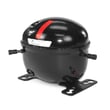
| Warm fridge and freezer | Compressor or sealed system not pumping efficiently | Refrigerator compressor TCA38091801 |
| Poor heat removal, long run times | Dirty or damaged condenser coil | Refrigerator condenser coil ACG73748502 |
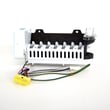
| Ice maker issues (no ice, clumping, slow dispense) | Ice maker/auger drive problems | Refrigerator ice maker and auger motor assembly EAU61004410 |
Cooling problems are the “starting point” for many other complaints. When temperatures drift even a few degrees, you can get soft ice, frost buildup, water leaks from excess defrosting, and higher energy use. Catching airflow and condenser issues early helps prevent bigger failures.
If the refrigerator is not cooling in both sections after basic airflow and condenser cleaning, sealed-system diagnosis is the next step. We recommend using Smart Diagnosis (per the manual) and then scheduling service if the results point to a compressor or cooling-system problem.
Last updated: February 2026
Why is my LG LSXS26386D freezer not freezing?
If your LG LSXS26386D freezer is not freezing, the most common causes are cooling being turned off (Demo Mode or controls set incorrectly), restricted airflow from heavy loading or frost buildup, or a dirty condenser area that prevents heat from leaving the refrigerator. Start with the control settings in the LSXS26386D owner's manual.
- Confirm the refrigerator is not in Demo Mode (lights work but cooling is disabled).
- Verify the freezer temperature setting was not changed to a warmer setting.
- Make sure the freezer door closes tightly and is not being held open by packages.
- Avoid overloading; leave space so cold air can circulate around food.
- Wait 30 minutes if the unit is in a normal defrost cycle; temps can rise briefly.
Good freezing depends on two things: cold air moving through the freezer and heat being released underneath/behind the unit.
- Airflow inside the freezer: Frost or ice buildup can block vents and reduce circulation. Also, large amounts of unfrozen food can overwhelm normal freezing capacity.
- Condenser area: Dust and pet hair on the condenser coil can reduce cooling performance. If the coil is damaged or heavily corroded, replacement may be needed.
| What you notice | Likely direction | What we do next |
|---|---|---|
| Freezer warm, fresh food also warm | Cooling disabled or sealed system issue | Check settings/Demo Mode; then listen for compressor operation |
| Freezer warm but unit runs a lot | Poor heat removal or airflow restriction | Clean condenser area; check for blocked vents |
| Frost buildup and weak airflow | Defrost/airflow problem | Clear vents, reduce door openings, check for heavy frost patterns |
These parts are commonly related to “not freezing” complaints on side-by-side refrigerators:
- Refrigerator condenser coil ACG73748502 (heat release; dirty or damaged coils reduce cooling)
- Refrigerator electronic control board EBR80977529 (can affect cooling commands and modes)
- Refrigerator compressor TCA38091801 (sealed system component; replacement is a major repair)
When the freezer cannot hold temperature, food safety and ice production are affected quickly. Fixing airflow restrictions and condenser heat removal early also prevents the compressor from running excessively long.
Last updated: February 2026
What are the disadvantages of LG refrigerators?
Some disadvantages reported with LG refrigerators (including side-by-side models like LG LSXS26386D) are higher-cost sealed-system repairs (compressor, evaporator, condenser), plus more frequent service needs for ice maker and dispenser components compared with simpler, non-dispensing designs. Checking the LSXS26386D user manual helps you match symptoms to the right troubleshooting steps.
- Costly cooling-system repairs: Sealed-system parts and labor can be expensive when cooling performance drops.
- Compressor-related cooling complaints: When the compressor struggles, you can see warm temperatures and food spoilage.
- Ice and water dispenser issues: Ice chute frost, slow dispensing, or clumping ice can happen if moisture gets into the chute.
- Door seal and alignment sensitivity: Small gasket gaps can cause frost, humidity, and temperature swings.
- More maintenance points: Filters, valves, fittings, and dispenser mechanisms add parts that can wear over time.
The LSXS26386D manual specifically calls out common user issues such as clearing frost and ice fragments from the dispenser chute and keeping doors closed during dispensing. Those are good examples of how dispenser-equipped refrigerators can need more hands-on upkeep than basic models.
| Feature | Benefit | Typical downside |
|---|---|---|
| In-door ice and water | Convenience | More moving parts (chute door, auger, valve) |
| High-efficiency compressor system | Better energy use | Repairs can be higher cost |
| Tight door sealing | Better temps | Misalignment or gasket wear shows up quickly |
If you are troubleshooting cooling or dispenser performance on this model, these parts are often involved:
- Refrigerator compressor TCA38091801 (cooling system)
- LG refrigerator water filter ADQ73613401 (water taste, flow, dispenser performance)
- Refrigerator water inlet valve AJU34125555 (no water, slow fill, ice maker fill issues)
- Refrigerator dispenser ice chute door motor EAU59551204 (chute door not sealing, frost buildup)
- Refrigerator door gasket 4987JJ1010Z (warm air leaks, frost, sweating)
Knowing these disadvantages helps you troubleshoot faster and avoid repeat problems. For example, a weak door seal can mimic a cooling failure, and a dispenser chute that does not close fully can drive ongoing frost and clumping.
Last updated: February 2026





