 Error Codes


How to tell if a washing machine drain pump is bad?
On a Whirlpool LSB6000PQ2 washer, a bad drain pump usually shows up as standing water left in the tub, slow or no draining, a loud humming or grinding sound during drain, or a spin that never reaches full speed because the washer cannot empty. The most common first cause is a clog, not the pump motor.
- Washer will not drain at all, or drains very slowly
- You hear a steady hum but little or no water moves (impeller not turning or jammed)
- Grinding, rattling, or squealing during the drain portion of the cycle
- Water leaking from the pump area or hoses during drain
- Clothes come out wetter than normal because the washer cannot fully drain before spin
- Cancel the cycle and unplug the washer.
- Check the drain hose for kinks, crushing, or a blockage at the standpipe.
- Look for clogs in the pump inlet hose (coins, socks, lint) and the drain hose.
- If the pump hums but does not move water, the impeller is often jammed or stripped.
- If the pump is silent when it should be draining, the issue can also be a lid switch or timer, not the pump.
| What you notice | Most likely cause | What we recommend |
|---|---|---|
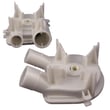
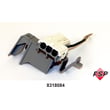
| Hums but won’t drain | Jammed/stripped impeller, seized pump | Inspect for clogs; replace the pump if impeller is damaged using washer drain pump WP3363394 |
| Drains slowly | Partial clog in hoses or pump | Clear hoses and pump passages; verify strong flow at the standpipe |
| Leaks during drain | Cracked pump housing, loose hose clamp | Inspect pump body and hose connections; replace pump if housing is cracked |
| Won’t drain and won’t spin | Drain problem or safety interlock | Check lid switch operation; consider washer lid switch assembly WP8318084 if the lid switch is intermittent |
A washer that cannot drain puts extra strain on the drive system and can leave loads soaking wet. Catching a clog early can prevent repeat failures and helps the Whirlpool LSB6000PQ2 complete the drain and spin portions of the cycle normally.
If your top-load washer will not drain or spin, follow the step-by-step checks in troubleshooting a top load washer that wont drain or spin video.
Last updated: February 2026
What is the most expensive part to replace on a washing machine?
On a Whirlpool LSB6000PQ2 washer, the most expensive repairs are typically major drive system parts (drive motor, gear case components) and large assemblies that require significant teardown time. In many cases, labor is a bigger cost driver than the part itself, especially for basket, transmission, and bearing-related work.
These are the repairs that most often create the highest total bill (parts plus labor):
- Drive motor replacement (if the motor is weak, noisy, or won’t run)
- Gear case or internal drive system repair (often involves major disassembly)
- Basket and drive hardware work (removing a stuck basket can be time-intensive)
- Timer or control replacement (less labor than a gear case, but the part can be pricey)
- Suspension and balance repairs (usually moderate parts cost, but can add up)
Here are a few model-matched parts that illustrate how costs can vary.
| Repair area | Example part for LSB6000PQ2 | Typical cost impact |
|---|---|---|
| Motor/drive | Washer drive motor WP661600 | Higher part cost; moderate labor |
| Controls | Washer timer WP8546685 | Higher part cost; lower labor |
| Drive system | Actuator 3360629 | High part cost; higher labor |
| Basket/drain | Drive basket W10820043 | Higher part cost; higher labor |
We use these checkpoints when estimating whether a washer repair will be one of the costly ones:
- Does the repair require removing the cabinet, basket, and drive components?
- Is the part a major assembly (motor, gear case, basket, timer/control)?
- Are there symptoms of internal wear (burning smell, grinding, oil leak, loud spin)?
- Is the basket seized to the drive block or spanner nut (adds labor time)?
On direct-drive top-load washers like the Whirlpool LSB6000PQ2, the most expensive jobs are usually the ones that combine a high-priced assembly with lots of teardown and reassembly. If you’re comparing repair vs. replace, focus on total cost (part plus labor), not just the part price.
Last updated: February 2026
How do I reset the lid lock on my Whirlpool washer?
On the Whirlpool LSB6000PQ2 washer, a lid lock reset starts with a power reset: unplug the washer (or switch off the breaker) for 5 minutes, restore power, then close the lid and try a Drain/Spin cycle. If the lid still will not lock or unlock, the lid switch/lock circuit usually needs troubleshooting or a part replacement.
- Unplug the washer for 5 minutes (or turn the breaker off).
- Plug back in (or turn breaker on).
- Open the lid fully, then close it firmly.
- Select Drain/Spin and start the cycle.
- If the control seems unresponsive, rotate the timer knob to Off and reselect the cycle.
A locked lid is often caused by the washer not fully draining, a failed lid switch/lock, or a control/timer issue.
- Listen for the drain pump running during Drain/Spin.
- Check the drain hose for kinks or a clogged standpipe.
- If you hear humming but no draining, inspect the pump area for obstructions.
Helpful parts to consider for this model:
- Lid strike alignment: Make sure the lid closes squarely and the strike is not bent.
- Load balance: An off-balance load can stop the cycle before it reaches unlock.
- Power supply: A loose outlet or tripped breaker can leave the lock in a stuck state.
- Drain first: If water remains in the tub, the washer may keep the lid locked.
| What you see | What it usually points to | Common part on LSB6000PQ2 |
|---|---|---|
| Won’t start, acts like lid is open | Lid switch/lock not sensing closed lid | Lid switch assembly |
| Won’t drain, lid stays locked | Drain restriction or failed pump | Drain pump |
| Timer advances oddly or stalls | Timer contacts worn | Timer |
The lid lock is a safety system; if it does not sense a closed lid or the washer cannot drain, the washer can stop mid-cycle and keep the lid locked. Resetting power clears a temporary control state, but repeated lock problems usually trace back to the lid switch/lock or draining.
Last updated: February 2026
How to check for a clogged drain pump on a Whirlpool washer?
On a Whirlpool LSB6000PQ2 washer, a clogged drain pump usually shows up as slow draining, standing water, or a washer that will not spin because it cannot pump water out. We check for a clog by safely accessing the pump, inspecting the inlet and outlet hoses for debris, and verifying the pump impeller turns with slight magnetic resistance.
- Unplug the washer before servicing.
- Turn off both water supply valves.
- Have towels and a shallow pan ready; drain hoses and the pump can release water.
- If the washer is full of water, bail out water first or lower the drain hose into a bucket to siphon.
- Confirm the symptom: If you hear the motor running but water does not move, the drain path or pump is restricted.
- Check the drain hose: Look for kinks, crushing, or a clog at the standpipe or laundry sink.
- Access the pump: On many Whirlpool direct-drive top-load designs, the pump mounts to the front of the drive motor.
- Inspect hoses at the pump: Remove the inlet hose from the tub and the outlet hose to the drain; clear coins, socks, lint, or sludge.
- Check the impeller: With hoses off, look into the pump ports and gently rotate the impeller. It should not spin completely “free”; a little resistance is normal.
- Reassemble and test: Reconnect hoses securely, restore power, and run a drain/spin to confirm strong flow.
| What you observe | What it points to | What to do next |
|---|---|---|
| Hose packed with debris | Drain path clog | Clear hose and standpipe, then retest |
| Impeller jammed or broken | Pump damage or obstruction | Replace the pump |
| Impeller turns but no pumping | Worn pump or internal slip | Replace the pump |
| Washer will not drain and motor hums | Pump jam or motor issue | Clear jam; if still hums, diagnose drive system |
- Washer drain pump WP3363394
- Washer lid switch assembly WP8318084 (if the washer will not spin after draining issues)
- Washer motor coupling 285753A (if the motor runs but the pump is not being driven)
A restricted drain pump can prevent spinning, leave water in the tub, and strain the drive motor. Clearing the clog early helps avoid bigger repairs like motor coupling or drive system damage.
Last updated: February 2026





