Owner’s manual
 Error Codes
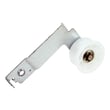


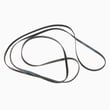
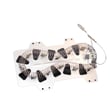
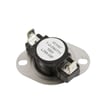
How to find part number for Samsung dryer?
For your Samsung DV218AEB dryer, we find the correct part number by matching the dryer’s model and serial information to the parts list, then confirming the part’s name and location in the diagrams. The model/serial tag is typically on the front frame behind the door; a backup tag is often on the back.
Where to look for the model and serial tag
Check these common locations first:
- Front frame behind the dryer door opening (most common)
- Back panel of the dryer cabinet (common secondary tag)
- Inside the door area near the opening (around the frame)
- On the cabinet edge near the lint screen housing (less common)
Use the DV218AEB manual to confirm the exact tag location and the correct way to record the model and serial information.
How we match the right part number
Once you have the model information, use this process:
- Identify the failed symptom (no heat, noisy drum, won’t start, door won’t latch)
- Find the matching section in the parts breakdown (heating, drum, door, controls)
- Match the part name to the diagram callout
- Confirm the part number before ordering
Quick examples for this model
These are common DV218AEB-RELATED parts customers look up by symptom:
| Symptom | Part to check | Example part number |
|---|---|---|
| Loud thumping or squealing | Drum support roller | DC97-16782A |
| Dryer won’t heat or overheats | Heating element or thermostats | DC47-00019A, DC47-00018A |
| Drum not turning | Drum belt | 6602-001655 |
(Always match by model and diagram position; similar Samsung dryers can use different revisions.)
Why it matters
Samsung dryers often have multiple versions that look alike, and small differences can change the correct heating element, thermistor, belt, or door parts. Using the DV218AEB model/serial information prevents ordering the wrong replacement part and reduces downtime.
Last updated: February 2026
What is the average lifespan of a Samsung dryer?
Samsung dryers typically last 10 to 15 years with normal household use. For your Samsung DV218AEB, consistent airflow maintenance (lint filter and venting) and avoiding overloads are the biggest factors that push life toward the high end; see the DV218AEB owner’s manual for care and safety guidance.
What affects dryer lifespan the most
- Airflow and venting: restricted airflow overheats components and shortens life.
- Lint control: clean the lint screen every load; keep the blower housing and ducting clear.
- Load size: frequent overloading strains the drum belt, rollers, and motor.
- Heat stress: long cycles with poor airflow can stress thermostats and the heating circuit.
- Installation quality: crushed or improper vent material increases lint buildup and heat.
Quick maintenance checklist (best ROI)
- Clean lint screen every load.
- Inspect and clean the vent run periodically (especially long runs or many elbows).
- Keep the dryer level to reduce vibration and drum wear.
- Stop using the dryer if you smell burning or notice repeated overheating.
- Use cycles appropriately (avoid running heavy loads on high heat repeatedly).
Common wear items vs. typical symptoms
| Wear item (example) | What you notice | What it can lead to |
|---|---|---|
| Drum support rollers | Thumping, rumbling | Drum wear, belt stress |
| Drum belt | Drum not turning, squeal | No-tumble drying, motor strain |
| Heating circuit safety parts | No heat, shuts off early | Overheating protection trips |
Why it matters
A dryer can run for years past the average, but only if it stays cool and moves air. Good airflow reduces heat stress on the heating element, thermostats, and wiring, and it also helps clothes dry faster with less run time.
Last updated: February 2026
Is it worth replacing a heating element in a Samsung dryer?
Yes; for a Samsung DV218AEB dryer, replacing the heating element is usually worth it when the dryer tumbles normally but won’t heat, because the part cost is typically far less than replacing the whole dryer. It’s most successful when you confirm the no-heat problem is not caused by airflow or a safety thermostat.
When replacement makes sense
Replacing the heater is a strong choice when the rest of the dryer is in good shape (drum turns, controls work, no burning smell) and you address airflow first.
- Dryer runs but clothes stay cold or barely warm
- Heat cycles on and off normally but never gets hot enough
- You’ve cleaned lint buildup and verified strong vent airflow
- No error code points to a sensor issue (see Samsung dryer error codes)
- You’re comfortable using a multimeter and basic hand tools (listed in the DV218AEB owner’s manual)
Parts that commonly mimic a “bad heating element”
On DV218AEB, several heat-protection parts can open and stop heat even when the element is fine. Checking these first prevents buying the wrong part.
| Symptom | More likely cause | Example part for DV218AEB |
|---|---|---|
| No heat at all | Thermal cut-off fuse open | Dryer thermal cut-off fuse, 320-degree f DC47-00015A |
| Heats briefly then stops | High-limit thermostat opening | Dryer high-limit thermostat DC47-00018A |
| Temperature seems “wrong” | Thermistor out of range | Dryer thermistor DC32-00007A |
| No heat and safety opened | Thermal cut-off thermostat | Dryer thermal cut-off thermostat DC47-00016A |
Why it matters (and what to fix first)
A failed heater often happens after restricted airflow. The manual warns that crushed or improper venting can trap lint and obstruct airflow, which increases overheating risk. Fixing venting and using a 4-inch rigid metal duct helps the new heater and thermostats last longer.
Quick decision guide
- Replace the heating element if the element tests open (no continuity) and airflow is good.
- Replace a fuse/thermostat first if one tests open and the element tests good.
- Consider replacing the dryer if it has repeated overheating failures and the vent system cannot be corrected.
Last updated: February 2026
How to tell if a Samsung dryer heating element is bad?
If your Samsung DV218AEB dryer runs but doesn’t heat, the heating element is often the issue. We confirm it by checking for visible coil damage and testing the element with a multimeter for continuity and for a short to the metal housing; failed readings mean the element is bad.
Quick checks first (no tools)
- Make sure you did not select Air Fluff or a no-heat cycle.
- Clean the lint filter and confirm the outside vent hood opens freely.
- Check for a crushed, kinked, or lint-clogged exhaust duct (restricted airflow can mimic a heat failure).
- Verify the home breaker is fully reset (many electric dryers use a 2-pole breaker).
Multimeter test: what to check
Unplug the dryer before testing.
- Continuity across the element terminals: a good element shows continuity (many meters beep in continuity mode).
- Resistance (ohms) across terminals: most electric dryer elements read in a low, finite range (commonly around 8 to 15 Ω).
- Short to ground: test from each element terminal to the metal heater housing; you should get no continuity.
What the readings mean
| Test result | What it indicates | What to do |
|---|---|---|
| No continuity (open circuit) | Broken coil | Replace the element |
| Continuity to housing (grounded) | Element shorted | Replace the element |
| Normal ohms, still no heat | Heat circuit issue (thermostat, fuse, wiring, control) | Check safety devices and wiring |
Related parts that commonly fail with no-heat symptoms
If the element tests good, we next check the heat safety circuit parts used on this model:
- Samsung dryer heating element DC47-00019A
- Dryer high-limit thermostat DC47-00018A
- Dryer thermal cut-off thermostat DC47-00016A
- Dryer thermal cut-off fuse, 320-degree f DC47-00015A
Why it matters
A failed heating element stops heat entirely, but a blown thermal cut-off or high-limit thermostat often points to airflow restriction. The DV218AEB manual also calls out periodic exhaust duct cleaning by qualified service personnel, and it recommends rigid metal venting for proper drying performance.
For wiring access, component locations, and safety notes, follow the DV218AEB owner’s manual.
Last updated: February 2026