Installation guide
 Owner’s manual
 Error Codes


How long does a Maytag Bravos dryer last?
A Maytag Bravos dryer typically lasts 10 to 15 years with normal household use. For your Maytag MEDX700XW0, keeping airflow strong (clean lint screen, correct vent length, no crushed duct) is one of the biggest factors in reaching the full lifespan; see the MEDX700XW0 owner's manual for care and use details.
Typical lifespan and what affects it
Most dryers reach their expected life when heat and airflow stay in spec and the drum turns smoothly.
- Venting quality (short, straight, rigid metal) has a major impact on run time and wear
- Lint control (screen cleaned every load; duct cleaned periodically)
- Load habits (avoid chronic overloading, which strains the drive system)
- Heat system health (stable temperature control reduces overheating and shutdowns)
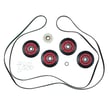
- Wear parts (rollers, idler pulley, belt) eventually need replacement on any dryer
Venting guidelines that help the dryer last longer
The MEDX700XW0 installation guidance emphasizes using the straightest, most direct vent route and limiting turns. Long or restrictive venting shortens dryer life and increases drying time.
| Vent setup (rigid metal) | Max length with box/louvered hood | Max length with angled hood |
|---|---|---|
| 0 elbows | 64 ft | 58 ft |
| 2 elbows | 44 ft | 38 ft |
| 4 elbows | 27 ft | 21 ft |
Quick checks when performance drops (before assuming the dryer is “worn out”)
- Confirm the vent behind the dryer is not crushed or kinked
- Run a timed, full-heat cycle and check for heat after about 5 minutes
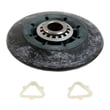
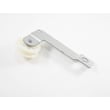
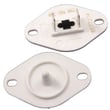
- If the drum squeals or thumps, inspect drum support components such as the dryer drum support roller WPW10314173
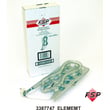
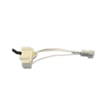
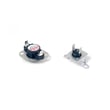
- If the dryer runs but does not heat, common service items include the dryer heating element WP3387747 and the dryer thermal cut-off fuse kit 279973
Why it matters
A dryer that takes longer to dry runs hotter and longer per load, which increases wear on the heating circuit, motor, and drum support system. Good venting and routine maintenance are the simplest ways to protect performance and lifespan.
Last updated: January 2026
What is the capacity of the MEDX700XW0?
The Maytag MEDX700XW0 dryer has a 7.4 cu. ft. capacity, which is a common full-size drum size for handling everyday loads like towels, jeans, and mixed laundry.
How to confirm capacity and match it to your laundry needs
We recommend checking the model documentation for the exact capacity listing and any load-size guidance for sensor cycles.
- Look for “capacity” or “drum volume” in the specifications section of the MEDX700XW0 owner's manual.
- Use sensor cycles for mixed loads; they rely on proper tumbling and airflow.
- Avoid overloading; clothes should tumble freely for even drying.
- If loads seem to dry unevenly, reduce load size and check venting.
Typical load guidance for a 7.4 cu. ft. dryer
A 7.4 cu. ft. drum is designed for full-size household loads. Use this as a practical guide:
| Load type | Typical fit | Notes |
|---|---|---|
| Everyday mixed load | Yes | Best results on sensor cycles |
| Queen comforter | Often | Depends on fill and fabric; don’t pack tightly |
| Heavy towels | Yes | Dry in smaller batches for faster results |
Why it matters
Capacity affects drying performance, cycle time, and wrinkle control. When the drum is too full, airflow drops and clothes may not tumble properly, which can lead to longer dry times and inconsistent results.
Last updated: January 2026
What is the most common problem with the Maytag dryer?
For the Maytag MEDX700XW0 dryer, the most common problem we see is no-heat or long dry times caused by restricted airflow (lint buildup or poor venting). That overheating can also lead to a blown thermal cut-off or other heat-related failures, and it often shows up as “runs but won’t dry.”
Most common symptoms and what they usually mean
- Runs but no heat: heating circuit issue (often airflow-related overheating, or a failed heater component)
- Takes too long to dry: vent restriction, crushed/collapsed duct, or lint buildup in the ducting
- Dryer won’t start: door switch issue, power supply issue, or a safety device opened due to overheating
- Burning smell or very hot cabinet: severe airflow restriction
- Thumping/squealing: worn drum support parts (rollers or idler pulley)
Quick checks that fix the most “common” dryer problems
Start with airflow and basics because the installation guide warns that improper venting traps lint and obstructs airflow.
- Clean the lint screen every load; wash it with water occasionally to remove residue.
- Inspect the vent path behind the dryer for kinks, crushing, or long runs.
- Use rigid metal duct when possible; avoid flexible plastic or foil-style duct.
- Confirm the exhaust hood outside opens freely and is not clogged.
- If the dryer runs but won’t heat, verify both household fuses or breakers (many dryers use two).
Common parts involved (when airflow is already corrected)
If airflow is good and the problem persists, these are frequent repair items on this model:
| Problem you notice | Common part to check/replace | What it affects |
|---|---|---|
| No heat | Dryer heating element WP3387747 | Creates heat for drying |
| Squeal or drum drag | Dryer drum support roller WPW10314173 | Supports drum rotation |
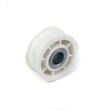
| Squeal or belt slack | Dryer idler pulley 279640 | Maintains belt tension |
Why it matters
Restricted venting does more than slow drying; it raises operating temperatures. That can shorten the life of heating components and safety devices, and it can also cause moisture and lint to collect indoors. For venting rules and acceptable ducting, use the MEDX700XW0 installation guide.
Last updated: January 2026