Installation guide
 Owner’s manual



Where can I find a Maytag dryer model?
You can find the model number for your Maytag dryer on the appliance’s rating label; on the Maytag MGD6000XG0, it’s typically located in the door opening (door well) or on the cabinet. Use the model number to match the correct parts, manual, and installation information.
Most common places to check
Look for a sticker or metal plate with Model and Serial information in these spots:
- Inside the dryer door opening (the door well around the opening)
- On the inner door frame or rim area
- On the back of the dryer cabinet (upper area)
- Under the top panel edge (visible when the door is open on some designs)
What the label looks like
The rating label usually includes:
- Model number (example: MGD6000XG0)
- Serial number
- Gas type and burner information (on gas models)
- Electrical ratings
Quick tips to avoid mix-ups
If you’re ordering parts or checking troubleshooting steps, match the full model number exactly.
| What to match | Why it matters |
|---|---|
| Full model number (MGD6000XG0) | Ensures parts diagrams and part fit are correct |
| Serial number | Helps confirm production variation when applicable |
| Gas type (Natural gas vs LP) | Prevents incorrect gas setup or conversion decisions |
Why it matters
Dryer parts like the drive system, sensors, and gas ignition components can vary by model and production series. Using the exact model number helps us point you to the right diagrams, repair instructions, and compatible parts in the MGD6000XG0 owner's manual.
Last updated: February 2026
What is E1 code on Maytag dryer?
On the Maytag MGD6000XG0 dryer, an E1 code points to a temperature-sensing problem, most often a thermistor circuit issue (sensor out of range, wiring/connection problem, or airflow-related overheating). Use the MGD6000XG0 owner’s manual for the model’s diagnostic steps and checks.
What to check first (fast, high-success steps)
- Unplug the dryer for 2 minutes, then restore power and run a Timed Dry, heated cycle (not Air Only).
- Clean the lint screen and confirm strong airflow at the outside vent hood.
- Inspect the thermistor wiring harness for loose plugs, corrosion, pinched wires, or a rubbed-through spot.
- Check the exhaust duct for crushing, long runs, or heavy lint buildup.
- If the dryer heats briefly then stops heating, suspect a failing gas heat circuit component.
Parts commonly involved with E1-type temperature faults
If you are troubleshooting heat and temperature sensing on this model, these parts are the most relevant:
| Symptom you notice | Most likely area | Example part for this model |
|---|---|---|
| E1 appears quickly after start | Thermistor circuit | Dryer thermistor WP8577274 |
| Dryer overheats, shuts down, or cycles oddly | High-limit safety opened due to restricted airflow | Dryer thermal cut-off kit WP8573713 |
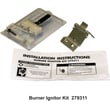
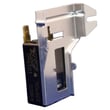
| No heat or heat cuts out mid-cycle | Gas ignition or flame sensing | Igniter 279311 or dryer radiant sensor WP338906 |
Why airflow matters with an E1 code
Even with a new control board or sensor, restricted venting can drive temperatures out of the normal range. That can trigger error codes, open safety devices, and cause long dry times. Keeping the vent path short, smooth, and clean prevents repeat failures.
Safety note for gas dryers
If you ever smell gas, follow the “What to do if you smell gas” instructions in the MGD6000XG0 installation guide. Gas leaks cannot always be detected by smell.
Last updated: February 2026
How to remove the front panel from a Maytag dryer?
On the Maytag MGD6000XG0 dryer, we remove the front panel by disconnecting power, taking off the lower and/or top fasteners, releasing the panel clips, then unplugging the door switch harness so the panel can lift off and expose the drum, belt, and blower area.
Safety first (before you start)
- Unplug the dryer from the wall outlet.
- If it is a gas model, shut off the gas supply valve.
- Let the dryer cool completely.
- Use gloves; sheet metal edges inside the cabinet are sharp.
- Support the front panel as you disconnect wiring so it does not drop.
Front panel removal steps (typical for this Maytag-style cabinet)
- Remove the lint screen, then remove the screws under the lint screen opening (these often secure the top).
- Slide a putty knife under the front edge of the top (near the left and right corners) to release the spring clips; lift the top.
- Remove the screws that secure the front panel to the cabinet (commonly at the upper inside corners).
- Disconnect the door switch wire connector from the front panel.
- Tilt the front panel forward and lift it up and off the lower retaining tabs.
What you can access once the front panel is off
| Area you can reach | Common reason | Example part for MGD6000XG0 |
|---|---|---|
| Drum support area | Squealing, thumping | Dryer drum support roller WPW10314173 |
| Belt tension area | Belt slipping, squeal | Dryer idler pulley W10837240 |
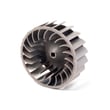
| Air movement area | Poor airflow, rumbling | Dryer blower wheel WP697772 |
Why it matters
Removing the front panel the right way prevents broken clips, stripped screws, and damaged door switch wiring. It also gives you safe access to wear items like rollers, the idler pulley, and the blower wheel that commonly cause noise and drying problems.
Reference diagrams and fastener locations
For the exact screw locations and cabinet style details for MGD6000XG0, we follow the MGD6000XG0 installation guide for handling and access guidance, and the MGD6000XG0 owner’s manual for model-specific use and care notes.
Last updated: February 2026
What could be wrong with my Maytag dryer?
Several common issues can cause a Maytag MGD6000XG0 dryer to dry poorly or act up: restricted venting, an unlevel installation that affects sensor cycles, or a heating/airflow component problem. We start by checking airflow, power, and basic setup steps in the MGD6000XG0 installation guide.
Quick checks that fix many dryer problems
- Clean the lint screen before every load.
- Confirm the dryer is exhausted outdoors and uses 4-inch heavy metal venting (not plastic or foil).
- Make sure the vent run is not crushed, kinked, sagging, or clogged.
- Verify the dryer sits level (a floor slope over about 1 inch can affect tumbling and sensor cycles).
- If it is a gas model, confirm the gas shut-off valve is fully open.
Symptom-to-cause guide (fast diagnosis)
| What you notice | Most likely cause | What to check first |
|---|---|---|
| Clothes take too long to dry | Restricted airflow | Lint screen, vent hose, outside vent hood |
| Dryer runs but no heat | Gas ignition or temperature sensing issue | Igniter glow, burner cycling, sensors |
| Dryer will not start | Power/door/start issue | Door fully closed, outlet, breaker/fuse |
| Thumping/squealing | Worn drum support parts | Rollers, idler pulley, belt path |
Parts that commonly solve these problems
If airflow is good and the issue persists, these model-compatible parts are common fixes:
- Dryer thermistor WP8577274 for temperature sensing problems (overheating, underheating, odd cycle behavior).
- Igniter 279311 if the gas burner is not lighting reliably.
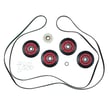
- Dryer drum support roller WPW10314173 or dryer idler pulley W10837240 for squealing, rumbling, or thumping.
- Dryer blower wheel WP697772 if airflow is weak even with a clear vent.
Why it matters
A restricted vent or incorrect vent material can create a fire risk and also causes long dry times, overheating, and repeated thermal shutdowns. A level, properly vented MGD6000XG0 dries faster, protects components like the thermistor and thermal cut-off, and helps automatic sensor cycles work correctly.
Last updated: February 2026