 Owner’s manual


How do I tell what model my Kenmore dryer is?
Your Kenmore dryer’s model number is printed on the model and serial number plate. On Kenmore model 11062982100, that plate is typically found in the door opening area; record both the model and serial numbers so we can match the correct parts, wiring, and specifications.
Where to look for the model number plate
Check these common locations on Kenmore dryers:
- Inside the dryer door opening (around the frame or opening lip)
- On the back panel of the dryer cabinet
- Near the lint screen housing area (depending on design)
- On a metal plate or durable label labeled “Model No.” and “Serial No.”
If the label is worn, use a flashlight and look for lightly stamped characters.
What to write down (and why)
The manual notes you’ll need the complete model and serial numbers when requesting information or service. Use this quick checklist:
- Model number (example: 11062982100)
- Serial number (unique to your unit)
- Date of purchase (helpful for records)
- Power type (this model family is covered under an electric dryer manual)
Quick reference table
| Item | What it tells us | Example |
|---|---|---|
| Model number | Exact design and parts match | 11062982100 |
| Serial number | Production run details | Varies |
| Plate location | Where to confirm both numbers | Door opening area |
Why it matters
Kenmore model numbers can look similar, but small differences change the correct heating parts, drum support parts, and controls. Using the exact model number helps us avoid ordering the wrong component.
For model-specific identification details and record-keeping, use the 11062982100 owner's manual.
Last updated: February 2026
How much does it cost to replace a heating element in a Kenmore dryer?
Replacing the heating element in your Kenmore dryer model 11062982100 typically costs $70 to $120 for the part plus any supplies; with professional service, the total repair commonly runs $200 to $400 depending on labor rates and whether additional heat-circuit parts are needed. See the 11062982100 owner's manual for safety and operating guidance.
Typical cost breakdown
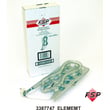
- Heating element part: often $70 to $120 for this style of electric dryer element
- Optional wiring/terminals: $10 to $30 if connectors are heat-damaged
- Professional labor: commonly $120 to $280 (service call plus installation time)
- DIY tools/supplies: $0 to $25 (nut driver, vacuum, gloves)
| Scenario | What you pay for | Typical total |
|---|---|---|
| DIY element swap | Part only | $70 to $120 |
| DIY plus wiring repair | Part + connectors | $80 to $150 |
| Pro repair | Labor + part | $200 to $400 |
What can raise the total cost
A heating element failure is sometimes caused by airflow or heat-control issues. Plan for extra cost if you also need to address:
- A blown dryer thermal fuse WP3390719
- A temperature-sensing issue (for example, a thermistor)
- Restricted venting (long runs, too many elbows, crushed duct)
- Burned wiring at the element terminals
Why it matters
A weak or failed heating element can leave clothes damp and can overwork the dryer. Fixing airflow and any heat-safety components at the same time helps the new element last longer and keeps drying times normal.
Last updated: February 2026
How do I know if my Kenmore dryer thermal fuse is blown?
A blown thermal fuse in your Kenmore dryer model 11062982100 commonly shows up as a dryer that will not run at all, or a dryer that runs but will not heat. The sure way to confirm is a continuity test with a multimeter after unplugging the dryer (the fuse should read closed/continuous).
Quick symptoms to look for
- Dryer will not start (no motor run)
- Dryer tumbles but there is no heat
- Cycle seems normal, but clothes stay damp
- You recently had poor airflow (clogged lint screen or vent restriction)
- House power issue can look similar (dryer runs but no heat if one supply fuse is blown)
How to test the thermal fuse (basic continuity check)
- Unplug the dryer (or switch off the breaker).
- Access the fuse (location varies by design; use the wiring/parts views in the 11062982100 owner's manual).
- Remove at least one wire from the fuse terminal.
- Set a multimeter to continuity or lowest ohms.
- Probe the fuse terminals.
Typical results
| Meter result | What it means | What to do next |
|---|---|---|
| Beep or near 0 ohms | Fuse is good | Keep troubleshooting heat or run issues |
| No beep or OL/infinite | Fuse is blown (open) | Replace the fuse and correct the airflow problem |
Parts that are often involved in “no heat” complaints
If your dryer runs but does not heat, we check these items in a logical order because the manual notes that a power supply issue can let the dryer appear to run while producing no heat.
- House fuses or breaker (one side of the 240V supply can be out)
- Heating circuit components such as the dryer heating element WP3387747
- Safety devices such as the dryer thermal fuse WP3390719
- Airflow components (lint screen, exhaust duct, outside hood)
Why it matters
The thermal fuse is a safety device designed to open if the dryer overheats. If you replace a blown fuse without fixing restricted venting or lint buildup, the new fuse can blow again quickly and drying performance will stay poor.
Last updated: February 2026
What is an F1 code on a Kenmore dryer?
On a Kenmore dryer, an F1 code typically points to a problem with the electronic control (control board) or its wiring. On model 11062982100, start by resetting power, then inspect harness connections; if the code returns, the control is usually the failed component.
What to do first (quick checks)
- Unplug the dryer (or switch off the breaker) for 5 minutes, then restore power.
- If the code comes back immediately, stop the cycle and unplug the dryer again.
- Check that the console area is dry and free of lint buildup.
- Reseat the wire harness plugs on the control (a loose connection can trigger false errors).
- If the dryer overheated recently, correct airflow issues before running again.
Likely causes and what they mean
| Likely cause | What you may notice | Typical fix |
|---|---|---|
| Control board fault | F1 appears at start or mid-cycle | Replace electronic control (model-specific) |
| Loose or damaged wiring | Intermittent F1, works sometimes | Repair/secure harness connections |
| Overheating from poor venting | Hot cabinet, long dry times | Clean venting; check thermal safety parts |
Why airflow matters with error codes
Even when an F1 is control-related, restricted venting can overheat the dryer and stress electrical components. For this Kenmore electric dryer, we recommend confirming the vent path is clear and the lint screen area is clean before replacing parts.
Parts that commonly get checked during overheating or no-heat symptoms
These parts do not “cause” an F1 by themselves, but they are often inspected when the dryer has heat or airflow problems:
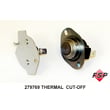
- Dryer thermal fuse WP3390719 (opens if the dryer overheats)
- Dryer heating element WP3387747 (no-heat condition)
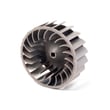
- Dryer blower wheel WP697772 (weak airflow, noise, poor drying)
Model-specific help
Use the 11062982100 owner's manual for the control panel features, troubleshooting section, and safe access guidance before servicing.
Last updated: February 2026








