Installation guide
 Owner’s manual
 Error Codes


How to tell if a dryer switch is bad?
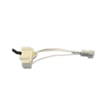
On a Kenmore dryer model 11067432600, a bad switch (most often the door switch) typically shows up as the dryer not starting even though the door is shut. The quickest confirmation is a continuity test with power disconnected, plus a simple “does the door click and align” check from the 11067432600 installation guide.
- Unplug the dryer (or switch off the breaker) before touching any wiring.
- Close the door firmly and listen for a distinct click at the door switch area.
- Confirm the door is actually closing and aligning with the catch/strike.
- Make sure the Start button is pressed firmly and a cycle is selected (some settings will not start if the dial is at Off).
- Disconnect power.
- Access the door switch (usually behind the front panel near the door opening).
- Pull the wire connectors off the switch terminals (note their positions).
- Set your meter to continuity (or lowest ohms).
- Test the switch:
- Door closed (or switch lever pressed): continuity should be present.
- Door open (lever released): continuity should be absent.
| Switch position | Expected result | What it suggests if you get the opposite |
|---|---|---|
| Door closed | Continuity | Contacts are worn/burned, switch is failing |
| Door open | No continuity | Switch is stuck closed or internally shorted |
If the switch tests good, a “won’t start” symptom can also be caused by power supply issues (for example, a tripped breaker or blown fuse) or a start circuit problem. Our 11067432600 owner’s manual troubleshooting section highlights basics like verifying the door is closed, the Start button is pressed firmly, and household fuses/breakers are OK.
The door switch is a safety interlock; if it fails open, the dryer will not run. If it fails closed, the dryer may behave unpredictably and should be repaired before regular use.
Last updated: January 2026
Is it worth replacing the heating element in a dryer?
Yes, it’s usually worth replacing the heating element in your Kenmore dryer model 11067432600 when the dryer otherwise runs normally, because a failed heater commonly causes “no heat” or very long dry times and the repair restores proper drying performance.
Replacing the heater is typically a good value when the dryer tumbles, the drum light and controls work, and airflow is good.
- The drum turns but clothes stay cold or take much longer to dry
- You have correct power but still get no heat (electric dryers need 240V)
- The venting is clear and not crushed (restricted airflow can cause overheating and repeat failures)
- The rest of the dryer is in good condition (drum support, idler, blower)
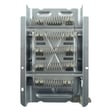
A common replacement for this model is the dryer element 279838.
Before ordering parts, we recommend ruling out the most common “no heat” causes called out in the troubleshooting guidance.
- Verify the dryer has 240V supply; electric dryers can run the motor on 120V but not heat
- Check both household fuses or breakers (many electric dryers use 2)
- Confirm the door is fully closed and Start is pressed firmly
- Inspect and clean the lint screen and vent path; avoid flexible venting that can collapse and trap lint
| What you observe | Most likely issue | What to do next |
|---|---|---|
| Drum turns, no heat | Power supply issue or heater circuit fault | Check breakers/fuses, then test heater and safety devices |
| Heat starts then stops | Airflow restriction or thermostat/fuse opening | Clean venting, then test thermostats/fuses |
| Long dry times, hot cabinet | Vent restriction | Clear/replace venting and clean lint buildup |
A dryer that cannot move air properly can overheat and repeatedly trip safety devices, which can make a new heating element fail sooner. Following the venting and safety guidance in the 11067432600 installation guide helps protect the heater circuit and improves drying efficiency.
Last updated: January 2026
What is the life expectancy of a Kenmore dryer?
Most Kenmore dryers, including model 11067432600, typically last about 13 years with normal household use. Regular airflow maintenance (lint screen, venting, and periodic internal lint removal) is the biggest factor in reaching or beating that lifespan; see the owner's manual for the recommended care schedule.
We see dryers fail early most often from overheating and airflow restriction. Focus on these habits:
- Clean the lint screen after every load.
- Keep the exhaust duct as short and straight as practical.
- Remove lint buildup from the exhaust venting on a routine schedule.
- Avoid overloading; heavy loads strain the drive system.
- Stop using the dryer if you smell burning or notice repeated overheating.
The Kenmore guidance calls out periodic lint removal beyond the lint screen.
| Task | Best practice | Why it helps |
|---|---|---|
| Lint screen | Every load | Prevents overheating and long dry times |
| Exhaust vent (duct to outside) | About every 2 years (more often with heavy use) | Reduces heat stress and improves drying |
| Inside dryer cabinet | About every 2 years (qualified service) | Removes hidden lint that can restrict airflow |
These parts do not set the lifespan by themselves, but replacing worn items can keep the dryer running smoothly:
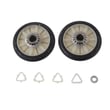
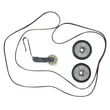
- Dryer drum belt 341241 if the drum will not turn or you hear slapping.
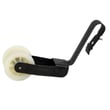
- Dryer idler pulley WP691366 if you hear squealing or chirping.
- Dryer repair kit 4392065 when you want to refresh multiple wear items at once.
A dryer that runs hot or takes too long to dry clothes wears out heaters, thermostats, and the drive system faster. Good airflow also lowers energy use and helps protect fabrics.
Last updated: January 2026
How do I tell if my dryer heating element is bad?
On your Kenmore 11067432600 electric dryer, a bad heating element usually shows up as “no heat” even though the drum tumbles. The most reliable check is a multimeter test: if the element has no continuity (open circuit), it has failed and needs replacement.
Before opening the cabinet, rule out common “no heat” causes called out in the troubleshooting guidance.
- Confirm the dryer is on the correct power supply (electric dryers need 240V)
- Check both household fuses or both sides of the breaker (the motor can run on 120V but the heater will not)
- Make sure the cycle is actually selected and the Start button was pressed firmly
- Verify the door is fully closed
- Inspect the venting for crushing, kinks, or blockage (poor airflow can cause overheating and heater shutdown)
For model-specific safety and access notes, follow the 11067432600 owner's manual.
- Unplug the dryer (and shut off the breaker).
- Access the heater housing and disconnect at least one wire from the element terminal.
- Set the meter to ohms (Ω) and measure across the element terminals.
| Meter result | What it indicates | What to do |
|---|---|---|
| ~10 to 50 Ω | Element is typically OK | Check airflow, thermostats, thermal cut-off, and power supply |
| OL / infinite / no continuity | Element is open (bad) | Replace the element |
| Very low Ω (near 0) | Possible shorted coil | Replace the element and inspect wiring |
If the element tests bad, the correct replacement for this model is the dryer element 279838.
A failed heating element is one of the most common reasons an electric dryer tumbles but does not heat. Confirming continuity prevents replacing good parts and helps you focus on other heat-circuit parts like thermostats and thermal cut-offs.
Last updated: January 2026