Error Codes


How to hard reset kenmore washer?
To hard reset your Kenmore washer model 11082872120, unplug it (or switch off the breaker) for 2 minutes, then restore power and start a normal cycle. This clears many temporary control glitches; if symptoms return, run a basic functional check and inspect common drive and drain parts.
Hard reset steps (safe and quick)
- Turn the washer OFF.
- Unplug the power cord (or turn the breaker OFF).
- Wait 2 minutes (this lets the control fully discharge).
- Restore power.
- Select a Normal cycle and press Start.
- If the washer has a lid lock, close the lid firmly and listen for the lock to engage.
If the reset did not fix it
A reset helps when the control is “stuck”, but it will not correct a mechanical failure (no spin, no drain, loud grinding, burning smell).
Common next checks on this Kenmore top-load platform:
- No drain / standing water: check for a clog at the pump and hoses; a failing pump can also cause slow or no drain (see water pump WP3363394).
- Agitates poorly or not at all: worn agitator components are common; inspect the agitator for stripped internal dogs (see agitator dog 80040) and the cam.
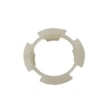
- Motor runs but won’t agitate/spin: inspect the motor-to-transmission coupler for cracking (see coupling 285753A).
- Won’t spin or slips under load: a worn clutch can prevent full-speed spin (see clutch 285785).
Quick symptom-to-part guide
| Symptom | What we check first | Related part on this model |
|---|---|---|
| Won’t drain | Pump, drain path | WP3363394 |
| Weak agitation | Agitator dogs/cam | 80040 |
| No agitate/spin but motor runs | Motor coupler | 285753A |
| Slow/weak spin | Clutch, drive system | 285785 |
Why it matters
A hard reset is the fastest way to clear a temporary control issue, but repeated failures usually point to a drain restriction, a worn drive component, or a lid/drive system problem that needs a real fix (not repeated power cycling).
Last updated: January 2026
What is the cubic foot of my Kenmore washer model 11082872120?
The exact cubic-foot capacity for Kenmore washer model 11082872120 depends on the specific tub and basket design used in this series; most Kenmore 110 top-load, agitator-style washers of this era typically fall in the about 3.2 to 3.5 cu. ft. range.
How to estimate capacity (quick, practical method)
If you want a close estimate without a spec sheet, we use the basket measurement method (it gets you in the right ballpark).
- Unplug the washer for safety.
- Measure the inside basket diameter (in inches).
- Measure the usable depth to the bottom of the basket (in inches).
- Use the calculation below.
- Compare your result to the typical ranges in the table.
Capacity estimate formula
| What to measure | What to do | Notes |
|---|---|---|
| Basket diameter | Measure straight across the inside | Ignore the rim flare |
| Usable depth | Measure from the bottom up to the normal fill line area | Do not include the top ring |
| Convert to cu. ft. | (π × (diameter/2)² × depth) ÷ 1728 | 1728 converts cubic inches to cubic feet |
Typical capacity ranges for Kenmore 110 top-load washers
These ranges help you sanity-check your estimate.
- Compact: about 2.5 to 3.0 cu. ft.
- Standard: about 3.1 to 3.6 cu. ft.
- Large: about 3.7 to 4.3 cu. ft.
Why it matters
Capacity affects how much laundry you can wash per load, how well items circulate around the agitator, and how likely you are to see out-of-balance shaking or poor cleaning when the tub is overloaded.
Related parts that can affect “usable space” and wash action
If the washer seems to “hold less” because clothes are not moving well, worn agitator components are a common cause on this style of Kenmore washer.
- Washer agitator WP389386 (damaged fins or loose fit can reduce turnover)
- Agitator dog 80040 (worn dogs can stop the upper agitator from ratcheting)
- Agitator cam 285748 (wear can affect agitation direction and grip)
Last updated: January 2026
What is the average lifespan of a Kenmore washer?
A Kenmore washer typically lasts 10 to 15 years with normal household use. For Kenmore model 11082872120, lifespan depends most on load size, leveling, water quality, and how quickly you address wear items like the drive system and drain pump.
Typical lifespan ranges
Most Kenmore washers fall into these real-world ranges:
- 10 to 12 years: heavier use (large families, frequent bulky loads)
- 12 to 15 years: average use with routine care
- 15+ years: lighter use plus timely repairs of common wear parts
| Washer type | Typical lifespan | Notes |
|---|---|---|
| Top-load (traditional) | 12 to 15 years | Often simpler mechanically; easier to service |
| Front-load | 10 to 12 years | More sensitive to maintenance and moisture control |
What shortens washer life fastest
These are the most common lifespan killers we see:
- Running overloaded or unbalanced loads (stresses clutch, drive, and suspension)
- Washer not level (increases vibration and component wear)
- Letting a slow drain continue (can overwork the pump)
- Hard water buildup affecting valves and internal passages
- Ignoring early symptoms like grinding, burning smell, or repeated no-spin events
Parts that commonly affect longevity on model 11082872120
If the washer agitates poorly, won’t spin, or won’t drain, these model-matched parts are frequent fixes:
- Agitator dog 80040 (worn dogs cause weak or one-direction agitation)
- Coupling 285753A (a common no-agitate/no-spin drive connection failure)
- Water pump WP3363394 (clogs or wear can cause no-drain or leaks)
Why it matters
Planning around a 10 to 15 year lifespan helps you decide whether to repair or replace. A single worn drive or drain component is often a cost-effective repair, while multiple major failures at once usually signals end-of-life.
Last updated: January 2026
What size is the Kenmore 11082872120 washer?
For the Kenmore 11082872120 washer, the most reliable way to confirm exact “size” (overall height, width, depth, and capacity) is to measure the cabinet and laundry opening; most Kenmore washers in this style are built around a 27-inch-wide footprint, but clearances and hookups determine real fit.
What “size” usually means for a washer
When customers ask for size, they typically need one or more of these:
- Overall width (to fit between walls or in a closet)
- Overall depth (to clear the door, hoses, and drain standpipe)
- Overall height (to fit under shelving or countertops)
- Capacity (cubic feet, which affects load size)
- Weight (important for moving and flooring)
How we recommend measuring for a correct fit
Use a tape measure and record the largest point (including protrusions):
- Measure width at the widest cabinet point.
- Measure depth from the back panel to the front edge; add room for hoses.
- Measure height from floor to top; include leveling feet adjustment.
- Measure your doorway and hallway widths for moving the washer.
Clearance planning (typical targets)
These clearances prevent kinked hoses and reduce vibration issues:
- Sides: 1 to 3 inches each side
- Back: 4 to 6 inches for fill hoses and drain hose routing
- Front: enough room to fully open the lid/door and load laundry
| Measurement you need | Where to measure | What to include |
|---|---|---|
| Width | widest cabinet point | side clearance for vibration |
| Depth | back panel to front edge | hoses, drain hose bend radius |
| Height | floor to top | leveling feet adjustment |
Why it matters
Correct sizing prevents installation problems (tight hookups, crushed hoses) and helps reduce shaking that can wear suspension and drive components over time. If you are addressing excessive movement after leveling, inspecting the washer suspension spring WP63907 is a practical next step.
Last updated: January 2026