Owner’s manual
 Error Codes



What is the average lifespan of a Kenmore Elite refrigerator?
A Kenmore Elite refrigerator like model 79571063011 typically lasts 10 to 15 years. Regular care (cleaning condenser coils, keeping door gaskets sealing, and maintaining proper airflow) helps you reach the high end of that range and reduces compressor and cooling-system strain.
Typical lifespan and what to expect
Most bottom-mount refrigerators fall into a predictable life range when used in a normal household.
| Appliance type | Typical lifespan | What usually ends the life |
|---|---|---|
| Bottom-mount refrigerator (like 79571063011) | 10 to 15 years | Sealed system or compressor repair cost |
| Well-maintained unit in a mild environment | 15 years | Wear items plus occasional control issues |
What shortens or extends lifespan
These are the biggest factors we see affecting longevity.
- Dirty condenser coils make the compressor run longer and hotter.
- Worn or leaking door gaskets cause longer run times and frost or moisture issues.
- Frequent door openings and warm room temperatures increase run time.
- Poor leveling or vibration can stress components over time.
- Water and ice system neglect (old filters, low water flow) can lead to nuisance failures.
Maintenance that pays off most
The Use & Care Guide for this Kenmore Elite model includes routine care items such as cleaning condenser coils and caring for door liners and gaskets; follow the schedule and steps in the 79571063011 owner's manual.
- Vacuum and brush condenser coils regularly.
- Wipe and inspect door gaskets; keep them clean so they seal.
- Keep vents clear inside the fresh food section and freezer.
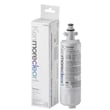
- Replace the water filter on schedule; use the correct filter such as genuine Kenmore refrigerator water filter 9690 AGF80300801 when your model uses that cartridge.
- Address unusual noises or long run times early (often tied to airflow, coils, or door sealing).
Why it matters
A refrigerator that runs excessively (often from heat load or poor sealing) uses more energy and accelerates wear on the compressor and cooling system. Keeping coils clean and doors sealing tightly is the simplest way to protect the most expensive components.
Last updated: January 2026
What does DH mean on Kenmore Elite refrigerator?
On Kenmore Elite model 79571063011, dH (often shown as Er dH) points to a defrost heating problem. The refrigerator is detecting that the defrost heater is not warming the evaporator as expected, which can lead to frost buildup and poor cooling if it continues.
What you’ll usually notice
- Frost or ice buildup on the freezer’s back wall
- Refrigerator section warming up while the freezer still seems cold
- Fan noise changing (fan hitting frost) or airflow feeling weak
- Longer run times and temperature swings
- An error code returning after you clear it
Quick checks we recommend (safe, no special tools)
- Power reset: Unplug the refrigerator for 5 minutes, then restore power.
- Confirm doors are sealing: A leaking gasket can increase frost and make defrost problems worse.
- Look for airflow blockage: Make sure vents are not blocked by food packages.
- Check for heavy frost: If the freezer back panel is packed with frost, defrost heat is likely not working.
- Review the troubleshooting steps in the 79571063011 owner’s manual.
What typically causes a dH / Er dH condition
In bottom-mount Kenmore Elite refrigerators like this one, the most common causes are in the defrost circuit.
| Likely cause | What it affects | Typical symptom |
|---|---|---|
| Defrost heater or wiring issue | No heat during defrost | Heavy frost behind freezer panel |
| Defrost sensor/thermistor issue | Incorrect temperature feedback | Intermittent defrost, recurring code |
| Control board/defrost control issue | Defrost not initiated or not powered | Code returns, cooling degrades |
| Door seal leak | Excess moisture load | Frost returns quickly after manual defrost |
When a part is commonly involved
If you’re also seeing dispenser or ice issues along with the code (from restricted airflow or icing), inspect the ice room area and door sealing surfaces. If you find a torn or deformed right-side fresh food gasket, replacing the refrigerator door gasket, right ADX73550624 can help reduce moisture intrusion that accelerates frost buildup.
Why it matters
A defrost heating fault is not just an “annoying code”; it can snowball into restricted airflow, warm refrigerator temperatures, and ice maker/dispenser problems as frost spreads.
Last updated: January 2026
Why is my Kenmore Elite refrigerator leaking water from the back?
Water leaking from the back of your Kenmore Elite refrigerator model 79571063011 is usually caused by a clogged or frozen defrost drain that overflows into the drain pan, or by a small leak at the water supply connections for the ice maker and dispenser. Use the 79571063011 owner's manual to locate access points and confirm the correct cleaning steps.
Most common causes (and what to check first)
- Defrost drain clogged or frozen: Meltwater cannot flow to the drain pan and spills.
- Drain pan shifted or cracked: Water from defrost cycles misses the pan or leaks out.
- Water line connection dripping: A loose compression nut or ferrule can seep at the rear connection.
- Tubing vibrating and rubbing: The manual notes routing the coil so it does not vibrate against the cabinet or wall; rubbing can eventually cause a leak.
- Water inlet valve leaking: The valve can seep or crack and drip down the back.
Step-by-step troubleshooting
- Unplug the refrigerator and pull it out far enough to see the back and floor.
- Look for clear water trails starting high (water line/valve area) versus low (drain pan area).
- Check the drain pan for cracks and that it is centered under the drain outlet.
- Inspect the water line connection at the rear: confirm the tubing is fully inserted and the compression nut is snug (do not overtighten).
- Check the tubing routing: coil it so it cannot vibrate against the refrigerator or wall.
- If the leak appears to start inside the freezer or fresh food section, clear the defrost drain using warm water (a turkey baster works well) until it flows freely.
Parts that commonly solve rear leaks
| Symptom | Likely area | Part to consider |
|---|---|---|
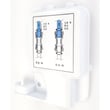
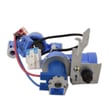
| Drip from valve area | Water supply inlet | Lg refrigerator water inlet valve AJU72992601 |
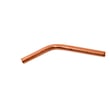
| Wet tubing or pinhole spray | Water line | Refrigerator water tubing MJU62070602 |
| Water pooling under unit after defrost | Drain pan/drain path | Clean drain and verify pan position |
Why it matters
A rear leak can lead to floor damage and can also create ice buildup that affects cooling performance. Fixing the drain path or a small water line seep early prevents bigger problems later.
Last updated: January 2026
What size is Kenmore refrigerator model 79571063011?
Kenmore Elite refrigerator model 79571063011 is a bottom-mount (bottom freezer) refrigerator in the 795.7106* series. For the exact exterior dimensions and total capacity for your specific version, we recommend confirming the specification table in the 79571063011 owner's manual.
What “size” usually means for this model
Most customers are looking for one or more of these measurements:
- Overall width (doors closed)
- Overall height (to the top hinge cover)
- Overall depth (cabinet only vs. with handles)
- Total capacity (cubic feet)
- Clearance needs (door swing and ventilation)
How we recommend measuring (so you get the right fit)
Measure your existing refrigerator and the opening so you can compare like-for-like:
- Measure width at the widest point (often the doors, not the cabinet).
- Measure height from the floor to the top hinge cover.
- Measure depth three ways: cabinet only, to door face, and to the front of the handle.
- Add space for leveling, door swing, and pull-out service access.
Quick reference: the 3 depth numbers to look for
| Depth spec | What it includes | Why it matters |
|---|---|---|
| Cabinet depth | Box only | Helps compare to counter depth |
| Depth to door | Door face, no handle | Helps with aisle clearance |
| Depth with handles | Door plus handles | Most important for tight kitchens |
Why it matters
Using the correct width, height, and depth (especially depth with handles) prevents delivery-day surprises and helps maintain proper airflow around the condenser area for reliable cooling.
Last updated: January 2026