Owner’s manual
 Error Codes


What is LG zero clearance?
LG “zero clearance” refers to a hinge and door design that lets the refrigerator doors open wide with minimal side clearance, so the unit can sit close to a wall or cabinet and still allow full access to drawers and bins. For your LG LFX31925ST, confirm the exact clearance guidance in the LFX31925ST owner's manual.
What zero clearance changes in real use
- You can place the refrigerator closer to a side wall without the door edge hitting first.
- Crisper drawers and freezer baskets are easier to pull out without removing door bins.
- Door swing is less likely to scrape adjacent cabinetry.
- It helps in tighter kitchens where the refrigerator is in a corner or alcove.
Quick placement checklist
Use these steps when planning installation space for an LG bottom-mount refrigerator:
- Measure the opening width and depth, including trim and baseboards.
- Check for obstructions like light switches, door casings, and pantry doors.
- Allow airflow space behind and above the cabinet per the manual.
- Verify the door can open enough to remove bins and shelves.
- Level the refrigerator so doors self-close and seal correctly.
Zero clearance vs standard hinges
| Feature | Zero clearance hinge design | Standard hinge design |
|---|---|---|
| Side clearance needed | Minimal | More space required |
| Door opening near a wall | Wider opening possible | Door may hit wall sooner |
| Drawer access | Typically easier | Often restricted |
Why it matters
Proper clearance affects everyday access and cooling performance. If doors cannot open far enough, you may struggle to remove the freezer basket or fully extend crispers; if airflow clearances are ignored, temperatures can become unstable.
Last updated: February 2026
How to remove bottom shelf LG refrigerator?
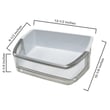
To remove the bottom shelf in your LG LFX31925ST refrigerator, we lift the front edge to release it from the supports, then slide the shelf out. If the shelf is a split or folding style, we remove the front section first, then the rear section.
Before you start
- Move food to a counter or cooler so the shelf can come out straight
- Remove the crisper drawers and any bins that block the shelf path
- Open both fresh food doors fully so the shelf clears the center mullion
- Wear cut-resistant gloves if the shelf has exposed glass edges
Step-by-step: removing the bottom shelf
- Clear the shelf completely.
- Remove drawers/bins below the shelf so you have room to lift and angle it.
- Lift the front of the shelf up about 1 to 2 inches to disengage the front tabs from the side rails.
- Slide the shelf forward until the rear hooks reach the rail openings.
- Angle and pull the shelf out through the door opening.
If your shelf is a split or folding shelf
- Retract or fold the moving section first
- Lift and remove the front section
- Then lift and slide out the rear section
Quick troubleshooting if it will not come out
- Shelf hits the door: remove the lower door bins (if installed) and try again.
- Shelf feels stuck: lift higher at the front; the tabs often bind if lifted unevenly.
- Shelf catches on drawers: pull drawers fully out or remove them.
- Shelf is wedged by ice/frost: unplug the refrigerator and let it warm slightly, then retry.
Shelf removal checklist
| What you see | What to do | Why it helps |
|---|---|---|
| Shelf will not lift | Lift front evenly with both hands | Releases both side tabs together |
| Shelf slides but will not clear | Remove crispers first | Creates the angle needed to exit |
| Shelf rubs door liner | Open doors fully, remove door bins | Prevents cracking the shelf frame |
Why it matters
Removing the bottom shelf the right way prevents cracked glass, broken shelf rails, and door liner damage. It also makes it easier to clean spills and access lower components without forcing parts.
For shelf style diagrams and the exact removal sequence used on this model, follow the LFX31925ST owner's manual.
Last updated: February 2026
Do LG refrigerators have a 10 year warranty?
Yes, many LG refrigerators include a 10-year limited warranty on the compressor; coverage for parts and labor varies by time period and by the exact warranty terms for your model. For the most accurate coverage details for your LG LFX31925ST, check the warranty section in the LFX31925ST owner's manual.
What “10-year warranty” usually means
On LG refrigerators, the 10-year term commonly applies to the compressor part (the sealed-system component that pumps refrigerant). Other items, such as the ice maker, door gaskets, sensors, and electronics, typically have shorter coverage periods.
Typical coverage breakdown (what to expect)
| Time since purchase | Compressor part | Labor | Notes |
|---|---|---|---|
| Years 0 to 1 | Covered | Covered | Often includes broader full-unit coverage |
| Years 2 to 5 | Covered | Often covered | Terms vary by model and region |
| Years 6 to 10 | Covered | Not covered | Commonly parts-only compressor coverage |
How to confirm coverage for your exact model
Use these steps so you match the warranty to the correct product and serial information:
- Locate the model and serial label inside the fresh food compartment.
- Compare the model number on the label to LFX31925ST.
- Review the warranty section in the LFX31925ST owner's manual.
- Keep your proof of purchase; warranty start dates are based on purchase or delivery date.
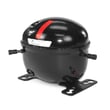
- If the compressor is the issue, note the exact part used in this model, such as the refrigerator compressor TCA38091801, for service discussions.
Why it matters
Warranty terms affect your total repair cost. A compressor repair can involve sealed-system labor, which is often the biggest expense even when the compressor part itself is covered.
Last updated: February 2026
What is the average lifespan of an LG refrigerator?
Most LG refrigerators, including the LG LFX31925ST, typically last 10 to 15 years. To reach the high end of that range, we recommend steady maintenance (clean airflow paths, good door sealing, and on-time filter changes) and avoiding overheating the compressor.
Typical lifespan and what affects it
A refrigerator’s life is mostly determined by how hard the sealed system and fans have to work.
- Heat and airflow: Dusty condenser areas make the compressor run longer.
- Door sealing: Leaky gaskets cause temperature swings and longer run times.
- Filter maintenance: Clogged filters can reduce performance and create odors.
- Loading habits: Overpacking blocks vents and reduces circulation.
- Power quality: Frequent outages or surges can stress controls and motors.
Quick maintenance checklist (best ROI)
Use these steps to extend the service life of an LG bottom-mount refrigerator.
- Vacuum and brush the condenser area regularly.
- Keep interior air vents clear of food packages.
- Confirm doors close fully and sit level.
- Replace the air filter on schedule (if equipped).
- Keep temperatures steady (avoid frequent setting changes).
Common wear items vs. major repairs
| Item type | Examples | What you’ll notice |
|---|---|---|
| Routine maintenance | Air filter, cleaning coils | Odors, warmer temps, longer run times |
| Sealing and fit | Door gasket | Moisture, frost, warm spots near the door |
| Major cooling components | Compressor, evaporator, condenser coil | Not cooling, loud running, repeated warm-ups |
Why it matters
When airflow is restricted or a door seal leaks, the compressor and fans run longer and hotter. That extra runtime is the biggest factor that shortens refrigerator lifespan and increases energy use.
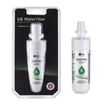
For model-specific care and settings, follow the LFX31925ST owner's manual. If you are fighting odors, replacing the LG refrigerator air filter ADQ73214408 is a common first step.
Last updated: February 2026
What is the most common problem with an LG refrigerator?
The most common problem we see with LG refrigerators like model LFX31925ST is a cooling problem: the fresh food section gets warm, the freezer temperature rises, or temperatures swing. The root cause is often in the sealed system (compressor-related) or airflow issues such as dirty condenser coils or a fan problem; confirm symptoms and checks in the LFX31925ST owner's manual.
Most common symptoms customers notice
- Refrigerator section is warm but the freezer is still partly cold
- Freezer is warm and ice production slows or stops
- Clicking, buzzing, or repeated start attempts from the back of the unit
- Frost buildup on the rear freezer panel (airflow restriction)
- Water leaking or puddles (often defrost drain related)
Quick checks we recommend before replacing parts
- Verify settings: set refrigerator to about 37°F and freezer to about 0°F.
- Check airflow: do not block vents with food packages.
- Clean the condenser area: dust buildup reduces heat release and causes poor cooling.
- Listen for fans: evaporator and condenser fans should run at times when cooling is needed.
- Look for frost patterns: heavy frost can point to a defrost or airflow issue.
Common causes and what they typically affect
| Likely cause | What you’ll notice | What to check next |
|---|---|---|
| Dirty condenser coil | Gradual warming, longer run times | Clean coil and grille area; recheck temps after 24 hours |
| Compressor or sealed system issue | Persistent warm temps, unusual compressor noises | Professional diagnosis recommended |
| Defrost system problem | Frost buildup, weak airflow | Inspect defrost sensor and evaporator area |
| Door sealing issue | Moisture, frost near door, temp swings | Check gasket contact and door alignment |
Parts that often relate to cooling complaints on this model
- Refrigerator compressor TCA38091801 (sealed system component)
- Refrigerator condenser coil ACG73645004 (heat rejection and airflow path)
- Refrigerator defrost sensor assembly 6615JB2005R (defrost temperature sensing)
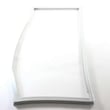
- Refrigerator door gasket, right ADX72930461 (prevents warm air leaks)
Why it matters
Cooling problems can spoil food quickly and also make the ice maker and water dispenser seem “broken” when the real issue is temperature. Catching airflow and maintenance issues early can prevent bigger failures.
Last updated: February 2026
How big is the LFX31925ST?
The LG LFX31925ST is a full-size bottom-mount refrigerator; use the exact published dimensions and capacity listed in the LFX31925ST owner's manual for delivery fit, cabinet opening, and door-swing planning. Those specs are the correct reference for your specific version and hinge/handle configuration.
What “how big” usually means (and what to check)
When customers ask about size, they typically need these exact specs from the manual:
- Overall width (cabinet and doors)
- Overall height (to top of case and to top of hinge)
- Overall depth (with handles and without handles)
- Door swing and required clearances
- Total capacity (cubic feet) and compartment breakdown
How to confirm the refrigerator will fit your space
Measure your opening and compare it to the manual specs.
- Measure opening width at top, middle, and bottom
- Measure opening height at left and right sides
- Measure opening depth to the wall, including baseboards
- Plan clearance for ventilation and for the doors to open fully
- If moving through doorways, measure the narrowest point on the path
Quick planning table
| Spec you should match | Where it’s used | What can change it |
|---|---|---|
| Width | Cabinet opening, delivery path | Door design, trim, leveling |
| Height | Overhead cabinets, soffits | Hinge cover, leveling legs |
| Depth | Counter run, walkway clearance | Handles, rear clearance |
| Clearance | Door swing, airflow | Wall placement, adjacent cabinets |
Why it matters
Using the exact LFX31925ST dimensions prevents delivery surprises, ensures proper airflow for cooling performance, and helps avoid door alignment and sealing issues that can cause moisture or warm temperatures.
Last updated: February 2026