Installation guide
 Owner’s manual


What is the average life of a Kenmore dryer?
A Kenmore dryer typically lasts 10 to 13 years. With consistent care on your Kenmore 11068732700, it’s common to reach the high end of that range because airflow, heat control, and drum support parts stay under less strain when the dryer is kept clean and properly vented.
- Vent length and bends: long runs and too many elbows reduce airflow and shorten dryer life.
- Lint buildup: lint inside the cabinet and exhaust vent increases heat stress and wear.
- Overloading: strains the drive motor, belt, idler pulley, and drum rollers.
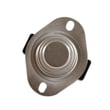
- Heat issues: overheating can damage thermostats and the heating element.
- Usage frequency: multiple loads daily wears moving parts faster.
Use your 11068732700 owner’s manual for model-specific care steps and intervals.
| Task | Best interval | Why it matters |
|---|---|---|
| Clean lint screen | Every load | Improves airflow and drying time |
| Clean exhaust vent run | About every 2 years (more with heavy use) | Reduces overheating and wear |
| Clean inside dryer cabinet (qualified service) | About every 2 years | Removes hidden lint near heat and moving parts |
| Check vent routing and length | At install and after moves | Prevents restricted airflow |
Your installation guidance for the 11068732700 is clear: keep the vent path straight, use the fewest turns, and do not exceed the vent-length limits in the vent chart because overly long venting shortens dryer life and increases drying time and energy use. Use the 11068732700 installation guide to match your vent material and hood style to the correct maximum length.
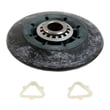
If you hear squealing, thumping, or grinding, these are frequent wear items:
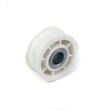
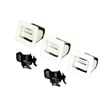
- Support WPW10314173 (drum support roller)
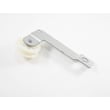
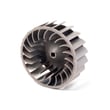
- Dryer idler pulley 279640
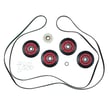
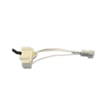
- Dryer repair kit 4392067 (common wear-item bundle for many Kenmore-built-by-Whirlpool designs)
A dryer that is clean and correctly vented runs cooler and dries faster; that reduces stress on the heating system (heating element, operating thermostat) and the drive system (motor, rollers, idler), which directly extends service life.
Last updated: January 2026
Is it worth replacing the heating element in a dryer?
Yes, it’s usually worth replacing the heating element in a Kenmore dryer model 11068732700 when the dryer still tumbles, the cabinet and drum are in good shape, and the repair cost is well below replacement. Before buying parts, we confirm the dryer has full 240V power because a tripped breaker can mimic a bad heater.
- The drum turns but there’s no heat (common heating element symptom)
- The dryer is otherwise reliable (no major motor, drum, or control issues)
- You’ve checked both household fuses/breakers (electric dryers often use two)
- The venting is clear (restricted airflow can overheat and damage heating parts)
- The repair cost makes sense compared to a new dryer
The installation and troubleshooting guidance for this model emphasizes verifying power and basic conditions first.
- Confirm power: Electric dryers typically need a 240V supply; if one breaker trips, the dryer may run but not heat.
- Run a heat check: After about 5 minutes, open the door and feel for heat.
- Inspect airflow: Clean the lint screen and make sure the exhaust duct is not crushed or clogged.
| Symptom | Likely cause | Best next step |
|---|---|---|
| Drum tumbles, no heat | One house breaker tripped | Reset/check both breakers/fuses |
| No heat, intermittent heat | Overheating from poor venting | Clean venting, then retest |
| No heat after power is confirmed | Failed heating circuit part | Test heating element and thermostats |
If testing shows the heater is open (failed), we often check the safety controls at the same time because they protect the heater from overheating.
Replacing the heating element can restore normal dry times and prevent repeat failures when paired with good airflow and properly working thermostats. It also avoids unnecessary replacement when the real issue is a power supply problem.
For model-specific operating and troubleshooting steps, use the 11068732700 owner’s manual.
Last updated: January 2026
How to hard reset a Kenmore dryer?
To hard reset your Kenmore dryer model 11068732700, unplug the dryer (or switch off the breaker) for 1 to 5 minutes, then restore power and start a cycle. This clears many temporary control or cycle issues, but it will not fix airflow restrictions or failed safety parts.
- Turn the Cycle Selector to Off.
- Unplug the dryer (or turn off both dryer breakers if it is hardwired).
- Wait 1 to 5 minutes.
- Restore power.
- Close the door fully.
- Select a cycle and press PUSH TO START.
For model-specific operating steps and normal start procedure, use the 11068732700 owner's manual.
A “reset” often seems like it worked when the real issue is intermittent power, a door switch problem, or a control not being set to an active cycle.
- Confirm the dryer is set to a running position (not Off).
- Push the start button firmly.
- Verify the door is fully closed.
- Check the home electrical supply; many dryers use two fuses or two breakers, and one can trip while the other stays on.
- If the door feels loose or the dryer stops when you open and close it, test the door switch.
Common part match for a no-start door circuit: Dryer door switch WP3406107.
Poor airflow can cause long dry times, overheating, and repeated shutdowns. The installation instructions call out avoiding a vent that is crushed or kinked and ensuring the vent is clean.
- Clean the lint screen before every load.
- Inspect the exhaust duct behind the dryer for kinks.
- Clean the vent run to the outside hood.
- Make sure the outside hood opens freely.
Use the 11068732700 installation guide for vent connection and final checks.
| Symptom | Reset helps? | Most common next step |
|---|---|---|
| Control acting “stuck” or cycle won’t change | Yes | Power cycle 1 to 5 minutes |
| Dryer will not start at all | Sometimes | Check door switch and power supply |
| Long dry times or hot cabinet | No | Clean/repair venting and lint buildup |
A hard reset clears temporary cycle or control glitches, but starting and heating problems are usually caused by power supply issues, door switch faults, or restricted venting. Fixing the root cause prevents repeat shutdowns and protects key components like the heating system.
Last updated: January 2026
How do I tell if my dryer heating element is bad?
If your Kenmore dryer model 11068732700 runs but produces little or no heat, the heating element is a top suspect, but we first confirm the dryer has full 240V power (two fuses or breakers). After power checks, a continuity test on the element typically confirms failure.
- Make sure the cycle is a heated cycle (not Air Fluff or similar).
- Verify the dryer is getting full power: electric dryers need 240V.
- Check both household fuses or breakers; the drum can tumble with only one side of power.
- Start the dryer and after about 5 minutes, carefully open the door and feel for heat.
- Confirm the door closes firmly; a failed door switch can prevent proper operation.
- Unplug the dryer (or switch off both breakers).
- Access the heater terminals (follow the access steps in the 11068732700 installation guide).
- Remove at least one wire from the element terminal.
- Use a multimeter on continuity or resistance:
- Good element: shows continuity (and a finite resistance reading).
- Bad element: shows no continuity (often reads OL or infinite resistance).
| What you observe | Most likely cause | What to do next |
|---|---|---|
| Drum tumbles, no heat | One breaker tripped or one fuse blown | Restore full 240V supply |
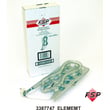
| Full power present, no continuity at element | Heating element failed | Replace dryer heating element WP3387747 |
| Heat is weak, cycles take too long | Airflow restriction or lint buildup | Clean venting and lint ducting |
| Dryer will not start when door closes | Door switch issue | Inspect/replace dryer door switch WP3406107 |
A failed heating element is common, but restricted airflow can also cause no-heat symptoms and can overheat the heater circuit. Confirming power and airflow first helps prevent repeat failures after replacing parts.
Last updated: January 2026