 Owner’s manual
 Error Codes



What is the average lifespan of a Kenmore 59672282202 Elite refrigerator?
A Kenmore Elite refrigerator like model 59672282202 typically lasts 10 to 15 years. Regular upkeep (cleaning condenser coils, keeping door seals tight, and maintaining proper temperatures) helps you reach the high end of that range and reduces the chance of costly sealed-system repairs.
Typical lifespan and what to expect
Most bottom-mount refrigerators fall into a predictable ownership pattern:
- 0 to 5 years: Mostly minor issues (lights, switches, ice maker adjustments)
- 5 to 10 years: Wear items show up (door alignment, ice maker parts, water valve issues)
- 10 to 15 years: Higher chance of major repairs (cooling performance, sealed system)
- 15+ years: Many units still run, but repairs can become less cost-effective
| Item | Typical impact on lifespan | What you can do |
|---|---|---|
| Condenser coil cleanliness | High | Vacuum and brush coils regularly |
| Door gasket seal | High | Keep seals clean; confirm doors close fully |
| Ice maker and water system | Medium | Replace filters on schedule; prevent freezing/clogs |
| Temperature settings | Medium | Keep fridge about 37°F and freezer about 0°F |
Maintenance that adds years
These steps make the biggest difference for a Kenmore bottom-mount refrigerator:
- Clean dust from the condenser area so the compressor runs cooler
- Keep the freezer drawer closing smoothly and fully (avoid air leaks)
- Replace failed lighting and door switches promptly (interior heat adds load)
- Use the correct water filter and flush air from the line after changes
- Watch for early symptoms: warm temps, long run times, unusual clicking or buzzing
Why it matters
Once a refrigerator reaches the 10 to 15 year window, preventing heat buildup and air leaks is the fastest way to reduce compressor workload. That directly affects energy use, temperature stability, and how long major components last.
For model-specific care and operating guidance, follow the maintenance and use instructions in the owner's manual.
Last updated: February 2026
How do I know what model Kenmore refrigerator I have?
Your Kenmore Elite refrigerator’s model number is printed on the model and serial number sticker inside the fresh food (refrigerator) section. For model 59672282202, the sticker is typically on the left interior wall; match that full number exactly when looking up parts and manuals like the owner's manual.
Where to look for the model number
Check these common locations first (use a flashlight and look for a white or silver label):
- Left wall inside the refrigerator compartment (most common for this model)
- Side wall near the crisper drawers
- Ceiling area inside the fresh food compartment
- Behind or beside a crisper drawer (remove the drawer to see the label)
- Along the door frame when the refrigerator door is open
What the model number looks like (and why it matters)
Kenmore model numbers are usually a full string of numbers and sometimes a dot. For this unit, you should see 59672282202 (sometimes shown as 596.72282202 on paperwork).
Why it matters
Using the exact model number ensures you get the right fit and function for parts like an ice maker, light switch, or water filter housing.
| What you’re doing | Use this identifier | Example for this refrigerator |
|---|---|---|
| Finding the correct parts list | Model number | 59672282202 |
| Confirming the exact unit | Serial number + model number | From the same interior sticker |
| Using operating and care info | Manual | Owner's manual |
Quick tips to avoid ordering the wrong part
- Copy the model number directly from the sticker; do not guess from the door style or color
- Include every digit; one missing number can pull up a different Kenmore refrigerator
- If the label is hard to read, take a photo and zoom in
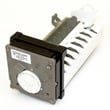
- Use the model number when selecting parts such as the refrigerator ice maker D7824706Q
Last updated: February 2026
How do you level a Kenmore 59672282202 Elite refrigerator?
To level your Kenmore Elite refrigerator model 59672282202, adjust the front roller adjustment screws to raise or lower the front, then set the stabilizing legs so the cabinet is level side to side and slightly higher in front (about 1/4 inch or 1/2 bubble) to help the doors close properly. See the owner's manual for the exact steps and access points.
Step-by-step leveling procedure
- If your refrigerator will be connected to a water supply for an ice maker, connect the water supply first, then level.
- Protect soft flooring (vinyl, wood, tile) with cardboard or rugs before moving or adjusting the unit.
- Remove the toe grille and the bottom bracket covers.
- Use a 3/8-inch hex head driver to turn the left and right roller adjustment screws to raise or lower the front.
- Level the cabinet side to side by balancing the left and right adjustments.
- Turn each stabilizing leg clockwise until it is firmly against the floor.
- After the stabilizing legs are set, turn the roller adjustment screws firmly against the floor, then back them off 2 to 3 turns counterclockwise so the refrigerator’s weight rests on the stabilizing legs.
- Confirm the front is about 1/4 inch higher than the back (or about 1/2 bubble on a level).
Quick checks after leveling
- Doors should close on their own from a partially open position.
- The refrigerator should not rock when you push gently on the corners.
- Drawer and door gaps should look even.
| What you’re checking | What “correct” looks like | What to adjust |
|---|---|---|
| Side-to-side level | Bubble centered | Left/right roller adjustment screws |
| Front-to-back tilt | Front slightly higher | Roller screws and stabilizing legs |
| Stability | No rocking | Stabilizing legs (firm contact) |
Why it matters
Proper leveling reduces vibration and noise, helps the doors seal consistently, and prevents warm air leaks that can cause temperature swings, frost, or excess compressor run time.
Last updated: February 2026
Why is my Kenmore 59672282202 Elite refrigerator leaking water out of the bottom?
Water leaking from the bottom of your Kenmore Elite 59672282202 refrigerator is usually caused by a clogged defrost drain that overflows into the base, or a leak in the water supply system (tubing, fittings, or the water inlet valve). Use the owner's manual to locate access points and follow safe shutoff steps.
Quick checks (fastest way to narrow it down)
- If the leak is only after defrost or you see ice under the freezer floor, suspect a defrost drain clog.
- If the leak happens during ice maker fills or when dispensing water, suspect water tubing or the inlet valve.
- If you recently installed or moved the refrigerator, recheck the water connection and look for slow drips.
- If the leak is clear and clean, it is typically supply water; if it is dirty, it is often drain pan overflow.
- If the freezer is warm and the leak is worse, ice buildup can block airflow and contribute to drain issues.
Step-by-step troubleshooting
- Unplug the refrigerator and pull it out enough to inspect behind and underneath.
- Check the drain pan for cracks, misalignment, or overflow.
- Inspect the water line and fittings for moisture; tighten compression nuts by hand first, then snug with a wrench (do not overtighten).
- Confirm water pressure is in range; most setups need 20 to 100 psi, and 35 psi minimum if a water filter is installed.
- If you suspect the valve is seeping, inspect and test the water inlet valve; replacement is commonly the fix: refrigerator valve WP12544002.
Common causes and what you will see
| What you notice | Most likely cause | Where to look |
|---|---|---|
| Water/ice under freezer bin | Defrost drain clogged or frozen | Freezer floor, drain trough |
| Drip behind unit near wall | Supply line or fitting leak | Rear lower area |
| Leak during ice maker fill | Valve or tubing seep | Valve area, tubing runs |
| Slow puddle over days | Tiny fitting seep or valve seep | Rear connections, valve |
Why it matters
Even a small leak can damage flooring and can also lead to corrosion, moldy odors, and cooling problems if water freezes where it should not. Fixing the source early protects the sealed system and helps your ice maker and dispenser work reliably.
Last updated: February 2026
What are the common problems with Kenmore 59672282202 Elite refrigerators?
Common problems on the Kenmore Elite 59672282202 bottom-mount refrigerator include warm temperatures from dirty condenser coils or airflow blockages, water and ice issues caused by low water pressure or valve problems, and “too loud” operation that is often normal compressor, fan, or defrost-heater noise. For model-specific checks and adjustments, use the owner's manual.
Most common symptoms and what to check first
- Food too warm: confirm doors seal and close fully; clean condenser coils; make sure the rear air grille under the crispers is not blocked.
- Refrigerator runs too often: reduce door openings; verify controls are set correctly; clean coils; check for heat sources nearby.
- Water leaks: inspect the water supply connection; avoid plastic tubing; look for loose fittings and cracked lines.
- Slow water flow or small/hollow ice: check household water pressure; reverse osmosis systems commonly reduce pressure.
- Unfamiliar noises: buzzing during ice maker fill, humming from the compressor, and hissing/popping during defrost can be normal.
Quick troubleshooting steps (in order)
- Set temperatures to normal targets: 37°F fresh food and 0°F freezer.
- Clean condenser coils and clear airflow paths (rear air grille under crispers).
- Check door gaskets for a full seal; remove bins or containers that prevent closing.
- If you have an ice maker, confirm the water supply is on and pressure is adequate.
- If water issues persist, test the inlet valve and related tubing; replace worn parts as needed.
Normal sounds vs. problem sounds
| Sound | Often normal on this model | When it points to a problem |
|---|---|---|
| Buzzing | Ice maker water valve energizing during fill | Buzzing repeats with no water entering (possible low pressure or valve issue) |
| Humming | Compressor running | Loud hum with poor cooling (possible compressor start or sealed-system issue) |
| Hissing/popping | Defrost heater operating | Persistent sizzling with water leak signs |
Parts that commonly relate to these issues
If troubleshooting points to a failed component, these model-matched parts are commonly involved:
- Ice production problems: refrigerator ice maker D7824706Q
- Slow water flow or no ice fill: refrigerator valve WP12544002
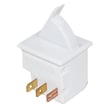
- Light not working or door sensing issues: refrigerator switch W11396033
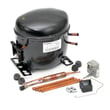
- Cooling failure after other checks: refrigerator compressor W10160407
Why it matters
Warm temperatures, frequent running, and water/ice symptoms often share the same root causes: restricted airflow, dirty coils, poor door sealing, or low water pressure. Fixing those basics first prevents unnecessary part replacement and helps restore stable cooling.
Last updated: February 2026





