Owner’s manual
 Error Codes


How to identify a Kenmore washer model?
Your Kenmore washer model number is printed on the model and serial number plate; for model 11028912791, use that exact number when ordering parts or looking up troubleshooting steps. On most Kenmore top-load washers, the plate is typically under the lid or on the cabinet opening near the tub.
Where to look on Kenmore washers
Check these common locations first (starting with the easiest):
- Under the washer lid, around the tub opening or underside of the lid
- On the cabinet rim where the lid closes (top edge of the opening)
- On the back panel near the power cord entry
- Behind the control console (some designs)
- Inside the front panel area (less common on top-load models)
For model-specific labeling and how the plate is referenced in documentation, use the 11028912791 owner's manual.
What the model number looks like (and why it matters)
Kenmore model numbers are often long and may include a prefix that identifies the manufacturing source. Using the full model number helps us match the correct washer parts list, diagrams, and compatible replacements.
Quick check table
| What you find | What to do next | Why it helps |
|---|---|---|
| Model number (example: 11028912791) | Use it exactly as printed | Ensures correct part fit |
| Serial number | Record it too | Helps date and production run |
| Plate is missing or unreadable | Check the back panel and cabinet rim | Most common alternate locations |
Tips to avoid ordering the wrong part
- Copy the model number exactly, including all digits
- Take a clear photo of the plate before it wears further
- Match the part by name and ID when possible (example: washer lid switch WP3949238)
- If you are troubleshooting a no-start condition, confirm the lid closes and latches properly before replacing parts
Why it matters
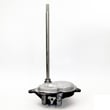
Kenmore washers often share similar styling across multiple series, but internal components (like the lid switch, drain pump, or gear case) can vary by model. The correct model number is the fastest way to get the right Kenmore washer parts the first time.
Last updated: February 2026
Is it worth repairing a Kenmore washing machine?
Yes, repairing a Kenmore washer is worth it when the fix restores reliable washing and spinning for less than the cost of replacing the machine. For Kenmore model 11028912791, common wear items (like the lid switch or drain pump) are straightforward repairs that often extend service life.
Quick way to decide (cost vs. value)
Use this checklist before you buy parts or schedule service:
- Compare the repair total (parts + labor) to the price of a comparable new washer.
- Prioritize repairs that solve no-spin, no-drain, or no-agitate symptoms.
- If the washer is leaking from the tub area or has major drive-train noise, expect a higher-cost repair.
- Confirm the washer is installed level; an unlevel washer can mimic “bad parts” with vibration and off-balance spinning.
- Use the model and serial number plate info when ordering parts to avoid mismatches (details in the 11028912791 owner's manual).
Repairs that are usually “worth it” on this model
These are common, high-impact fixes on direct-drive style Kenmore top-load washers:
| Symptom | Likely area | Example part for this model |
|---|---|---|
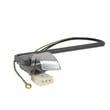
| Won’t spin or stops when lid opens/closes | Safety interlock | Washer lid switch WP3949238 |
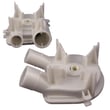
| Won’t drain or drains slowly | Pump or blockage | Washer drain pump WP3363394 |
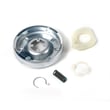
| Agitates poorly or “ratcheting” sound | Agitator dogs | Agitator dog 80040 |
| Motor runs but basket does not move correctly | Drive coupling | Coupling 285753A |
Why it matters
A targeted repair keeps a proven Kenmore platform running and avoids replacing the entire washer for a single failed component. The owner’s manual also calls out installation checks (leveling, tight front-leg nuts, water supply on) that directly affect vibration, noise, and performance.
Before you commit to a repair
- Unplug the washer and turn off water supplies.
- Re-level the cabinet and tighten the front-leg nuts.
- Run a test cycle and note: fill, agitate, drain, spin.
- If the washer will not drain, check the pump and drain hose routing.
Last updated: February 2026
What is the average lifespan of a Kenmore washer?
A Kenmore washer typically lasts 10 to 15 years with normal household use. For Kenmore model 11028912791, following the operating, care, and safety guidance in the 11028912791 owner's manual helps you reach the high end of that range by reducing wear on the drive system, pump, and lid switch.
What affects washer lifespan most
- Overloading (stresses the gearcase, clutch, and drive components)
- Unbalanced loads (increases vibration and suspension wear)
- Poor draining (forces the pump to work harder and can leave water behind)
- Water quality (sediment can shorten inlet valve life)
- Skipped maintenance and cleaning (leads to odors, residue, and extra strain)
Quick maintenance that extends life
Use these habits to keep your Kenmore top-load washer running longer:
- Load loosely; keep bulky items balanced around the basket
- Use the right amount of HE or standard detergent for your washer type
- Turn off water supply valves if the washer will sit unused for long periods
- Check hoses periodically for bulges, cracking, or seepage
- Address small issues early (slow drain, no spin, intermittent start)
Common “end-of-life” symptoms and likely parts
| Symptom | Common cause | Example part for this model |
|---|---|---|
| Won’t spin or stops mid-cycle | Lid switch not sensing closed lid | Washer lid switch WP3949238 |
| Won’t drain or drains slowly | Pump obstruction or failing pump | Washer drain pump WP3363394 |
| Agitator moves poorly or slips | Worn agitator dogs | Agitator dog 80040 |
Why it matters
A washer that is maintained and repaired early usually avoids secondary damage. For example, a no-drain problem can turn into repeated overloads and out-of-balance spinning, which accelerates wear on the clutch, suspension, and gearcase.
Last updated: February 2026