Owner’s manual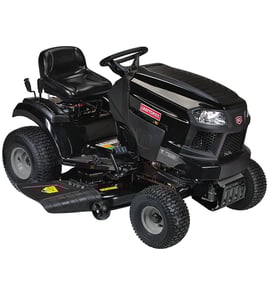



What brand engine does Troy-Bilt use?
Troy-Bilt uses engines from multiple manufacturers depending on the specific tractor and production run. For the Troy-Bilt lawn tractor model 13AT609G766, the documentation indicates the tractor uses a Briggs & Stratton engine (engine care is covered in the separate Briggs & Stratton Operator/Owner Manual referenced by Troy-Bilt).
Use these quick checks to verify what is installed on your tractor today:
- Look for the engine label on the blower housing or valve cover; it typically lists the manufacturer and model.
- Check the engine shroud decal for the engine family and displacement.
- Match the engine model and type numbers to the engine maker’s parts lookup.
- Use the tractor’s documentation to confirm what manuals apply to your unit.
- If the engine has been replaced, rely on the engine tag, not the tractor model number.
For model-specific operating and maintenance details, use the 13AT609G766 owner’s manual.
Troy-Bilt has commonly used these engine brands across different riding mower and lawn tractor models:
| Engine brand | Where you’ll usually see it | What it affects most |
|---|---|---|
| Briggs & Stratton | Many residential lawn tractors | Tune-up parts, oil type, air filter, spark plug |
| Kohler | Some mid to higher tier tractors | Fuel system parts, charging system, service intervals |
| Cub Cadet branded engines (varies by model) | Select MTD-built platforms | Service parts sourcing and manual references |
The engine brand determines the correct oil, spark plug, air filter, fuel filter, and service procedures. On 13AT609G766, Troy-Bilt points you to the Briggs & Stratton Operator/Owner Manual for engine care, so using the right engine-specific information helps prevent hard starting, poor performance, and premature wear.
Last updated: January 2026
What engine is in the Troybilt 13AT609G766?
The Troy-Bilt lawn tractor model 13AT609G766 uses a Briggs & Stratton engine (15.5 HP is a common rating for this Pony 42-style tractor). For the exact engine model and specification label, use the engine identification steps in the 13AT609G766 owner's manual.
Use these quick checks so you get the right tune-up parts and service info:
- Look for the engine ID label on the blower housing, valve cover, or near the starter
- Record the engine model, type, and code (Briggs & Stratton format)
- Match those numbers when ordering engine parts like air filters, spark plugs, and fuel filters
- If the label is dirty, wipe it clean; do not scrape it
- Use the engine maker's manual for engine-only specs, adjustments, and warranty details
The tractor manual explains that the engine manufacturer is responsible for engine-related specifications, power rating, warranty, and service, and it directs you to the engine maker's Owner's/Operator's Manual for details.
Briggs & Stratton engines can look similar across multiple Troy-Bilt tractors, but the model/type/code determines the correct carburetor parts, ignition parts, and governor settings.
| Item to record | Where you use it | Example format |
|---|---|---|
| Engine model/type/code | Engine parts and service | Briggs & Stratton model-type-code |
| Tractor model number (13AT609G766) | Deck, steering, chassis parts | 13AT609G766 |
| Tractor serial number | Support and production variations | Varies by unit |
Last updated: January 2026
Is the Troybilt 13AT609G766 any good?
Yes. The Troy-Bilt 13AT609G766 (Pony-series style) is a solid value lawn tractor for typical residential mowing; it is built for straightforward cutting and basic towing, not heavy ground-engaging work. For the best results, follow the setup, operation, and maintenance steps in the 13AT609G766 owner's manual.
Many owners like this type of Troy-Bilt rider because it is easy to operate and delivers a clean cut when the deck is set up correctly.
- Good fit for flat to moderately sloped yards and weekly mowing
- Simple controls and familiar riding mower layout
- Stronger cut quality when blades are sharp and the deck is level
- Supports common accessories like baggers and mulch kits (model-dependent)
Some “not so good” feedback usually traces back to setup, deck condition, or wear items.
- Vibration or noise: check blade condition, spindle play, and fasteners
- Uneven cut or scalping: level the deck and confirm tire pressures match side-to-side
- Poor discharge or clumping: clean the deck underside and avoid mowing wet grass
- PTO engagement issues: inspect the engagement linkage and belt routing
A practical first upgrade for cut quality is replacing a worn or bent blade with the correct OEM-style blade such as the lawn mower blade 742-0616A.
The manual for this tractor family is clear that it is not intended for ground-engaging attachments.
| Task | Fit for 13AT609G766? | Notes |
|---|---|---|
| Weekly mowing | Yes | Best with a leveled deck and sharp blades |
| Bagging/mulching | Often | Accessory compatibility varies by configuration |
| Light towing (yard cart) | Often | Stay within the manual’s guidance |
| Tilling/plowing/ground engaging | No | Not designed for that use |
Most “this mower is great” vs “this mower is terrible” experiences come down to maintenance and correct deck setup. Blades, belts, tires, and deck adjustments are normal wear items; keeping them in spec protects cut quality and reduces vibration.
- How to tune up a riding lawn mower video
- How to level a riding lawn mower deck for an even cut video
- Riding lawn mower blades video
Last updated: January 2026