Installation guide
 Owner’s manual
 Error Codes


How to identify a Kenmore washer model?
Your Kenmore washer model number is printed on the appliance’s model and serial tag. On Kenmore model 1105142510, you’ll typically find that tag under the lid (top-load) or around the lid opening area; the number often starts with 110 and is what we use to match the correct parts and diagrams.
Where to look on the washer
Check these common tag locations first:
- Under the lid, along the rim of the tub opening
- On the underside of the lid itself
- On the back panel near the power cord entry
- Near the control panel area (rear or side edge)
- Inside the cabinet opening if the top is lifted for service
What the model number looks like (and why it matters)
For Kenmore washers, the model number is usually a long numeric string (often starting with 110). Using the exact model number prevents ordering a similar-looking part that will not fit, such as a lid lock, inlet valve, or drive belt.
| What to record | Example for this washer | Why we need it |
|---|---|---|
| Model number | 1105142510 | Matches parts to the correct design |
| Serial number | (from the same tag) | Helps confirm production version |
| Type | Kenmore washer | Narrows diagrams and troubleshooting |
Quick tips to avoid mix-ups
- Copy the model number exactly as shown (all digits, no spaces)
- Take a clear photo of the tag before ordering parts
- If the tag is worn, look for a second label on the back panel
- Use the model number when checking procedures in the 1105142510 owner’s manual
Why it matters
Kenmore washers can share similar cabinets and controls across multiple model numbers, but internal components (like the washer lid lock W11307244 or washer drive belt WPW10006384) can vary by revision. The correct model number is the fastest way to get the right replacement part the first time.
Last updated: February 2026
What is the average lifespan of a Kenmore washer?
A Kenmore washer typically lasts 10 to 15 years. For your Kenmore 1105142510, regular care (proper loading, correct detergent, and routine cleaning) helps you reach the high end of that range and reduces wear on drive and water-handling parts.
Typical lifespan and what affects it
Most washers land in the same general window, but real-world life depends on usage and maintenance.
- Loads per week: more cycles equals faster wear
- Overloading: strains the drive system and suspension
- Water quality: sediment can shorten valve life
- Detergent habits: too much detergent can cause residue and odors
- Leveling and vibration: out-of-level cabinets increase mechanical stress
Common wear items that can shorten washer life
These are frequent failure points on many Kenmore washers, including the 1105142510.
| Symptom | Common area involved | Example model-matched part |
|---|---|---|
| Won’t spin, squeals, burning rubber smell | Belt and pulley drive | Washer drive belt WPW10006384 |
| Slow fill, no fill, fill errors | Water inlet system | Washer water inlet valve W11210459 |
| Lid won’t lock, won’t start, stops mid-cycle | Lid lock system | Washer lid lock W11307244 |
Maintenance that extends lifespan
We recommend following the routine care steps in the 1105142510 owner’s manual.
- Keep the washer level to reduce vibration and gearcase stress
- Avoid overfilling; load loosely for better wash action
- Use HE detergent if your cycle guide calls for it; measure carefully
- Run periodic cleaning cycles and wipe down the tub and lid area
- Check hoses for kinks and ensure steady water supply to prevent long fill times
Why it matters
A washer that is loaded correctly and maintained consistently runs with less strain on the motor, belt, gearcase, and valves. That directly improves reliability, reduces nuisance stoppages, and helps you get the full 10 to 15 years of service.
Last updated: February 2026
What replacement parts are most commonly needed for the 1105142510?
For Kenmore washer model 1105142510, the most commonly replaced parts are the ones tied to everyday wear (drain, fill, drive, and lid/lock functions). If your washer won’t fill, won’t drain, won’t spin, or won’t start, these are the first parts we check, along with the troubleshooting steps in the installation guide.
Commonly replaced parts for this model
These parts are frequently involved when the washer has no-spin, no-agitate, leaking, or won’t-start symptoms:
- Washer water inlet valve W11210459 (fill problems, slow fill, no fill)
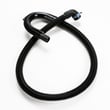
- Washer drain hose W11244231 (leaks, siphoning, drain issues)
- Washer lid lock W11307244 (won’t start, lid won’t lock, stops mid-cycle)
- Washer drive belt WPW10006384 (won’t spin or agitate, burning rubber smell)
- Whirlpool washer drive pulley W10721967 (belt slipping, squealing, poor spin)
- Washer gear case W11454741 (loud grinding, no agitation, no spin)
Quick symptom-to-part guide
| Symptom | Most likely part(s) to check first | What to look for |
|---|---|---|
| Won’t fill or fills slowly | Water inlet valve | Debris in screens, valve not opening |
| Won’t start or won’t lock | Lid lock, strike | Lock not engaging, broken strike |
| Won’t spin or weak spin | Drive belt, drive pulley | Belt worn, pulley damaged |
| Leaks during drain | Drain hose, clamp | Cracks, loose connections |
Why these parts matter
On the 1105142510, the washer has to sense a safe lid lock before it will run; it also relies on consistent water pressure and a solid drive system (belt and pulley) to agitate and spin. A small failure in any of these areas can stop the whole cycle.
Installation and fit tips
Use these checks to avoid ordering the wrong item:
- Match the part to model 1105142510 before ordering.
- Compare your original part’s markings and connector style.
- For fill issues, confirm home water pressure is typically 20 to 100 psi.
- Replace worn hoses or clamps at the same time to prevent repeat leaks.
Last updated: March 2026