 Installation guide
 Owner’s manual




How to hard reset a Kenmore dishwasher?
For the Kenmore dishwasher model 58715159400, a “hard reset” is done by canceling the current cycle and clearing the control selection. Use the RESET button on the control panel, then reselect a cycle and restart the dishwasher (see the 58715159400 owner's manual).
Use the option that matches what your dishwasher is doing:
- Cancel a cycle: press RESET once to turn off a selected option or clear the current selection.
- Restart after canceling: turn the dial clockwise to your desired cycle, then close the door to latch and start.
- Clear a stuck option light: press RESET to turn the option off.
- End-of-cycle light won’t go off: turn the dial slightly until the CLEAN light goes off.
- Open the door and wait a few seconds.
- Press RESET on the control panel.
- Turn the cycle dial clockwise to a fresh cycle selection.
- Run hot water at the nearest faucet until it is hot, then turn it off.
- Close the door firmly until it latches.
These checks fix most no-response situations without replacing parts:
| What you see | What to do next |
|---|---|
| Timer dial turns but nothing runs | Confirm the door is fully latched; reselect cycle and latch door again. |
| Option light stays on | Press RESET to turn the option off, then reselect. |
| Cycle seems to pause a long time | If HIGH TEMP WASH is selected, the timer can pause while water heats to about 140°F. |
Resetting the control correctly prevents partial fills, incomplete draining, and “stuck” option selections. It also helps you avoid misdiagnosing a normal heat pause (common with HIGH TEMP WASH) as a failure.
Last updated: February 2026
How do I tell which Kenmore dishwasher I have?
To tell which Kenmore dishwasher you have, we look up the model number on the rating label inside the door. For Kenmore model 58715159400, the label lists both the model number and serial number, which you can use to match the correct parts and manual.
Most Kenmore dishwashers place the rating label on the inner edge of the door opening. Check these common spots:
- Along the left side of the inner door frame
- Along the right side of the inner door frame
- On the top edge of the tub opening (near the latch area)
- On the door itself, near the side edge
If the label is hard to read, wipe it gently with a damp cloth and read it under a bright light.
Record these items exactly as shown:
- Model number (example: 58715159400)
- Serial number (unique to your unit)
- Purchase date (if you still have it)
- Any suffixes or extra digits/letters shown on the label
The model number is what ensures you get the right Kenmore dishwasher parts (like a spray arm, water inlet valve, or door latch) and the correct procedures for service and troubleshooting.
| Item | What it identifies | When we use it |
|---|---|---|
| Model number | The exact dishwasher design/version | Picking correct parts and diagrams |
| Serial number | Your specific unit | Service history and production details |
Once you confirm the model number, use the matching documentation for operating and care details:
- Review the owner's manual for feature descriptions, loading tips, and common problem solutions.
Last updated: February 2026
Why is water standing in the bottom of my Kenmore dishwasher?
Water standing in the bottom of your Kenmore 58715159400 dishwasher after a completed cycle is not normal; it almost always means the unit is not draining properly. We focus first on the drain path (disposer connection, drain hose, and drain pump) and then check for a stuck overfill protector (float). See the owner's manual for model-specific checks.
- Confirm the cycle fully ended (some cycles pause briefly during spray-arm switching).
- If your dishwasher drains through a food waste disposer, make sure the disposer is empty.
- If the dishwasher is newly installed or recently reconnected to a disposer, make sure the disposer inlet knockout plug was removed.
- Inspect the drain hose for kinks, crushing, or a sag that traps water.
- Check that the dishwasher is level; poor leveling can affect draining and leak protection.
If the drain path is clear but water still remains, these parts are common suspects:
- Drain pump: look for debris in the impeller area or a weak pump.
- Overfill protector (float): it should move up and down freely; clean underneath if it sticks.
- Water inlet valve: a valve that seeps can slowly refill the tub after draining.
| Symptom | Most likely cause | What to do next |
|---|---|---|
| Water remains right after cycle ends | Drain restriction or drain pump issue | Check hose/disposer connection; inspect pump |
| Water returns hours later | Slow fill from inlet valve | Test/replace inlet valve |
| Intermittent draining | Float sticking or partial clog | Clean float area; recheck hose routing |
Replace a part when you see one of these conditions:
- Drain pump hums but water does not move (impeller jammed or pump failing).
- Drain hose is clear but draining is still weak.
- Float does not drop freely after cleaning.
- Tub refills with clean water while the dishwasher is off.
Model-matched parts you can use include the dishwasher drain pump A00126501 and the valve 154637401.
Standing water can lead to odors, poor cleaning, and can trigger overfill protection behavior. Restoring proper drain flow protects the wash system and helps the spray arms and filters work as designed.
Last updated: February 2026
What are common problems with Kenmore dishwashers?
Common problems on the Kenmore 58715159400 dishwasher include not starting, poor cleaning, not draining, leaks, and long cycle times. Most issues trace back to power or door-latch problems, low water fill, blocked spray arms, drain restrictions, or detergent and leveling problems (all covered in the owner's manual).
- Dishwasher won’t run: tripped breaker or blown fuse, water supply off, cycle not set correctly, delay start selected, or door not fully closed and latched
- Poor cleaning (food soils left on dishes): items blocking spray arms, incorrect loading, low water pressure, water not hot enough, hard water, or old detergent
- Not draining or water left in tub: disposer knockout plug not removed, kinked drain hose, disposer not empty, or cycle paused/not complete
- Leaks/overflowing: too much or wrong detergent (foaming), spilled rinse aid, or dishwasher not level
- Long cycle times: water-heating delay or delay start option
- Confirm the door closes and latches firmly; restart the cycle.
- Verify the water supply valve is fully open.
- Check for kinks in the drain hose and confirm the cycle fully completed.
- Make sure nothing blocks spray arm rotation; re-load to avoid nesting.
- Use fresh automatic dishwasher detergent; measure carefully.
- Wipe up any spilled rinse aid immediately.
- Confirm the dishwasher is level (see the installation guide).
If the basic checks don’t solve it, these model-matched parts are common culprits:
| Symptom | Part to check | What it affects |
|---|---|---|
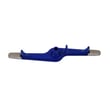
| Poor cleaning, debris left behind | Dishwasher spray arm 5304517203 | Water spray coverage and arm rotation |
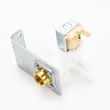
| Won’t fill or fills slowly | Valve 154637401 | Water entering the dishwasher |
| Leaks at the door | Gasket 809006501 | Door sealing during wash |
| Water won’t stop filling or overfills | Switch 154773201 | Overfill protection (float switch) |
| No heat, poor drying, long heat delays | Heater 154665201 | Water heating and drying performance |
| Won’t drain | Dishwasher drain pump A00126501 | Pumping water out to the drain |
Most “dishwasher problems” are performance issues caused by water supply, temperature, loading, detergent, or drainage setup. Fixing those basics first prevents repeat clogs, foaming leaks, and unnecessary part replacements.
Last updated: February 2026





