Owner’s manual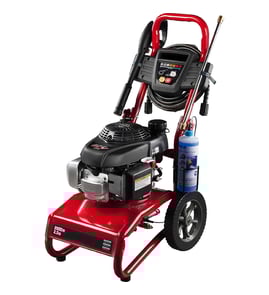




Are gas pressure washers 2 stroke or 4 stroke?
Most gas pressure washers, including the Generac 1674-0, use a 4-stroke engine. That means you add straight gasoline to the fuel tank and engine oil to the crankcase separately; you do not mix oil into the fuel like you would on a 2-stroke.
How to tell on your Generac 1674-0
Your Generac 1674-0 owner documentation shows an oil fill/dipstick and calls out checking the engine crankcase oil level before starting, which is a 4-stroke setup. Use the 1674-0 owner's manual for the exact oil type and fill procedure.
- Look for an oil fill/dipstick on the engine
- Check oil level before each use
- Fill the fuel tank with fresh gasoline only (no oil mix)
- Run water through the garden hose first to flush debris before connecting
- Purge air from the pump by squeezing the spray gun trigger with water on
2-stroke vs 4-stroke: what changes for maintenance?
| Feature | 2-stroke pressure washer | 4-stroke pressure washer (typical) |
|---|---|---|
| Fuel | Gas + oil mixture | Gasoline only |
| Oil | Mixed into fuel | Separate crankcase oil |
| Daily check | Fuel mix ratio | Oil level on dipstick |
Why it matters
Using a fuel/oil mix in a 4-stroke (or running a 2-stroke on straight gas) can cause hard starting, heavy smoke, loss of power, and internal engine damage. Correct fuel and oil practices also help the pump and unloader system operate consistently.
Related DIY help
If your unit runs poorly after fueling or storage, follow the troubleshooting steps in pressure washer won't start or pressure washer engine losing power.
Last updated: February 2026
Is 3000 psi considered high pressure?
Yes. 3,000 PSI is considered high pressure for a pressure washer; it is typically in the pro or contractor range. For your Generac 1674-0, the rated pressure is 2,300 PSI, which is a strong residential level for most cleaning jobs (driveways, siding, decks) when used with the right spray pattern.
PSI ranges (what “high pressure” usually means)
Pressure washer PSI is commonly grouped like this:
- Under 2,000 PSI: light duty (cars, patio furniture)
- 2,000 to 2,900 PSI: medium duty residential (most homeowner tasks)
- 3,000 PSI and up: high pressure (faster cleaning, more surface risk)
| PSI range | Typical use | Surface risk |
|---|---|---|
| Under 2,000 | Light cleaning | Low |
| 2,000 to 2,900 | Most residential cleaning | Medium |
| 3,000+ | Heavy cleaning, pro use | Higher |
How this applies to Generac 1674-0
Your Generac 1674-0 is rated at 2,300 PSI and about 2.0 GPM. That combination is designed to clean effectively without being as aggressive as a 3,000+ PSI unit.
- Use high pressure mode for rinsing and tougher grime
- Use low pressure mode for detergent application
- Keep the nozzle 8 to 24 inches from the surface for best results
- Do not get closer than 8 inches when cleaning tires
For the exact operating instructions and specifications, use the owner's manual.
Why it matters
Higher PSI can remove dirt faster, but it also increases the chance of etching concrete, stripping paint, or damaging wood. Matching PSI, spray pattern (fan vs. narrow), and distance helps you clean efficiently while protecting the surface.
Last updated: February 2026
Is it worth repairing a pressure washer?
Yes, repairing a pressure washer is worth it when the problem is a wear item (hose, O-rings, inlet screen, nozzle issues) and the engine and pump are basically sound. For the Generac 1674-0, we recommend comparing the repair cost to the washer’s performance needs (2,300 PSI, 2.0 GPM) and how often you use it.
When repair is the better choice
Repair usually makes sense when the fix is straightforward, low-cost, and improves safety or reliability.
- The high-pressure hose is leaking, kinked, or the couplings are damaged (replace, do not repair)
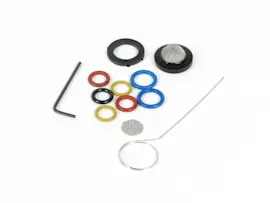
- You have connection leaks from worn O-rings or a damaged water inlet filter
- The inlet screen is clogged and restricting water flow
- The unit otherwise runs normally and reaches steady pressure
- You want to extend service life with routine maintenance (spark plug, air filter, seasonal checks)
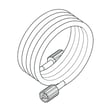
A common, high-value repair is replacing a damaged hose with the correct replacement, such as the hose 84006753.
When replacement is the better value
Replacement is typically the better call when the most expensive components are failing or the machine no longer fits your needs.
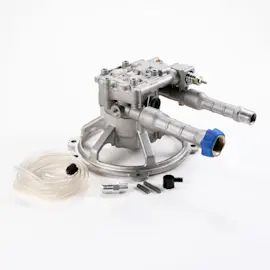
- The pump has internal damage (low pressure even with good water supply and clean inlet screen)
- The engine has persistent power loss, heavy smoke, or repeated no-start issues
- Repair cost approaches about half the price of a comparable new gas pressure washer
- You need higher output than this model’s rated 2,300 PSI and 2.0 GPM
Quick decision checklist (cost vs. symptoms)
| What you’re seeing | Most likely direction | Why |
|---|---|---|
| Hose leak, bulge, abrasion | Repair | Safety issue; hose is a replaceable wear part |
| Leaks at fittings | Repair | Often O-rings or inlet filter issues |
| Pressure surges or “stuck” pressure | Repair | Often related to unloader/check valve service |
| Engine won’t start repeatedly | Replace (or major repair) | Engine repairs can exceed the unit’s value |
| Low pressure with good water supply | Replace (or major repair) | Pump wear or internal damage is often costly |
Why it matters
A pressure washer can inject water through skin and cause serious injury; the manual specifically warns to inspect the high-pressure hose every use and to replace it immediately if damaged (never repair a high-pressure hose). Using the right parts and keeping up with maintenance protects both performance and safety. For model-specific maintenance intervals and specs, use the owner's manual.
Last updated: February 2026
What is a good GPM for a 3000 psi pressure washer?
For a 3000 PSI pressure washer, a good flow rate is typically 2.5 to 4.0 GPM; higher GPM cleans faster because it rinses and carries debris away better. For the Generac 1674-0, the manual lists 2.0 GPM at 2,300 PSI, which is a solid homeowner-level baseline. See the owner's manual for the rated specs and operating limits.
Quick guidance: how to choose the “right” GPM
When PSI is similar, we use GPM to judge cleaning speed.
- 2.0 to 2.5 GPM: light-duty homeowner jobs (cars, patio furniture, small patios)
- 2.5 to 3.5 GPM: strong all-around residential cleaning (driveways, siding prep, decks)
- 3.5 to 4.0+ GPM: faster rinsing and better productivity for large areas
- Bigger jobs: prioritize GPM first, then use the right spray tip to control pressure at the surface
PSI vs GPM: what changes your real cleaning results
PSI helps break soil loose; GPM determines how quickly you flush it away.
| Spec | What it affects most | What you notice | Typical homeowner “sweet spot” |
|---|---|---|---|
| PSI | Impact force at the tip | Ability to strip stuck-on grime | 2,000 to 3,200 PSI |
| GPM | Water volume and rinsing | Speed on driveways and siding | 2.5 to 3.5 GPM |
Why it matters (and how to avoid surface damage)
A 3000 PSI machine can damage wood, paint, and soft stone if you use the wrong spray tip or get too close. We recommend testing a small area first, using a wider fan tip, and keeping a safe distance so you clean effectively without etching.
Related DIY help
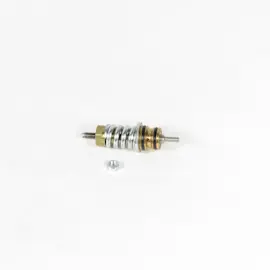
If your pressure seems inconsistent or spikes and drops, the unloader system is a common cause. Our guide on how to replace a pressure washer unloader valve walks through what to check and how replacement typically works.
Last updated: February 2026