Owner’s manual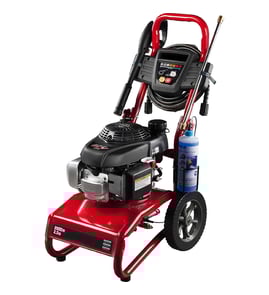



What is a good PSI for a gas pressure washer?
A good PSI for a gas pressure washer depends on what you’re cleaning. For most home jobs, 2,000 to 3,000 PSI is the sweet spot. Your Craftsman 580752500 is rated up to 2,500 PSI, which fits typical driveway, siding, and deck cleaning.
PSI ranges by job type
- 1,200 to 1,900 PSI: cars, patio furniture, grills, delicate wood
- 2,000 to 2,800 PSI: decks, fences, most siding, general concrete cleaning
- 2,800 to 4,000+ PSI: heavy concrete stains, stripping paint (higher damage risk)
How your Craftsman 580752500 compares
Your model’s performance rating is a strong “general purpose” setup. We recommend using the widest spray pattern that still cleans effectively.
| Cleaning need | Typical PSI range | How 2,500 PSI fits |
|---|---|---|
| Vehicle washing | 1,200 to 1,900 | Use a wider fan tip and keep distance |
| Decks and siding | 2,000 to 2,800 | Ideal range for most surfaces |
| Driveways and walkways | 2,000 to 3,000 | Very capable for routine cleaning |
| Paint stripping | 2,800 to 4,000+ | May be underpowered for fast stripping |
What matters as much as PSI
PSI is only half the story; flow rate (GPM) affects how quickly you rinse and how efficiently you clean.
- Higher GPM usually cleans faster than higher PSI alone
- Nozzle choice changes “effective” pressure at the surface
- Distance and spray angle prevent etching concrete or shredding wood fibers
- A worn nozzle or leaking hose can reduce cleaning power
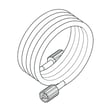
If your spray seems weak or inconsistent, check the high-pressure hose and connections for leaks and kinks; replacing a damaged hose such as the pressure washer hose 84006753 restores full flow and pressure.
Why it matters
Choosing the right PSI helps you clean efficiently while avoiding surface damage. Matching PSI, nozzle, and technique also reduces strain on the pump and unloader system.
For the exact rated specifications and operating guidance for the Craftsman 580752500, use the 580752500 owner’s manual.
Last updated: January 2026
What kind of gas goes in a Craftsman 3000 PSI pressure washer?
For the Craftsman 580752500 gas pressure washer, we recommend clean, fresh, unleaded gasoline with a minimum 87 octane (87 AKI, 91 RON). Gasoline with up to 10% ethanol (gasohol) or up to 15% MTBE is also acceptable; do not use E85 or mix oil into the gas (see the 580752500 owner's manual).
Fuel guidelines we follow for this model
- Use fresh unleaded fuel (old fuel can cause hard starting and surging).
- Use 87 octane minimum (higher is fine; lower can reduce performance).
- Ethanol blend is OK up to E10; avoid higher ethanol blends.
- Do not mix 2-cycle oil into the gasoline.
- Add fuel with the engine off and allow room for fuel expansion.
Quick fuel compatibility chart
| Fuel type | OK to use? | Notes |
|---|---|---|
| Unleaded 87 octane (AKI) | Yes | Recommended minimum octane |
| Unleaded 89 to 93 octane | Yes | Acceptable; no special benefit required |
| E10 (up to 10% ethanol) | Yes | Acceptable for this model |
| E15 | No | Higher ethanol can cause fuel system issues |
| E85 | No | Not approved for this engine |
| Gas mixed with oil | No | Use straight gasoline only |
If it runs rough after refueling
If you notice surging, loss of power, or hard starting after adding fuel, we treat it as a fuel-quality issue first.
- Drain old fuel and refill with fresh 87+ octane from a busy station
- Check that the choke is fully off after warm-up
- Inspect the air filter and spark plug condition
- Confirm you have strong water supply flow to the pump (low inlet flow can mimic engine strain)
For symptom-based troubleshooting, use pressure washer engine losing power.
Why it matters
Correct fuel protects the carburetor and fuel system from varnish and gum buildup, helps the engine deliver rated power, and reduces starting problems after storage.
Last updated: January 2026
How to tell if your pressure washer pump is bad?
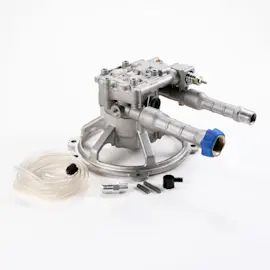
On the Craftsman 580752500 gas pressure washer, a bad pump usually shows up as low or surging pressure, water leaking at the pump, or abnormal pump noise even after you purge air from the system and confirm good hose and nozzle condition. Use the checks below to separate a pump failure from a supply or spray-tip issue.
Quick checks before blaming the pump
- Turn ON the water and squeeze the trigger to purge air and impurities from the pump system (per the 580752500 owner's manual).
- Verify the garden hose supply is steady and unrestricted.
- Inspect the high-pressure hose for kinks, cuts, or damage.
- Confirm all hose connections are tight and not sucking air.
- Try a different spray tip if you have one.
Symptoms that point to a failing pump
- Low pressure with a good water supply (and after purging air)
- Pressure pulses or surges while holding the trigger steady
- Water leaking from the pump head/manifold (not just at a fitting)
- Grinding, rattling, or squealing from the pump area
- Milky or discolored pump oil (on pumps with an oil-filled crankcase), which often indicates water intrusion past seals
Rule out common “not the pump” causes
| What you see | Most common cause | What to do first |
|---|---|---|
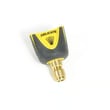
| Low pressure only on one tip | Clogged/worn nozzle | Swap/clean the nozzle; consider replacing with a matching tip such as pressure washer spray nozzle 195983XGS |
| Pressure surges at idle | Air in system or water supply restriction | Purge air; check inlet screen and supply hose |
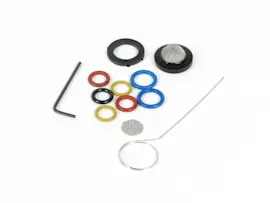
| Leaks at the connection | Worn O-ring or loose fitting | Reseat and tighten; replace seals as needed |
| No pressure and hose looks damaged | High-pressure hose failure | Inspect and replace the hose if needed (example: pressure washer hose 84006753) |
Why it matters
Running the 580752500 with a failing pump can quickly damage seals and plungers, and freezing damage can permanently ruin the pump. Following the storage and pump-protection steps in the 580752500 owner's manual helps prevent avoidable pump failures.
Last updated: January 2026