
Can you run a 2x4 through a planer?
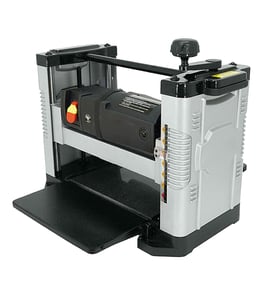
Yes, you can run a 2x4 through a Delta 22-560 portable planer, as long as it’s straight enough to feed safely and you take light passes; the planer will make the faces parallel, but it will not automatically make the edges square like a jointer. For parts and diagrams for model 22-560, start with the model parts list, or search by model on Sears PartsDirect.
Best practices for planing a 2x4
- Inspect for nails, staples, grit, and knots; metal will damage the cutterhead knives.
- Start with the board’s flattest face down; take light cuts to reduce snipe and tear-out.
- Feed with the grain when possible; reversing grain increases tear-out.
- Keep the board supported infeed and outfeed; long 2x4s can lever and cause snipe.
- Stop if you hear chatter or the board stalls; reduce depth of cut.
How to avoid a “trapezoid” 2x4
A planer references the face riding on the bed. If the board is twisted, bowed, or has a crowned edge, the planer can follow that shape and you can end up with faces that are parallel but not truly flat or square to the edges.
Common fixes:
- Joint one face first (or use a planer sled with shims) so the first face becomes truly flat.
- After one face is flat, plane the opposite face to thickness.
- Square one edge on a table saw or jointer after planing.
Quick setup guide (what to do first)
| Goal | Best tool order | Result |
|---|---|---|
| Make board thinner, faces parallel | Planer only | Thickness improves; edges may still be out of square |
| Make board flat and square | Jointer (or sled) then planer, then saw/jointer edge | Flat faces and square edge |
| Reduce snipe on 2x4s | Light passes, good support, steady feed | Cleaner ends |
Why it matters
2x4 lumber is often wet, twisted, and knotty. Taking lighter passes and flattening one face first protects your Delta planer’s knives, improves surface quality, and helps you get predictable, square stock for joinery.
Last updated: February 2026
Is a planer better than a sander?
A planer (like the Delta 22-560 portable planer) is better when you need to flatten boards and reduce thickness fast; a sander is better when you need controlled smoothing and final surface prep. In most shops they are complementary: plane to size, then sand to finish.
Best tool for the job
- Choose a planer to remove a lot of material quickly, true up rough lumber, and make boards a consistent thickness.
- Choose a sander (random-orbit, belt, or drum sander) to refine the surface, remove planer marks, and prep for stain or paint.
- Use both when you want flat stock and a furniture-ready finish.
Planer vs sander: quick comparison
| Task | Planer (Delta 22-560) | Sander |
|---|---|---|
| Reduce thickness fast | Excellent | Slow |
| Flatten cupped/twisted boards | Good (within limits) | Poor |
| Final finish quality | Leaves cutter marks | Excellent with fine grits |
| Risk to figured grain | Higher (tear-out) | Lower |
| Best use stage | Milling | Finishing |
What to expect from each tool
With a planer
- Removes material in passes using rotating knives/cutterhead.
- Can leave snipe at the ends if infeed/outfeed support is poor.
- Can cause tear-out on curly or highly figured wood.
With a sander
- Removes small amounts of material with abrasive.
- Better control on end grain and delicate surfaces.
- Slower for major thickness changes; can round edges if you linger.
Why it matters
Using the right tool saves time and improves results. Planing gets you flat, consistent stock quickly; sanding is what gets you to a clean, even surface that accepts finish well.
Parts and maintenance note
If your Delta 22-560 is leaving heavy ridges, chattering, or burning, we recommend checking the parts diagram and maintenance items (cutting knives, drive components, and feed system parts) for wear. You can look up parts by model number on Sears PartsDirect.
Last updated: February 2026
What are the common problems with planers?
Common problems we see with the Delta 22-560 portable planer include snipe at the board ends, uneven thickness, tearout (chipout), and chatter marks. These issues usually trace back to dull or nicked knives, dirty feed rollers, incorrect depth-of-cut, or stock that is warped or fed inconsistently.
Most common planer symptoms and likely causes
- Snipe (dip at the first or last few inches): infeed/outfeed support not level, board lifting, or feed pressure changes at entry/exit
- Uneven cut or taper: cutterhead/bed alignment off, dirty bed, or inconsistent pressure while feeding
- Tearout or chipout: dull knives, taking too deep a pass, or planing against the grain
- Chatter (ripples): loose fasteners, vibration, worn bearings, or knives not seated evenly
- Poor feeding or stalling: pitch buildup on feed rollers, glazed rollers, or excessive depth-of-cut
- Burn marks: dull knives, slow feed, or resin buildup on the bed/rollers
Quick checks we recommend (before buying parts)
- Unplug the planer; inspect knives for nicks and resin buildup.
- Clean the bed and feed rollers; wax the bed (avoid getting wax on rollers).
- Reduce depth-of-cut; for hard woods, take lighter passes.
- Support long boards with infeed/outfeed stands to prevent lifting.
- Check that the cutterhead lock (if equipped) is engaged and the height adjustment is not drifting.
Defect-to-fix guide
| What you see | Most common fix | Best first step |
|---|---|---|
| Snipe | Improve board support, lighter last pass | Add outfeed support and take a final skim pass |
| Tearout | Sharper knives, correct grain direction | Flip board direction; reduce cut depth |
| Chatter | Tighten, reduce vibration, check bearings | Verify knife seating and fastener tightness |
| Won’t feed | Clean rollers, reduce cut depth | Clean rollers and try a shallow pass |
Why it matters
Planer defects are more than cosmetic. Snipe and taper ruin thickness accuracy, and tearout and chatter can force extra sanding or re-milling. Feeding problems also increase the risk of kickback and flying debris, so consistent setup and maintenance protect both your workpiece and your safety.
Parts help for the Delta 22-560
If cleaning and setup do not solve the issue, we recommend looking up the Delta 22-560 parts breakdown and matching the symptom to wear items (knives, belts, bearings, feed roller components). Use Sears PartsDirect to search by model number and find the correct replacement parts.
Last updated: February 2026