



Is a mower with a roller better?
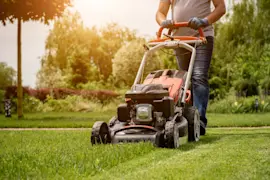
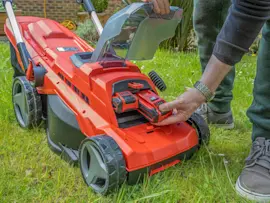
A mower with a rear roller can be better when your priority is a smoother-looking finish and light striping, but it is not automatically “better” for every yard. For a Poulan SM2155SP rotary lawn mower, a roller-style mower mainly changes the lawn appearance and how the mower rides over uneven spots.
When a roller mower is the better choice
- You want visible stripes and a more “finished” look after mowing.
- Your lawn is already fairly level and you mow often.
- You bag clippings regularly and want consistent contact with the turf.
- You mow mostly cool-season grasses that show striping more easily.
When a roller mower is not the best fit
- Your yard is bumpy or soft; a roller can press ruts into wet soil.
- You mow tall or wet grass often; added drag can reduce drive performance.
- You have lots of turns and tight areas; rollers can scuff turf on pivots.
- You prefer maximum lift for mulching; rollers do not improve airflow under the deck.
Quick comparison
| Feature | Roller mower | Standard rear wheels (like most rotary mowers) |
|---|---|---|
| Lawn appearance | Strong striping, smoother finish | Clean cut, less striping |
| Performance on soft/wet ground | Can leave tracks | Usually better flotation |
| Maneuverability | Slightly harder to pivot | Typically easier |
| Maintenance | More parts to clean/inspect | Simpler overall |
Why it matters
A roller changes how the mower contacts the ground; that affects traction, turning, and whether you leave marks when conditions are damp. If your SM2155SP ever struggles to self-propel after changes in rolling resistance, start with the drive system basics and belt condition.
Helpful DIY resource
For drive issues that feel like “drag” or slipping, use our lawn mower wont move troubleshooting video motion drive failure to pinpoint common motion-drive problems.
Last updated: February 2026
What is the best lawn mower for an elderly person?
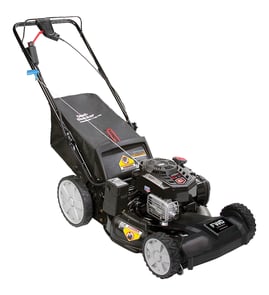
For most older adults, the best lawn mower is one that minimizes pushing force and reduces fall risk: a self-propelled walk-behind mower with easy-start controls, simple height adjustment, and stable traction. If you already own a Poulan SM2155SP, keeping the drive system and wheels in top shape makes it much easier to handle.
What to look for (best features for seniors)
- Self-propelled drive with a comfortable, easy-to-squeeze control bar
- Light steering effort (good wheel bearings, smooth traction)
- Easy height adjustment (large knobs or levers you can grip)
- Reliable starting (well-maintained fuel system and ignition)
- Low vibration and good balance (reduces fatigue)
- Simple bagging or mulching setup (less bending and lifting)
How the Poulan SM2155SP can be made easier to use
If your SM2155SP feels heavy to push or inconsistent on hills, the issue is usually in the wheels or drive components, not the engine power.
Common fixes that improve “ease of use”:
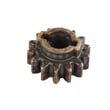
- Replace worn traction parts such as the drive pawl 532404845
- Restore smooth wheel operation with the correct lawn mower wheel 532180769
- Keep the drive system responsive by inspecting the lawn mower ground drive belt, 3/8 x 32-1/2-in 532175436
- Make height changes easier by replacing a cracked or missing husqvarna lawn mower height adjuster knob 532701037
Quick comparison: which mower type fits best?
| Mower type | Best for | Tradeoffs |
|---|---|---|
| Self-propelled gas walk-behind (like SM2155SP) | Most seniors with average mobility | Needs periodic maintenance; vibration/noise |
| Push mower (non-propelled) | Small, flat lawns | More effort; higher fatigue |
| Battery walk-behind | Low maintenance, easy starting | Runtime limits; battery cost |
| Robotic/remote mowing | Lowest physical effort | Higher upfront cost; setup complexity |
Why it matters
A mower that “pulls itself” and tracks straight reduces strain on shoulders, wrists, and back. It also helps prevent slips when turning or mowing uneven ground, especially when the drive belt, wheels, and pawls are worn.
Helpful DIY guidance
For step-by-step help diagnosing a self-propelled mower that is hard to push or will not drive, use lawn mower wont move troubleshooting video motion drive failure.
Last updated: February 2026
How do I find the model number on my SM2155SP?
The model number for your Poulan walk-behind mower is printed on the mower’s model and serial number label. On SM2155SP units, that label is typically on the rear of the mower deck near the back wheels, or on the deck under/near the handle mounting area.
Where to look on a Poulan SM2155SP
Check these common label locations first:
- Rear of the cutting deck, facing the operator (near the back wheels)
- Top of the deck near the engine base
- Deck area near the handle brackets or height adjuster
- Side of the deck near the discharge opening (less common)
What the label looks like
Most Poulan rotary lawn mowers use a small sticker or metal tag that includes:
- Model (you want SM2155SP)
- Product number (sometimes called a “PNC”)
- Serial number
- Manufacturing date or code
Quick ID guide
| You see on the label | What it’s used for |
|---|---|
| Model: SM2155SP | Identifies the mower family and parts diagrams |
| Product number/PNC | Narrows to the exact build and part variations |
| Serial number | Tracks production run details |
Why it matters
Poulan mowers can have small part changes by production run. Using the full model information from the label helps us match the correct drive parts, hardware, and deck components the first time.
If the label is missing or unreadable
Use these practical checks to narrow parts selection:
- Compare your deck style (rear bagger, side discharge, mulching door)
- Identify drive system parts (belt cover shape, wheel style)
- Match common wear items by diagram and measurements
If you are ordering parts, start with the parts list for SM2155SP and match by diagram; common items on this model include the lawn mower ground drive belt, 3/8 x 32-1/2-in 532175436 and the lawn mower blade adapter 532421176. For help confirming the correct model label format, use how to find your appliance model number (and what it means for parts).
Last updated: March 2026