Owner’s manual
 Error Codes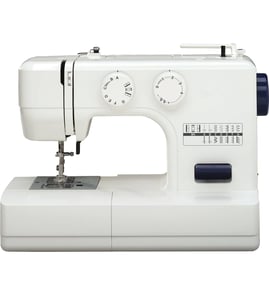

How old is the Kenmore sewing machine model 385?
A Kenmore sewing machine with a 385 prefix (including model 38515516000) is part of a large Kenmore model family; the prefix alone does not identify an exact build year. The most accurate way to date your specific machine is to use the model and serial information shown in the owner's manual and on the machine’s ID plate.
How to find the age of your specific 38515516000
Use these checks to pin down the timeframe for your exact machine:
- Locate the ID plate and confirm the full model number is 38515516000 (not just “385”).
- Write down the serial number exactly as shown; it is the key identifier for dating.
- Check original paperwork for a purchase date (receipt, warranty card, service record).
- Compare the machine’s features and included accessories to the manual’s descriptions and diagrams.
- If you have a service sticker, use the earliest dated service as a reliable “in use by” date.
What “385” means on Kenmore sewing machines
The “385” prefix identifies a Kenmore sewing machine series made across multiple years and multiple variants. It helps us choose compatible parts and documentation, but it does not translate to one specific production year.
| Identifier you have | What it tells us | What it does not tell us |
|---|---|---|
| “385” prefix | Series/family grouping | Exact manufacturing year |
| Full model number (38515516000) | Exact variant within the 385 family | Exact purchase date |
| Serial number | Best clue for dating and parts matching | Nothing by itself unless decoded |
| Receipt or dated paperwork | Exact “how old” answer | Nothing further needed |
Why it matters
Knowing the machine’s age helps us match the right maintenance steps (cleaning, lubrication, and adjustments) and avoid ordering incompatible items such as a foot control, motor components, or other wear parts.
Helpful DIY reference
If you are troubleshooting a fault condition on a 385-series machine, use our Kenmore 385 error codes reference.
For parts lookup by model number, start with the diagrams for 38515516000 or search by model on Sears PartsDirect.
Last updated: February 2026
Is Kenmore sewing machine 385 low shank?
Yes. Kenmore 385-series mechanical machines like model 38515516000 use a low-shank presser foot system, so low-shank feet (including a walking foot/even-feed foot) fit this machine.
How to confirm low shank on your 38515516000
We recommend verifying by checking the presser foot and holder style shown in the owner's manual. Use these quick checks:
- Turn the power switch off and unplug the machine.
- Raise the presser foot lifter to its highest position.
- Look at the presser foot holder (the metal “ankle” the foot attaches to).
- On a low-shank machine, the holder sits close to the needle plate (short distance from the screw to the foot).
- If your snap-on feet attach to a short holder and sit low over the feed dogs, that matches a low-shank setup.
What “low shank” means (and why it matters)
Low shank describes the height of the presser foot holder. It matters because the wrong shank height can cause poor feeding, needle strikes, or the foot not fitting at all.
Common foot types by shank height
| Shank type | Typical fit | What you’ll notice |
|---|---|---|
| Low shank | Most Kenmore 385 mechanical models | Foot sits close to needle plate; common snap-on feet fit |
| High shank | Many industrial or specialty machines | Taller holder; low-shank feet usually won’t mount correctly |
| Slant shank | Some older Singer designs | Holder angles forward; unique foot style |
Tips when buying a walking foot for a Kenmore 385
A walking foot is often labeled “low shank even feed” or “low shank walking foot.” Before ordering, match these details:
- Low-shank compatibility (explicitly stated)
- Attachment style (snap-on vs screw-on adapter)
- Needle clearance (no rubbing at zigzag width you plan to use)
- Intended use (quilting layers, plaids, knits)
For help identifying compatible accessories and setup steps for your exact machine, use the owner's manual. For parts and accessories searches by model number, use Sears PartsDirect.
Last updated: February 2026
Is it worth repairing a sewing machine?
Yes, it’s worth repairing a Kenmore 38515516000 sewing machine when the problem is a normal wear item, a basic adjustment, or an electrical issue like the switch or speed control; this model was built for long-term household use and includes strong mechanical coverage in its warranty terms. Check the troubleshooting and maintenance guidance in the 38515516000 owner's manual.
Quick decision checklist
- Repair it when the machine runs but has stitch quality issues, tension problems, or feed problems.
- Repair it when it won’t run due to a likely electrical part (power cord, foot control, on/off switch).
- Repair it when it locks up from lint, thread jams, or lack of cleaning.
- Replace it when the frame is cracked, the machine has severe internal damage, or repair cost approaches the price of a comparable replacement.
- Repair it when you already like the stitch performance and accessories, and the machine fits your projects.
Typical repair costs vs. replacement value
Costs vary by area, but these ranges help you decide whether to invest in service.
| Item | What it usually includes | When it’s worth it |
|---|---|---|
| Basic service/tune-up | Cleaning, lubrication, timing and tension checks | When the machine is noisy, sluggish, or inconsistent |
| Targeted repair | Replacing a switch, motor, belt, or wiring repair | When the rest of the machine is in good shape |
| Major internal repair | Multiple parts plus labor and adjustments | Only when you want to keep the machine long-term |
Why it matters (especially on this model)
The 38515516000 is a mechanical sewing machine designed for household use, and the manual emphasizes safe operation, routine cleaning, and unplugging before maintenance. Good maintenance prevents “expensive” problems that are really lint buildup, thread jams, or dry mechanisms.
What to check before paying for service
- Safety first: Unplug the machine before cleaning, clearing jams, or inspecting the needle area.
- Rule out simple causes: Rethread upper thread and bobbin, install a new needle, and confirm correct presser foot pressure and stitch settings.
- Match the symptom to a likely fix:
- Fabric not moving: feed dogs, presser foot pressure, lint under needle plate
- Locks up: thread jam in hook/bobbin area, debris in drive area
- Motor won’t run: foot control, on/off switch, wiring, motor
For symptom-based troubleshooting and repair planning, we recommend starting with the sewing machine repair-guides landing page. For Kenmore 385-series diagnostics, use Kenmore 385 error codes. For parts lookup and ordering by model number, use Sears PartsDirect.
Last updated: February 2026