Installation guide
 Owner’s manual
 Error Codes


What is the most common problem with GE washers?
The most common GE washer problem is a no-drain or no-spin condition. On the GE GTWN2800D2WW top-load washer, this is most often tied to a lid safety issue, a drain restriction, or a drive system problem that prevents the basket from reaching full spin.
Most common symptoms we see
- Washer fills and agitates but will not spin out
- Water remains in the tub at the end of the cycle
- Hums or runs but the basket barely moves
- Stops mid-cycle when the lid is opened or the lid switch does not register closed
- Loud grinding/roaring during spin (often points to bearing or tub support wear)
Quick checks you can do first (before replacing parts)
- Confirm the washer is on firm, level flooring; unstable floors increase vibration and can trigger spin issues (see the installation guide).
- Verify the drain setup: standpipe height must be at least 30 inches and not more than 8 feet above the washer base.
- Make sure the drain hose is not kinked, crushed, or shoved too far down the standpipe.
- Avoid extension cords; use a properly grounded outlet on a dedicated circuit.
- If the washer will not spin with the lid closed, test the lid switch function.
Parts that commonly fix no-spin/no-drain on this model
If basic checks look good, these model-matched parts are common culprits:
| Symptom | Most likely area | Example model-matched part |
|---|---|---|
| Won’t spin, acts like lid is open | Lid safety circuit | Washer lid switch assembly WH12X10334 |
| Won’t fill correctly or fills slowly | Water inlet/flow | Washer water inlet valve WH13X22720 |
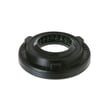
| Loud roar or grinding in spin | Tub support/bearing area | Tub bearing WH2X1198 |
Why it matters
A washer that cannot drain or spin leaves clothes soaking wet and can strain the motor, drive pulley, and tub components. Catching the cause early helps prevent bigger repairs like bearing or tub damage.
For fault code help on GE top-load models, use our GE top load washer error codes reference.
Last updated: February 2026
How many years should a GE washing machine last?
A GE washing machine like model GTWN2800D2WW typically lasts 10 to 14 years with normal household use. Consistent care (proper loading, correct installation, and routine cleaning) helps you reach the high end of that range and reduces wear on the drive system and tub components.
What affects washer lifespan most
- Load size and balance: frequent overloading or unbalanced loads strain the suspension and drive.
- Installation quality: a washer on firm, level flooring vibrates less during spin.
- Water conditions: very hard water and excessive detergent can increase residue and corrosion.
- Drain setup: improper standpipe height can contribute to siphoning and poor draining.
- Wear parts: seals, bearings, and lid switch issues can shorten usable life if ignored.
Quick care checklist (high impact)
- Keep the washer level and on firm flooring; concrete is ideal.
- Use the right amount of detergent; too much leaves buildup.
- Avoid packing the basket tight; allow clothes to circulate.
- Run periodic cleaning cycles (hot wash with an approved washer cleaner).
- Fix small leaks quickly to protect the tub seal and bearing area.
Common “end-of-life” symptoms vs. repairable issues
| Symptom | Often points to | Typical next step |
|---|---|---|
| Loud roaring during spin | Tub bearing wear | Inspect/replace bearing and related seals |
| Water leaking under washer | Tub seal or hose issue | Check tub seal area and clamps |
| Won’t spin or stops with lid closed | Lid switch problem | Test/replace lid switch |
| Excessive shaking | Suspension or leveling | Re-level; inspect suspension components |
If you’re seeing no-spin or intermittent stopping, the lid switch is a common fix on top-load washers; for this model, see the washer lid switch assembly WH12X10334.
Why it matters
Knowing the typical 10 to 14 year lifespan helps you decide whether to repair (often smart for a single failed part) or replace (more practical when multiple major components are worn). For model-specific operating and care guidance, follow the GTWN2800D2WW owner's manual and keep the washer installed to the requirements in the GTWN2800D2WW installation guide.
Last updated: February 2026
How much does it cost to replace a gasket on a GE washing machine?
For a GE GTWN2800D2WW washer, replacing a “gasket” (most often a tub seal) typically costs the price of the part plus labor; many seal-type parts run about $20 to $50, while professional service commonly adds $150 to $350 depending on how far the washer must be disassembled.
What “gasket” usually means on this model
On a top-load GE washer like GTWN2800D2WW, customers often mean one of these sealing points:
- Tub seal that helps prevent water leaks around the drive shaft area
- Hose connection seals (rubber washers in fill hoses)
- Drain connection sealing and anti-siphon setup (prevents backflow issues)
- Lid-related issues (not a gasket, but sometimes confused with sealing problems)
A common leak-related seal part for this model is the washer tub seal assembly WH02X10383.
Typical cost breakdown (parts vs. labor)
Costs vary most by whether the leak is a simple external connection or an internal tub seal.
| Repair type | What you pay for | Typical total cost |
|---|---|---|
| Fill hose seal/connection reseal | Rubber washers, minor adjustment | $0 to $30 |
| Replace tub seal (internal) | Seal plus significant teardown time | $170 to $400 |
| Bearing or shaft-related leak repair | Seal plus bearing/drive components | $250 to $600+ |
How to tell if you need a seal replacement
Use these quick checks before buying parts:
- Water appears under the center of the washer during agitation or spin (often tub seal)
- Drips at the wall valves or hose connections (often hose washers)
- Leaks only during fill (often inlet hose or inlet valve connection)
- Sudden leak after moving the washer (hose connection or drain hose positioning)
- Musty odor without visible leaking (cleaning issue, not a gasket)
For model-specific diagrams, disassembly notes, and safety steps, use the GTWN2800D2WW installation guide.
Why it matters
A small leak can quickly lead to rust, bearing damage, belt/drive issues, and floor damage. Fixing a simple seal early is usually far cheaper than replacing major components like a tub bearing or drive shaft assembly.
Last updated: February 2026
What does GTWN2800D2WW stand for?
GTWN2800D2WW is the GE model number that identifies your specific top-load washer; it’s the code you use to match the correct parts, installation requirements, and service information for that exact machine. For model-specific details, we reference the GTWN2800D2WW owner's manual and the GTWN2800D2WW installation guide.
What the model number is used for
- Confirming you’re buying the correct GE washer parts (agitator, lid switch, tub seal, etc.)
- Matching wiring and electrical requirements to the correct unit
- Finding the right installation specs (hose routing, drain height, grounding)
- Looking up troubleshooting steps and any displayed error codes
- Ensuring diagrams and part breakdowns match your exact washer configuration
Where to find the model number on the washer
Most GE top-load washers list the model number on the rating plate. For GTWN2800D2WW, the installation information notes the rating plate is located on top of the backsplash.
Common examples of parts that must match the model
If you’re ordering replacement parts, the model number prevents fit and compatibility issues.
| Example part | What it affects | Why model match matters |
|---|---|---|
| Washer lid switch assembly WH12X10334 | Lid sensing and spin safety | Wrong switch can prevent spinning or cause lid errors |
| Washer water inlet valve WH13X22720 | Filling with hot/cold water | Port style and electrical connector must match |
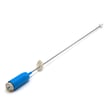
| Washer agitator WH43X10034 | Wash action and turnover | Spline and height must fit the drive system |
Why it matters
GE model numbers like GTWN2800D2WW are the fastest way to get the right repair information the first time; they tie your washer to the correct diagrams, parts list, and installation requirements (including proper grounding and a dedicated 15- or 20-amp circuit).
Last updated: February 2026
How do I tell what model my GE washer is?
Your GE washer’s model number is printed on the appliance ID label. On the GE GTWN2800D2WW top-load washer, you’ll typically find it on the back of the control panel, on the top area, or on the cabinet near the bottom edge; match the full model number exactly.
Where to look on a GE top-load washer
Check these common label locations first:
- Back of the control panel (rear panel area)
- Along the top rim under the lid opening
- Side of the main cabinet near the bottom front edge
- Rear of the washer cabinet near the power cord entry
How to read the label correctly
Model numbers and serial numbers can look similar. Use these tips so you capture the right one:
- Copy the entire model number (letters and numbers) with no spaces added
- Look for wording like Model, Model No., or M/N
- Take a clear photo of the label before ordering parts
- If the label is worn, use a flashlight and view from an angle
Quick check: model vs. serial
| Label item | What it’s used for | Example format |
|---|---|---|
| Model number | Identifies the exact washer design for parts and manuals | Letters plus numbers (like GTWN2800D2WW) |
| Serial number | Identifies your specific unit for manufacturing info | Longer string, often numbers and letters |
Why it matters
We use the model number to match the correct GE washer parts (like a lid switch, water inlet valve, or tub seal) because small design changes can affect fit and wiring. Once you confirm the model, the GTWN2800D2WW owner’s manual is the fastest way to verify features and operating details.
Last updated: February 2026
Why is my GE front load washer leaking from the front?
A front leak is almost always caused by water escaping past the door opening or overflowing at the front during fill. On the GE GTWN2800D2WW, start by checking for oversudsing, a blocked drain path, or an out-of-level cabinet that lets water run forward; then inspect the door-area sealing surfaces.
Quick checks we recommend first
- Reduce detergent to HE amount (too much soap creates foam that spills out the front).
- Make sure the washer is level front-to-back and side-to-side; an unlevel cabinet can send water toward the front edge.
- Check that the drain standpipe or laundry tub is not backing up.
- Look for water trails starting at the top front edge (splash/overflow) versus low front (drain-related).
- Confirm hoses are tight and have rubber washers installed at the supply connections (a drip can run forward and look like a front leak); see the GTWN2800D2WW installation guide.
Most common causes (and what to look for)
| What you see | Most likely cause | What to do next |
|---|---|---|
| Leak only during fill | Oversudsing or water splashing | Use less HE detergent; select lower water level if available; level the washer |
| Leak during wash/agitate | Tub ring or splash control issue | Inspect tub ring for cracks/warping; check for loose fasteners |
| Leak during drain/spin | Drain restriction or tub seal/bearing area leak | Check for clogs; inspect for water under center of tub |
| Slow drip that worsens over time | Seal/bearing wear | Plan a tub seal or bearing repair |
Parts that commonly relate to leaks on this model
If you find water coming from the center under the tub (not from the fill hoses), these parts are common leak points:
- Washer tub seal assembly WH02X10383 (helps keep water from leaking along the drive shaft)
- Tub bearing WH2X1198 (bearing wear often goes with seal leakage)
- Tub assembly WH45X20473 (used when the outer tub is damaged or leaking)
Why it matters
A “small” front leak can quickly lead to floor damage and can also cause corrosion or electrical issues if water reaches wiring or the motor area. Catching the source early usually keeps the repair smaller.
Last updated: February 2026