
What is the most expensive part to replace on an AC unit?
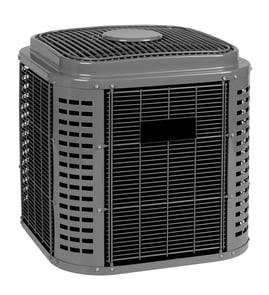
On a Thermal Zone CA36K-1S split-system air conditioner, the most expensive single component to replace is typically the compressor. In many repairs, the indoor evaporator coil or outdoor condenser coil can also be among the highest-cost replacements because they involve refrigerant handling and significant labor.
Most common high-cost AC parts
In a central or split-system AC, these parts usually drive the biggest repair bills:
- Compressor (outdoor unit): often the top-cost part and labor
- Evaporator coil (indoor): expensive coil plus refrigerant work
- Condenser coil (outdoor): can be costly if replacement is practical
- Main control board (if equipped): can be pricey on some systems
- Refrigerant-related repairs (leak search, brazing, recharge): labor-heavy even when parts are small
Typical cost drivers (what makes it expensive)
Even when the part itself is not extreme, total cost climbs quickly due to:
- Refrigerant recovery, evacuation, and recharge requirements
- Diagnostic time (electrical testing, pressure readings, airflow checks)
- Accessibility (tight attic air handler, rooftop condenser, etc.)
- Matching requirements (coil and compressor compatibility, metering device sizing)
Quick comparison: “most expensive” by scenario
| Scenario | Usually most expensive item | Why |
|---|---|---|
| Outdoor unit will not cool and trips breaker | Compressor | High part cost plus sealed-system labor |
| Poor cooling with confirmed refrigerant leak indoors | Evaporator coil | Coil cost plus leak repair and recharge |
| Outdoor coil is badly corroded or damaged | Condenser coil (or condenser replacement) | Coil labor can be high; replacement decisions vary |
Why it matters
When the compressor or a coil fails, the repair often approaches the cost of major system work. Getting an accurate diagnosis first helps avoid replacing a high-dollar part when the real issue is a capacitor, contactor, wiring, airflow, or a blown fuse.
What we recommend before approving a major repair
- Confirm the thermostat is calling for cooling and the indoor blower runs
- Check for a tripped disconnect/breaker and obvious burned wiring
- Verify the condenser fan runs and the outdoor unit is not clogged with debris
- Have electrical components tested with a meter (capacitor, contactor, windings)
- If a leak is suspected, confirm leak location before replacing a coil
For safe electrical checks and troubleshooting technique, use our how to use a multimeter to test electrical parts video.
Last updated: February 2026
What is the most common part to fail on an AC unit?
On most central and split-system AC units (including Thermal Zone model CA36K-1S), the run capacitor is the most common part to fail. It helps start and keep the compressor and fan motor running; when it weakens, you can get humming, hard starts, or a unit that will not turn on.
What usually fails first (and what you notice)
- Run capacitor: outdoor unit hums, fan will not start, intermittent starts
- Contactor/relay: outdoor unit will not pull in, chattering, burned contacts
- Condenser fan motor: fan runs slow, overheats, stops after running awhile
- Clogged air filter or dirty coil: weak airflow, icing, poor cooling, high bills
- Condensate drain blockage (at the indoor coil): water leaks, safety shutoff trips (if equipped)
Quick checks that help narrow it down
Turn off power at the disconnect and breaker before opening any panels.
- Confirm the thermostat is calling for cooling and the indoor blower runs.
- Listen at the outdoor unit: silent, humming, or clicking points to different electrical issues.
- Look for obvious signs: bulged capacitor top, burned wires, insect nests, loose spade connectors.
- If you test parts, use a meter correctly; see how to use a multimeter to test electrical parts video.
- If wiring looks damaged or brittle, repair it properly; see how to repair broken or damaged wires video.
Common failure symptoms and likely causes
| Symptom | Most likely culprit | Why it happens |
|---|---|---|
| Outdoor unit hums but fan will not spin | Run capacitor | Heat and age weaken capacitance |
| Outdoor unit does nothing (no sound) | Contactor, power issue | No 24V signal, failed contacts, or lost line power |
| Fan runs but no cooling | Compressor start components, refrigerant issue | Electrical start failure or sealed-system problem |
| Coil icing or weak airflow | Filter/airflow restriction | Low airflow drops coil temperature |
Why it matters
A weak capacitor or failing contactor can stress the compressor and fan motor. Catching the problem early helps prevent bigger, more expensive failures and keeps your Thermal Zone split-system air conditioner running efficiently.
Last updated: February 2026
Is central AC better than split AC?
Central AC can be better than a split (ductless) system when you want whole-home, even cooling and stronger filtration through a single return-air filter. For a Thermal Zone CA36K-1S split-system air conditioner, the better choice depends on your home’s ductwork, comfort goals, and installation constraints.
Quick comparison: central AC vs split (ductless) AC
- Central AC (ducted): best for whole-home coverage using existing ducts
- Split (ductless mini-split): best for zoning and homes without ducts
- Filtration: central systems typically filter more air through one main filter
- Efficiency: ductless often avoids duct losses; central can be very efficient when ducts are tight and sized correctly
- Upfront cost: ductless can cost more per room; central can cost more if ducts must be added or repaired
- Comfort control: ductless usually offers room-by-room control; central is typically one thermostat (unless zoned)
What “better” usually means (and how to decide)
Use these questions to pick the right system type:
- Do you already have sealed, properly sized ductwork in good condition?
- Do you want one consistent temperature across most rooms?
- Do you need zoned comfort (different temps in bedrooms vs living areas)?
- Are there rooms that are always too hot or too cold (sunroom, bonus room)?
- Is indoor air filtration a top priority (allergy, dust control)?
Why filtration often favors central AC
Most central air conditioners pull air from the home through a return and pass it through a filter before cooling and recirculating it. That setup typically provides more consistent whole-home filtering than many ductless heads, which usually have smaller, washable screens meant more for protecting the unit than deep air cleaning.
Typical pros and cons at a glance
| Feature | Central AC (ducted) | Split (ductless) AC |
|---|---|---|
| Whole-home coverage | Strong | Good only if multiple indoor units are installed |
| Zoning | Optional (adds complexity) | Strong (built-in by room/zone) |
| Filtration potential | Typically higher | Typically lower |
| Duct losses | Possible | None |
Why it matters
Choosing the right system affects comfort, energy use, and how well your system manages dust and airflow. The “best” option is the one that matches your home layout, duct condition, and how you actually use each room.
For help identifying the correct system type and parts by model number, use how to find your appliance model number (and what it means for parts).
Last updated: February 2026
Is 1 ton AC enough for a 12X12 room?
Yes, a 1-ton air conditioner is typically enough for a 12x12 room (about 144 sq. ft.) when the room is reasonably insulated and the door stays closed. For a Thermal Zone CA36K-1S split-system air conditioner, the right size still depends on heat load factors like sun exposure and ceiling height.
Quick sizing rule of thumb (what 1 ton usually covers)
Most 1-ton systems are commonly used for rooms in this general range:
| Room conditions | Typical coverage for 1 ton | Notes |
|---|---|---|
| Well insulated, shaded | 120 to 180 sq. ft. | Best-case scenario |
| Average insulation, mixed sun | 100 to 160 sq. ft. | Most common |
| Hot sun, poor insulation, high ceiling | 80 to 130 sq. ft. | Often needs more capacity |
When 1 ton may feel too small
A 12x12 room can still struggle to cool if any of these apply:
- Large west-facing windows or strong afternoon sun
- Ceiling height above about 8 ft
- Poor insulation or lots of air leaks around doors and windows
- The room is open to hallways or other rooms most of the day
- Heat sources in the room (gaming PC, multiple people, cooking nearby)
How to tell if the AC is undersized or oversized
Signs it is undersized
- Runs constantly and still does not reach set temperature
- Supply air feels cool but the room stays warm
- Humidity stays high even while running
Signs it is oversized
- Short cycles (turns on and off frequently)
- Room temperature swings up and down
- Air feels cold but clammy (poor dehumidification)
Why it matters
Correct sizing protects comfort and efficiency. An undersized system runs longer and may never catch up on hot days; an oversized system can short-cycle, waste energy, and remove less moisture.
Helpful DIY check before changing equipment
If cooling seems weak, confirm the basics first:
- Replace or clean the return air filter (if your setup uses one)
- Make sure supply and return vents are open and not blocked
- Check for obvious duct leaks or disconnected ducts (if ducted)
- Verify the outdoor unit coil is not clogged with debris
For safe electrical troubleshooting steps (like checking a fuse or testing voltage), use how to use a multimeter to test electrical parts video.
Last updated: February 2026
What is the average AC indoor unit price?
For the Thermal Zone CA36K-1S split-system air conditioner, the “indoor unit” is usually an air handler or an evaporator coil matched to the outdoor condenser; it is typically priced as HVAC equipment, not as a single repair part. Most indoor units of this type run about $1,000 to $4,000 for equipment only, and about $3,000 to $9,000 installed.
What counts as the “indoor unit”
Depending on how your CA36K-1S system is set up, the indoor side is usually one of these:
- Air handler (blower and evaporator coil in one cabinet)
- Evaporator coil mounted on a gas furnace or electric furnace
- Fan coil (common in some split-system configurations)
What changes the price the most
- Capacity match (tonnage/BTU and required airflow)
- Refrigerant type and compatibility (for example, R-410A vs. older systems)
- Blower motor type (standard PSC vs. ECM/variable-speed)
- Installation scope (drain pan, condensate pump, float switch, electrical whip)
- Ductwork condition (sealing, resizing, repairs)
- Controls (thermostat upgrades, zoning, safety switches)
Planning ranges (equipment vs. installed)
| What you are pricing | Typical range | Usually includes |
|---|---|---|
| Indoor unit equipment only | $1,000 to $4,000 | Air handler or coil cabinet |
| Installed indoor unit | $3,000 to $9,000 | Labor, fittings, drain work, startup/charge checks |
| Common add-ons | $200 to $2,000+ | Thermostat, safety switches, minor duct or electrical updates |
How to price your replacement accurately
- Confirm whether you have an air handler or a coil on a furnace.
- Match the indoor unit to the outdoor unit capacity and metering device requirements.
- Plan for refrigerant circuit work (evacuation, leak check, airflow setup) when replacing the indoor section.
- Use how to find your appliance model number (and what it means for parts) to verify the exact model information before ordering parts.
Why it matters
Indoor and outdoor sections must be properly matched for airflow and refrigerant performance. A mismatch commonly leads to coil freeze-ups, poor humidity control, higher energy use, and shortened compressor life.
Last updated: February 2026