Owner’s manual
 Error Codes




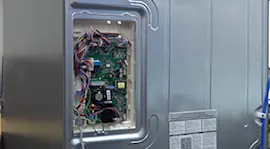
How to hard reset kenmore washer?
A hard reset on your Kenmore washer model 79648842800 is done by removing power long enough for the control to fully shut down, then restoring power and running a quick check. This clears many temporary glitches and some stored error conditions.
Hard reset steps (recommended)
- Press Power to turn the washer off.
- Unplug the washer (or switch the breaker off).
- Wait 2 minutes.
- Restore power.
- Press Power, then run a short cycle (or Rinse/Spin) with the drum empty.
If your washer still acts up after the reset, use the model-specific procedures in the 79648842800 washer manual.
If the washer still will not start or keeps showing an error
A reset helps when the control is “stuck”, but it will not fix an active problem like a door lock issue, a drain problem, or a fill problem.
Check these common causes:
- Door will not lock: make sure the door closes firmly; inspect the latch area for detergent buildup. If the lock is failing, the lg washer door lock assembly EBF49827801 is the correct lock assembly listed for this model.
- Not draining: clean the pump filter and verify the drain hose is not kinked. A clogged filter can mimic a control problem; the washer drain pump filter 383EER2001A is the listed filter part.
- Not filling: confirm both water supply valves are fully open and inlet screens are not blocked. If the valve is faulty, the lg washer single-solenoid water inlet valve 5220FR2006H is a listed inlet valve.
Quick “reset vs. repair” guide
| Symptom after reset | Most likely area to check | Typical next step |
|---|---|---|
| Powers on, then stops and beeps | Door lock system | Inspect latch; test/replace door lock |
| Hums but won’t drain | Drain pump or filter | Clean filter; check pump and hoses |
| Long fill time or no water | Water inlet valve or supply | Check faucets/screens; test valve |
Why it matters
Resetting the control board is a fast first step that can clear a one-time software glitch, but repeated errors usually point to a real mechanical or electrical issue (door lock, drain pump, inlet valve) that needs troubleshooting.
Last updated: January 2026
What is the life expectancy of a Kenmore washer?
Most Kenmore washers, including model 79648842800, typically last 10 to 15 years with normal household use, proper installation, and routine maintenance. Heavy use, frequent overloading, and poor draining or vibration issues can shorten that lifespan.
Typical lifespan ranges
Here’s what we see most often for residential washers:
| Usage pattern | Typical life expectancy | What usually ends it first |
|---|---|---|
| Light (1 to 3 loads/week) | 12 to 15 years | Hoses, pump clogs, door/lock wear |
| Average (4 to 7 loads/week) | 10 to 12 years | Drain pump, shocks, bearings |
| Heavy (8+ loads/week) | 7 to 10 years | Suspension, tub bearings, motor-related wear |
What helps a Kenmore washer reach 10 to 15 years
- Keep loads balanced; avoid consistently washing heavy single items (like one rug or one blanket).
- Use the correct detergent amount (especially HE detergent if your washer requires it).
- Clean the drain pump filter regularly to prevent slow draining and pump strain.
- Leave the door slightly open between loads to reduce odor and boot mildew.
- Level the washer to reduce vibration and suspension wear.
Parts that commonly affect longevity (and why)
When these wear items are maintained or replaced, the washer often keeps going:
- Washer drain pump filter 383EER2001A: a clogged filter can cause slow drain, pump noise, and drain errors.
- Washer shock absorber 383EER3001J: weak shocks increase vibration and can accelerate tub and bearing wear.
- Lg washer door lock assembly EBF49827801: a failing lock can prevent starting or cause mid-cycle stops.
Why it matters
A washer that is draining slowly, vibrating heavily, or struggling to lock the door is wearing out faster than normal. Addressing those symptoms early usually extends the service life and helps prevent more expensive tub or bearing damage.
Where to confirm model-specific care steps
For Kenmore 79648842800, follow the maintenance and cleaning intervals in the 79648842800 owner’s manual.
Last updated: January 2026
Is Kenmore Elite high end?
Yes. Kenmore Elite is Kenmore’s higher-end line; it typically adds upgraded wash performance, quieter operation, and more convenience features than standard Kenmore models. For your Kenmore washer model 79648842800, the 79648842800 owner's manual is the best place to confirm the exact feature set and cycle options.
What “high end” means for a washer
High-end washers usually focus on better fabric care, stronger cleaning, and a more refined user experience.
Common high-end traits include:
- More specialized cycles (bedding, sanitize, allergen, quick wash)
- Higher spin speeds for better water extraction (shorter dry times)
- Better vibration control and quieter operation
- More precise water level and temperature control
- Larger capacity and improved drum design for bulky loads
How to tell where your Kenmore Elite fits
We recommend comparing your washer’s controls and cycle list to typical tiers.
| Tier | Typical focus | What you’ll notice most |
|---|---|---|
| Standard Kenmore | Basic cleaning | Fewer cycles, simpler controls |
| Kenmore Elite | Premium performance/value | More cycles, better noise and vibration control |
| Pro-style lines | Specialty or commercial-style features | Heavier-duty build, niche features, higher cost |
Why it matters
Knowing the “tier” helps you set expectations for noise, cycle variety, and repair decisions. For example, higher-end front-load designs often rely on components like a door lock and drain system that must work correctly for safe operation and proper draining.
Parts that commonly affect “premium” performance
If performance feels less “high end” than it used to, these parts often play a role:
- Drain issues or slow draining: laundry appliance drain pump 4681EA2001T
- Door won’t lock or cycle won’t start: lg washer door lock assembly EBF49827801
- Water fill problems or long fill times: lg washer single-solenoid water inlet valve 5220FR2006H
Last updated: January 2026
How to tell if a washer impeller is bad?
On the Kenmore 79648842800 washer, a “bad impeller” usually shows up as poor draining because the drain pump’s impeller is damaged, loose on the shaft, or jammed. If the washer leaves water behind, drains slowly, or the pump makes a loud grinding/rattling noise, the impeller area is the first place we check.
Quick symptoms that point to an impeller problem
- Washer won’t drain or drains very slowly
- Humming from the pump but little or no water flow
- Grinding, rattling, or “rocks in the pump” sound during drain
- Intermittent draining (works sometimes, fails other times)
- Water left in the tub at the end of the cycle
What we check first (fast, no special tools)
- Unplug the washer and turn off water.
- Open and clean the pump filter area; remove coins, pins, lint, and small socks.
- Inspect the filter housing for broken plastic or debris that could have hit the impeller.
- If the filter keeps clogging quickly, check pockets and use a garment bag for small items.
A clogged filter can mimic a “bad impeller,” so clearing the restriction is the best first step. For the exact access steps and panel removal details, use the 79648842800 owner's manual.
How to confirm the impeller is actually bad
With power disconnected and the pump accessible:
- Look for cracked blades, missing pieces, or wobble.
- Spin the impeller by hand; it should turn smoothly without scraping.
- If it spins freely but feels loose on the shaft, the impeller can slip under load.
What the results usually mean
| What you observe | Most likely cause | Typical fix |
|---|---|---|
| Debris in filter/housing | Restriction, not a failed impeller | Clean filter and housing |
| Impeller blades damaged | Physical impeller damage | Replace pump |
| Loud grinding during drain | Debris hitting impeller or worn pump | Clean; if noise remains, replace pump |
| Hums but won’t move water | Jammed impeller or weak pump | Clear jam; replace pump if needed |
Parts that commonly solve “impeller” drain issues
If cleaning does not restore normal draining, the repair is typically replacing the pump assembly. On this model, we commonly use the laundry appliance drain pump 4681EA2001T.
Why it matters
A damaged or slipping impeller prevents proper draining, which can stop the cycle, leave clothes soaking wet, and strain the motor and control system during repeated drain attempts.
Last updated: January 2026