Owner’s manual
 Error Codes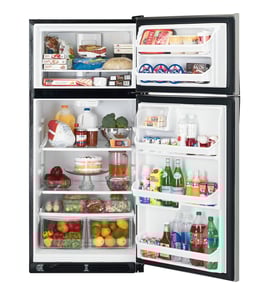

Can you still get parts for Kenmore refrigerators?
Yes. We still support Kenmore refrigerator repairs by offering replacement parts for many models, including Kenmore model 10676393412. The key is matching parts to your exact model number so the fit, wiring, and mounting points are correct; start with the 10676393412 owner's manual to confirm features and configurations.
How to find the right part for your Kenmore model 10676393412
Use the model number first, then narrow by the symptom or the part location (freezer section, fresh food section, behind the toe grille, etc.).
- Confirm the full model number on the rating label (inside the refrigerator compartment)
- Identify the symptom (no cooling, warm freezer, door not sealing, light stays off)
- Look up the part by description and match it to the model-specific list
- Compare the part ID and the part name before ordering
- If multiple versions exist (color or revision), match your original part details
Common parts we see replaced on this model
These are examples of parts available for Kenmore 10676393412 that cover frequent repair needs:
| What you’re fixing | Example part for this model | What it does |
|---|---|---|
| Compressor will not start or clicks | Refrigerator start device WPW10448874 | Helps start the compressor and protects it from overload |
| Compressor struggles to start | Refrigerator run capacitor WPW10662129 | Provides an extra boost to help the compressor start |
| Interior light issue | Refrigerator light switch W11384469 | Turns the light on and off when the door opens/closes |
| Frost or defrost timing problems | Refrigerator defrost timer 4388931 | Cycles the defrost system to prevent heavy frost buildup |
Why it matters
Kenmore refrigerators were built by different manufacturers over the years, so “Kenmore refrigerator parts” is not specific enough. Using 10676393412 ensures you get the correct OEM-style replacement part for your exact top-mount refrigerator design.
Helpful DIY reference
If your refrigerator is showing a code or you’re troubleshooting an electronic issue, use Kenmore 106 model refrigerator error codes to narrow the problem before ordering parts.
Last updated: February 2026
How do I tell what model Kenmore fridge I have?
To tell what model Kenmore refrigerator you have, look for the model and serial tag on the cabinet frame inside the fresh food section or freezer. On Kenmore model 10676393412, the tag is typically inside the compartment, not on a removable shelf or bin.
Where to look first (most common spots)
- Inside the refrigerator compartment on a side wall (near the top or near the crisper area)
- Inside the refrigerator compartment on the ceiling area near the light
- Inside the freezer compartment on a side wall
- On the cabinet frame behind the lower crisper drawers
- Behind the lower front kick plate or toe grille (you may need a flashlight)
What the label looks like
The tag usually includes:
- Model number (example: 10676393412)
- Serial number (a longer mix of letters and numbers)
- Electrical ratings (volts/amps)
- Sometimes a manufacturing date code
Quick ID tips (so you record the right number)
- Write down the full model number exactly as shown (all digits matter)
- Take a clear photo of the tag before ordering parts
- If you see multiple numbers, use the one labeled MODEL
| What you found | What to do with it |
|---|---|
| Model number (like 10676393412) | Use it to match diagrams and order exact-fit parts |
| Serial number | Helps confirm production series and compatible revisions |
| Only a partial number | Keep looking; the full model is needed for best accuracy |
Why it matters
Kenmore refrigerators can look similar across different series, but parts like door bins, gaskets, and electrical components vary by model. Using the exact model number helps us match the correct diagrams and avoid returns.
For model-specific identification details and label locations, use the 10676393412 owner's manual.
Last updated: February 2026
How much top clearance does a fridge need?
For a Kenmore top-mount refrigerator like model 10676393412, we recommend about 1 inch of open space above the refrigerator cabinet (not the hinge) so heat can vent properly and the unit can run efficiently. Always confirm the exact ventilation requirements in the 10676393412 owner's manual.
Recommended clearances (typical for top-mount refrigerators)
Use these as practical targets when installing in a cabinet opening or alcove:
- Top: ~1 inch (above the cabinet, not the hinge)
- Sides: 1/8 inch to 1 inch per side (more space helps doors swing and improves airflow)
- Back: 1 inch to 2 inches (helps condenser airflow and prevents kinks in the water line, if equipped)
- Front: keep the grille/toe-kick area unobstructed
Quick clearance guide
| Location | Typical minimum | Better target |
|---|---|---|
| Top | 1 inch | 1 inch |
| Sides | 1/8 inch | 1/2 inch to 1 inch |
| Back | 1 inch | 2 inches |
Why it matters
Proper clearance helps the condenser and compressor shed heat. When airflow is restricted, the refrigerator can run longer, cool poorly, and build up extra heat around the cabinet.
Installation tips that prevent common problems
- Level the refrigerator so doors self-close and seal consistently.
- Avoid pushing the cabinet tight against the wall; protect the water line and power cord.
- Keep the condenser area clean so airflow stays strong.
- If doors hit cabinets or walls, increase side clearance or adjust placement.
Last updated: February 2026
How to read Kenmore model numbers?
Kenmore model numbers tell us who built the appliance and which design family it belongs to; that is how we match the right parts and service information. For Kenmore refrigerator model 10676393412, the 106 prefix identifies the manufacturer group, and the remaining digits narrow down the exact configuration.
How the Kenmore model number is structured
Most Kenmore model numbers follow a simple pattern:
- Prefix (first 3 digits): manufacturer identifier (who made it for Kenmore)
- Middle digits: product design series (platform and major features)
- Last digits: version, color, and engineering changes
For refrigerators, the model tag is commonly found:
- On the inside wall of the fresh food compartment
- Along the door frame near the gasket
- On a side wall near the crisper drawers
- Sometimes behind the toe grille
For diagrams and the exact tag location on this unit, use the 10676393412 owner’s manual.
Quick example using your model: 10676393412
| Section | Example | What it tells us |
|---|---|---|
| Manufacturer prefix | 106 | Who built the refrigerator for Kenmore |
| Model series | 7639 | Design family and feature set |
| Version digits | 3412 | Specific configuration and revisions |
Why it matters when ordering parts
Using the full model number (not just “Kenmore top-mount”) helps us avoid mismatches caused by small design changes.
- Door bins and shelves can vary by revision
- Electrical parts can change by production run
- Gaskets can differ by color and door style
- Cooling system parts must match the exact platform
If you are troubleshooting and need to identify the right cooling-system parts for this model, common examples include the refrigerator start device WPW10448874 and refrigerator run capacitor WPW10662129.
Last updated: February 2026
What is the cubic foot of my Kenmore refrigerator model 10676393412?
The exact cubic-foot capacity for Kenmore refrigerator model 10676393412 is listed on the model’s rating label and in the 10676393412 owner's manual. For most Kenmore 106 top-mount refrigerators, total capacity commonly falls in the 18 to 22 cu. ft. range.
How to find the exact cubic feet for 10676393412
Check these two places first:
- Owner’s manual specs section (often under “Product dimensions and capacity”)
- Rating label inside the fresh food compartment (commonly on a side wall near the crisper area)
- Model and serial tag (sometimes includes capacity or a code tied to capacity)
- Parts diagram descriptions (occasionally notes “18 cu. ft.” or similar)
Quick capacity guide (what the number means)
Capacity is the total interior volume of both compartments.
| Capacity type | What it includes | Why it can look “off” |
|---|---|---|
| Total capacity | Refrigerator + freezer | Shelves, bins, and ducts reduce usable space |
| Usable space | What you can actually store | Varies with ice maker, air channels, and shelf layout |
Why it matters
Knowing the correct cubic feet helps us match the right shelves, door bins, and door gaskets, and it also helps when comparing energy use and storage needs for your household.
Related help for Kenmore refrigerators
If your display is showing codes or you are troubleshooting cooling issues while checking specs, use Kenmore 106 model refrigerator error codes for model-family guidance.
Last updated: February 2026
What is the top mount refrigerator?
A top-mount refrigerator is a classic fridge layout where the freezer is on top and the fresh-food (refrigerator) section is below. Your Kenmore model 10676393412 uses this design to keep everyday refrigerated items at easy reach while still providing a full-width freezer compartment.
How a top-mount layout is set up
In most Kenmore top-mount refrigerators, you will see these common features:
- Freezer compartment on the top with a swing door
- Fresh-food compartment below with adjustable shelves and door bins
- Shared cooling system that moves cold air from the freezer into the refrigerator section
- Temperature controls located inside the fresh-food section or the freezer (varies by model)
- A defrost system that periodically melts frost off the evaporator to maintain airflow
Why people choose a top-mount refrigerator
Top-mount models are popular because they balance capacity, simplicity, and cost.
| Feature | Top-mount refrigerator | Bottom-freezer refrigerator |
|---|---|---|
| Freezer access | Higher up | Lower down |
| Fresh-food access | Mid-level and lower | More at eye level |
| Typical design complexity | Lower | Higher |
| Common service items | Door gaskets, fans, defrost parts | Drawers, rails, icemaker systems (varies) |
Parts that commonly affect performance in this style
If cooling, airflow, or door sealing becomes an issue on a top-mount refrigerator, these are common areas we check first:
- Door sealing and alignment (warm air leaks cause frost and temperature swings)
- Evaporator airflow (fan and vents)
- Compressor start components
- Defrost system timing and operation
For model-specific diagrams, control locations, and care instructions, use the 10676393412 owner's manual.
Why it matters
Because the freezer is the primary cold source in many top-mount designs, restricted airflow (ice buildup, blocked vents, weak fan) can cause the refrigerator section to warm up even when the freezer still seems cold.
Last updated: February 2026
What is the upper part of a fridge called?
On a Kenmore top-mount refrigerator like model 10676393412, the upper compartment is the freezer. It is designed to keep foods frozen and typically houses freezer shelves/bins and, on some setups, ice-making components (if equipped). See the 10676393412 owner's manual for the exact compartment features on your unit.
What the freezer does (and what it includes)
In a top-mount refrigerator, the freezer is the coldest section and supports long-term frozen storage.
- Maintains below-freezing temperatures for frozen foods
- Helps chill the fresh food section through airflow and temperature control
- Often includes shelves, door bins, and an ice tray or ice maker (if installed)
- Uses internal airflow paths; blocked vents can reduce cooling performance
- Relies on door sealing; gaps can cause frost and temperature swings
Common terms you may see
Different manuals and parts diagrams may use slightly different names for the same “upper part.”
| What you call it | What it usually means | Where it is |
|---|---|---|
| Freezer | Frozen-food compartment | Top (top-mount models) |
| Freezer compartment | Same as freezer | Top |
| Freezer section | Same as freezer | Top |
| Fresh food compartment | Refrigerator section (not the freezer) | Bottom |
Why it matters
Knowing the correct name helps when you are ordering parts, reading troubleshooting steps, or describing a problem (for example, “freezer cold but refrigerator warm” often points to an airflow or defrost issue).
If you are tracking down a cooling symptom, our Kenmore 106 model refrigerator error codes guide can also help you identify what the control is reporting (when your model has a display).
Last updated: February 2026
What's the average lifespan of a Kenmore refrigerator?
Most Kenmore refrigerators average 10 to 15 years of service life; a well-maintained top-mount like model 10676393412 often reaches the upper end of that range when airflow, door sealing, and temperatures are kept in check. For model-specific care and settings, follow the 10676393412 owner's manual.
Typical lifespan and what changes it
A refrigerator’s life is mostly driven by compressor run time, heat removal, and how hard the doors and seals have to work.
- 10 to 15 years is the typical lifespan for most household refrigerators
- 15+ years is common when condenser coils stay clean and doors seal tightly
- Heavy use (frequent door openings, warm garage installs) can shorten life
- Poor airflow around the cabinet and dirty coils increase compressor stress
- Small issues fixed early (noisy fan, weak start) prevent major failures
Maintenance that helps you reach the high end of the range
These steps reduce heat load and keep the sealed system from working overtime.
- Vacuum dust from the condenser area (often behind the toe grille or rear panel)
- Keep door gaskets clean and fully sealing; correct door alignment if needed
- Set stable temps (typical targets: 0°F freezer, 37°F fresh food)
- Avoid overpacking so air can circulate through vents
- Listen for new noises (clicking, buzzing, fan rubbing) and address them early
Parts that commonly affect longevity (and symptoms)
If your refrigerator is warm, noisy, or repeatedly clicking, these model-matched parts are often involved.
| Symptom | Common cause | Example model-matched part |
|---|---|---|
| Clicking, won’t start, then tries again | Start components failing | Refrigerator start device WPW10448874 |
| Hums but struggles to start | Weak run capacitor | Refrigerator run capacitor WPW10662129 |
| Warm temps, weak airflow, fan noise | Fan blade damage or obstruction | Fan blade WP2163777 |
Why it matters
A refrigerator that runs hotter or longer than normal wears the compressor and electrical start components faster; basic cleaning and sealing checks can add years and reduce food-spoilage risk.
Last updated: February 2026