Owner’s manual
 Error Codes




What is the capacity of Maytag mtw5700tq0?
The Maytag MTW5700TQ0 top-load washer has a 3.2 cu. ft. wash basket capacity, which is a common mid-size capacity for traditional agitator washers. For cycle and load-size guidance that matches this model, use the MTW5700TQ0 owner's manual.
A 3.2 cu. ft. washer is designed for typical household loads without overfilling the tub.
- Handles most daily mixed loads comfortably
- Works well for towels and jeans in moderate quantities
- Bulky items (comforters, large blankets) may need one item at a time
- Best cleaning happens when clothes can circulate around the agitator
Use this as a starting point; adjust based on fabric thickness and how freely items move.
| Load type | Typical fit in 3.2 cu. ft. | Tip |
|---|---|---|
| Mixed everyday clothes | Medium to large | Keep items below the top row of holes |
| Bath towels | Medium | Add towels gradually to avoid imbalance |
| Bulky items | Small | Wash one bulky item with a few small items |
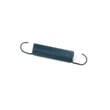
Capacity affects cleaning and spinning performance. Overloading a 3.2 cu. ft. tub can reduce agitation, leave detergent residue, and increase out-of-balance spinning, which can stress suspension components such as the washer suspension spring WP63907.
- Choose the correct water level for the load size
- Use HE detergent if your detergent label calls for it; measure carefully
- Distribute items evenly around the basket before starting
- If the washer will not spin with the lid open, check the washer lid switch assembly WP8318084
Last updated: January 2026
What is the most common problem with Maytag washer top loader?
For the Maytag MTW5700TQ0 top-load washer, the most common customer-reported problem is spin-related issues (won’t spin, won’t drain fully, or clothes come out wet). The usual causes are a lid switch problem, a draining restriction or failed pump, or a worn drive system component.
- Washer won’t spin at all: lid switch not sensing the lid closed, drive system not engaging
- Clothes still wet after cycle: slow drain, partial spin, unbalanced load
- Won’t drain or drains slowly: clogged pump or hose, failed drain pump
- Loud banging or walking: out-of-balance load, weak suspension springs
- Agitator not moving correctly: worn agitator dogs or agitator drive parts
For model-specific operating checks and cycle behavior, use the MTW5700TQ0 owner’s manual.
- Redistribute the load (especially bulky items) and rerun a spin.
- Confirm the lid closes firmly; if the washer stops when you lift the lid, the lid switch circuit is critical for spin.
- Check draining: listen for the pump during drain; inspect the drain hose for kinks or clogs.
- Level the washer: an unlevel cabinet increases vibration and can reduce spin performance.
- Use the right detergent amount: oversudsing can interfere with drain and spin.
| Symptom | Common fix | Example part for this model |
|---|---|---|
| Won’t spin / stops when lid opens | Lid switch not closing | Washer lid switch assembly WP8318084 |
| Won’t drain / wet clothes | Drain pump weak or jammed | Washer drain pump WP3363394 |
| Poor agitation / top agitator slips | Agitator dogs worn | Agitator dog 80040 |
Spin and drain problems are often connected; if the washer cannot drain fast enough, it cannot reach full spin speed. Fixing the root cause helps prevent repeat wet loads, long cycle times, and excess vibration.
Last updated: January 2026
Is it worth repairing a Maytag MTW5700TQ0 washer?
Yes, repairing a Maytag MTW5700TQ0 washer is worth it when the fix is a common, lower-cost failure (drain, lid switch, agitation) and the tub and drive system are in good shape; it is usually not worth it when the repair involves major drive or basket components and labor approaches the cost of replacement.
- Choose repair when the washer still fills, drains, and spins most of the time, and the problem is isolated.
- Choose replacement when you have repeated leaks, loud grinding, severe vibration, or multiple symptoms at once.
- Repair is typically a good value for “no drain,” “won’t start,” or “won’t agitate” issues.
- Replacement is typically a better value for major mechanical failures (gear case, basket drive, drive tube) plus labor.
- Use the troubleshooting and part diagrams in the MTW5700TQ0 owner’s manual to confirm symptoms before ordering parts.
These are frequent, straightforward fixes on top-load Maytag washers like MTW5700TQ0:
- Won’t drain or leaves water behind: check the washer drain pump WP3363394
- Won’t start or stops when the lid opens: check the washer lid switch assembly WP8318084
- Agitator slips or doesn’t move clothes well: check the agitator dog 80040
- Agitator loose: inspect the washer agitator bolt WP358237
| Repair situation | Typical value call | Why |
|---|---|---|
| Single part failure, washer otherwise solid | Repair | Restores function with minimal risk |
| Multiple symptoms or repeated breakdowns | Replace | Higher chance another part fails soon |
| Major drive/basket work plus labor | Replace | Cost and downtime rise quickly |
A targeted repair can extend the life of the MTW5700TQ0 for years, but major drivetrain work often turns into a chain of related parts (clutch, drive block, gear case) and the total cost can exceed the washer’s practical value.
Last updated: January 2026
What's the average lifespan of a Maytag washer?
Most Maytag washers average 10 to 13 years of service life; with consistent care, many run 14 years or longer. For your Maytag MTW5700TQ0 top-load washer, lifespan depends most on load size, installation (leveling), and how quickly you address wear items.
A washer’s life is usually limited by wear in the drive and drain systems, plus vibration-related stress.
- Overloading speeds up wear on the drive system and suspension
- Frequent unbalanced loads increase stress on the basket, springs, and drive block
- Hard water can contribute to residue buildup and odors
- Slow draining strains the drain pump and can leave water in the tub
- Delayed repairs often turn a small issue into a larger failure
If performance changes, these parts are often involved on a top-load washer like the MTW5700TQ0:
- Washer drain pump WP3363394 (draining problems, humming, leaks)
- Washer lid switch assembly WP8318084 (won’t spin or drain when the lid isn’t sensed as closed)
- Clutch 285785 (weak spin, burning smell, intermittent spin)
- Washer suspension spring WP63907 (excessive shaking, banging)
Use this as a practical way to judge whether extending life makes sense.
| Situation | What it usually means | Typical next step |
|---|---|---|
| Washer won’t drain | Drain restriction or pump issue | Check hose, then test/replace pump |
| Won’t spin but fills/agitate | Lid switch or drive issue | Verify lid switch, then clutch/drive parts |
| Loud banging on spin | Load balance or suspension wear | Re-level, then inspect springs |
| Water leak underneath | Hose, pump, or tub seal area | Inspect for drips during fill/drain |
These habits reduce strain on the motor, gearcase, basket, and pump.
- Keep loads evenly distributed; wash bulky items with similar items
- Use the right amount of HE detergent to reduce suds and residue
- Leave the lid open after use to help the tub dry and reduce odor
- Periodically check fill and drain hoses for bulges, cracks, or seepage
- Level the washer to minimize vibration (especially before high-speed spin)
A Maytag washer that is kept level, not overloaded, and repaired promptly typically reaches the upper end of the 10 to 13-year range because the drive and suspension components avoid repeated shock and overheating.
For model-specific operating and care guidance, follow the MTW5700TQ0 owner’s manual.
Last updated: January 2026