Owner’s manual
 Error Codes


How do I tell what model my Kenmore dryer is?
Your Kenmore dryer’s model number is printed on the model and serial number plate; for Kenmore model 11067902791, that plate is typically found in the door opening area. Once you have the full model number and serial number, we can match the correct parts and specifications.
Check these common locations on Kenmore electric dryers like 11067902791:
- Inside the dryer door opening (most common)
- On the door frame or inner front panel near the opening
- On the back panel of the dryer cabinet
- Near the lint screen housing (on some designs)
If you need a visual reference for the plate location and how it’s described by Kenmore, use the 11067902791 owner's manual.
Record the information exactly as shown on the plate:
- Model number (example: 11067902791)
- Serial number (letters and numbers)
- Date of purchase (helpful for your records)
| Item | What it’s used for | Why it matters |
|---|---|---|
| Model number | Parts lookup and diagrams | Ensures exact fit for your dryer |
| Serial number | Version/production details | Helps confirm the correct variation |
| Type (electric) | Heating and wiring parts | Prevents ordering the wrong heating components |
Kenmore model numbers can look similar, but small differences change which parts fit. For example, heating and safety parts must match your exact model:
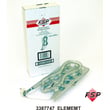
- Dryer heating element WP3387747 (heat production)
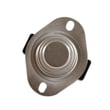
- Dryer thermal fuse WP3390719 (overheat safety shutoff)
- Dryer operating thermostat WP3387134 (temperature regulation)
Using the correct model number prevents repeat repairs and helps keep airflow and temperature in the safe operating range.
Last updated: February 2026
How to replace thermal fuse on Kenmore 11067902791 dryer?
On Kenmore electric dryer model 11067902791, replacing the thermal fuse is a straightforward repair: we unplug the dryer, access the blower housing area, move the wires to the new fuse one at a time, and reinstall the mounting screw. Use the steps in the 11067902791 owner's manual for safe access and reassembly.
- Unplug the dryer (or switch off the breaker); an electric dryer uses 240V power.
- Let the dryer cool completely.
- Wear work gloves; cabinet edges can be sharp.
- Have a 1/4-inch nut driver or socket, plus a small flat screwdriver.
- Take a quick photo of wire positions before removing anything.
- Disconnect power.
- Remove the lower access panel or front panel (depending on your exact console/cabinet style).
- Locate the thermal fuse on the blower housing (small, flat fuse with two wires).
- Pull off the two wire connectors.
- Remove the mounting screw, then remove the fuse.
- Install the new fuse and tighten the screw.
- Reconnect wires (match your photo).
- Reassemble panels, restore power, and run a timed heat cycle to confirm operation.
| What you replace | What it does | When it commonly fails |
|---|---|---|
| Thermal fuse | Stops the dryer if it overheats | Restricted venting, lint buildup, weak airflow |
If you need the correct replacement for this model, the listed dryer thermal fuse WP3390719 is a common match for Kenmore 110-series electric dryers.
A thermal fuse usually opens because the dryer overheated from poor airflow. We correct the airflow issue before running loads.
- Clean the lint screen and the lint screen housing
- Check the vent hose for kinks or crushing
- Clean the full vent run to the outside hood
- Confirm strong airflow at the outside exhaust hood
- Avoid running the dryer with the vent disconnected for normal use
- Dryer still will not run: check door switch, timer, and house breakers.
- Runs but no heat: one house fuse/breaker leg can be tripped; the drum may turn with no heat.
- Long dry times: vent restriction or a clogged blower wheel.
Last updated: February 2026
What are common dryer part failures?
On Kenmore electric dryer model 11067902791, the most common part failures involve heating, airflow, and drum drive components. These problems typically show up as no heat, long dry times, no tumbling, or the dryer shutting off from overheating; checking venting first prevents repeat failures (see the 11067902791 owner's manual).
- No heat or weak heat: failed heating circuit parts such as the heating element, thermal fuse, or operating thermostat
- Dryer runs but takes too long: restricted exhaust venting, lint buildup, or a damaged blower wheel
- Drum will not tumble: worn drum support rollers, a failing idler pulley, or a motor issue
- Squealing, thumping, or rumbling: worn rollers or idler pulley
- Won’t start or stops when the door moves: door latch or door switch problems
| Symptom | Common suspect part | Example part for this model |
|---|---|---|
| No heat | Heating element | Dryer heating element WP3387747 |
| Runs then shuts off (overheats) | Thermal fuse | Dryer thermal fuse WP3390719 |
| Squeal or drum drag | Idler pulley | Dryer idler pulley 279640 |
| Thump/rumble | Drum support rollers | Support kit WPW10314173 |
- Clean the lint screen before every load; poor airflow mimics heating failures.
- Inspect the vent path end-to-end and clear lint; the manual specifies a 4-inch heavy metal vent and warns against plastic or foil venting.
- Confirm the dryer is exhausted outdoors; exhausting into walls, ceilings, or concealed spaces creates overheating and drying issues.
- Verify power supply: this electric dryer needs a dedicated 120/240V (or 120/208V if listed), 30-amp circuit.
- If the dryer is new to you, a brief burning odor on first heat use can be normal and should fade.
Most repeat “no heat” and “thermal fuse blew” complaints trace back to restricted airflow. Fixing venting first protects the heating element, thermostat, and fuse, and it shortens dry times and lowers energy use.
Last updated: February 2026
What size is a Kenmore model 11067902791 dryer?
Kenmore electric dryer model 11067902791 is a 27-inch wide dryer. For the full cabinet dimensions and the installation clearances you need (including the typical space behind the dryer for venting), we list them in the 11067902791 owner's manual.
A “27-inch wide” rating describes the cabinet width class used for most full-size Kenmore and Whirlpool-built dryers. Depth and height vary by design details (console style, door, leveling legs), so use the manual dimensions when planning a tight closet or laundry room.
- Plan for the dryer body width plus a little side clearance for airflow and vibration
- Leave room to fully open the dryer door
- Account for venting space behind the dryer (many installs need about 5 inches)
- Make sure the floor is level; the manual allows up to about 1 inch slope under the dryer
- Confirm your electrical connection and vent route before final placement
Use a tape measure and record these three numbers:
- Width: side panel to side panel
- Depth: back panel to the front-most point (often the door)
- Height: floor to the top (include leveling legs)
Then compare your space to the manual’s requirements for recessed or closet installations.
| Item to plan for | What to measure | Why it matters |
|---|---|---|
| Cabinet width class | 27-inch wide | Confirms this is a full-size dryer footprint |
| Behind-dryer space | Vent clearance | Prevents crushed or kinked exhaust duct |
| Door swing | Front clearance | Lets you load/unload without obstruction |
Correct sizing prevents poor airflow and long dry times. Tight installs can also pinch the exhaust duct, which can overheat the dryer and lead to repeated thermal fuse trips.
Last updated: February 2026