Installation guide
 Owner’s manual
 Error Codes


What is the average lifespan of a KitchenAid dishwasher?
A KitchenAid dishwasher typically lasts about 10 years with normal household use and routine maintenance. For your KitchenAid KDTE204ESS3, following the care, loading, and detergent guidance in the owner's manual helps you get the full expected service life.
Typical lifespan and what affects it
Most dishwashers reach their average lifespan based on a mix of usage, water quality, and upkeep. The biggest factors we see are:
- Loads per week (heavy daily use shortens lifespan)
- Hard water and mineral buildup (affects heating and wash performance)
- Consistent use of rinse aid for drying and deposit control
- Keeping filters and spray paths clear
- Fixing small leaks or draining issues early
What “normal use” looks like for KDTE204ESS3
This model is designed for longer, energy-efficient cycles. Expect many cycles to run 2 to 3 hours, and some options can push cycles longer. Longer cycles are normal and not a sign the dishwasher is wearing out.
| Usage pattern | Typical outcome | What to do |
|---|---|---|
| 3 to 5 loads/week | Often reaches ~10 years | Keep up with cleaning and rinse aid |
| 7+ loads/week | Often wears sooner | Clean more often; address symptoms quickly |
| Hard water area | More buildup-related issues | Use rinse aid; clean regularly |
Maintenance that extends dishwasher life
These steps reduce strain on key components like the circulation system, drain system, and heating circuit:
- Use rinse aid consistently to improve drying and reduce hard-water deposits
- Run a dishwasher cleaning routine regularly (especially if you notice odor or film)
- Check that the door closes and latches smoothly; avoid slamming
- Keep the lower rack rolling smoothly; worn rollers can cause rack drag and misalignment
- Watch for early symptoms: poor draining, leaks, or weak cleaning, and correct them promptly
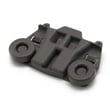
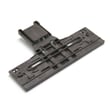
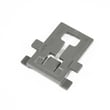
If your lower rack is hard to roll or keeps coming off track, replacing worn rack wheels can prevent extra wear on the rack and tub rails; see the dishwasher dishrack roller assembly, lower WPW10195417.
Why it matters
Once a dishwasher gets past its average lifespan, small issues (leaks, draining problems, weak heating, poor drying) tend to cascade into bigger repairs. Regular maintenance helps you avoid repeat stress on high-wear parts like pumps, seals, and the heating element.
Last updated: February 2026
What is the most common problem with a KitchenAid dishwasher?
For KitchenAid dishwashers like model KDTE204ESS3, the most common issue we see is a drainage problem: the dishwasher will not drain fully, leaves water in the tub, or stops mid-cycle. In most cases, the cause is a clogged filter or drain path, or a failing drain pump.
What to check first (fast, no-parts steps)
- Cancel the cycle and let the unit attempt a drain; listen for the drain pump running.
- Check the tub bottom for standing water and remove any debris.
- Inspect the filter area and sump for food, labels, glass, or bone fragments.
- Verify the sink drain and garbage disposal inlet are clear (a blocked sink drain can mimic a dishwasher drain failure).
- Confirm the drain hose is routed correctly and not kinked.
Common causes and the likely fix
| Symptom | Most likely cause | What usually fixes it |
|---|---|---|
| Water left in tub after cycle | Clogged filter or drain path | Clean filter and sump area; clear hose routing |
| Hums but drains slowly | Restricted hose or air gap (if used) | Clear restriction; correct hose loop |
| No drain sound at all | Failed drain pump or wiring issue | Replace the drain pump |
| Drains sometimes, not always | Intermittent pump or control issue | Check pump first; then diagnostics per manual |
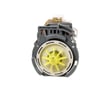
If you determine the pump is not moving water, the correct replacement for this model is the dishwasher drain pump W10876537.
Why it matters
Drain problems can trigger cycle interruptions, odors, and poor cleaning because dirty water recirculates. Fixing drainage early also helps protect the circulation system and keeps wash performance consistent.
Helpful model-specific resources
- Use the troubleshooting and “Problem Solver” section in the owner's manual to match symptoms (for example, indicator lights and basic checks) to the right repair path.
- If you are seeing a flashing light pattern or a stored fault, use the KitchenAid microclean he dishwasher error codes guide to narrow the diagnosis before replacing parts.
Last updated: February 2026
How do I find the model number on my KDTE204ESS3?
On KitchenAid dishwasher model KDTE204ESS3, the model number is printed on a label inside the tub along the left outer edge. Open the door and look along the left side wall near the front opening; the label lists both the model and serial number.
Where to look (quick checklist)
- Open the dishwasher door fully.
- Look inside the tub, not on the outer door panel.
- Check the left outer edge of the tub opening.
- Find the label that lists Model and Serial.
- Wipe the area with a damp cloth if the label is hard to read.
What the label typically includes
| Label item | What it’s used for | When you need it |
|---|---|---|
| Model number | Identifies the exact version of your dishwasher | Ordering the correct parts, manuals, diagrams |
| Serial number | Identifies production run and date details | Service history, warranty paperwork |
Why it matters
KitchenAid dishwashers can look similar across multiple series, but parts like a door seal, drain pump, or control board can vary by model revision. Using the exact model number from the tub label helps ensure the right fit and avoids returns.
Helpful tip for parts matching
When you write the model number down, copy it exactly (letters and numbers). Then use it to match parts and diagrams in the KDTE204ESS3 owner's manual.
Last updated: March 2026