Owner’s manual
 Error Codes


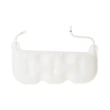
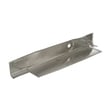
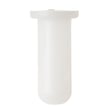
How to remove bottom grille on GE refrigerator?
On the GE GFE28HMHCES bottom-mount refrigerator, the bottom grille (base grille/toe grille) typically comes off by removing any retaining screws (if present) and then pulling the grille straight out to release the locking tabs. Use the steps in the owner's manual for the exact fastener locations for your unit.
Steps to remove the bottom grille
- Unplug the refrigerator or switch off power at the breaker (safer when working near wiring and fans).
- Look along the top edge and corners of the grille for Phillips-head screws; remove them if you see them.
- Grip the grille near both ends and pull straight toward you; apply steady pressure to pop the tabs free.
- If it feels stuck, slide a plastic putty knife along the seam to gently release clips (avoid metal tools that can scratch).
- Set the grille aside and keep screws together for reinstallation.
What you might see behind the grille (and what to do)
Once the grille is off, it is common to see dust buildup and service-access areas.
| What you notice | What it usually means | What to do next |
|---|---|---|
| Heavy dust/lint | Reduced airflow and efficiency | Vacuum carefully; do not bend coils or wiring |
| Water on the floor area | Possible drain or defrost issue | Check for ice or blockage; review drainage guidance in the manual |
| Warm air blowing | Normal condenser airflow | Make sure the grille goes back on securely |
Why it matters
The bottom grille helps direct airflow for cooling and protects components. If it is loose, blocked, or missing, the refrigerator can run longer, cool unevenly, and collect dust faster.
Reinstalling the grille
- Line up the tabs with the slots and push the grille straight in until it snaps flush.
- Reinstall any screws you removed.
- Restore power and confirm the grille is secure and not rubbing.
Last updated: February 2026
What is the most common problem with a GE refrigerator?
The most common GE refrigerator complaint is not cooling properly (fresh food warm, freezer soft, or temperatures swinging). On the GE GFE28HMHCES bottom-mount refrigerator, the usual causes are airflow issues, a failing evaporator fan, defrost problems, or a temperature-sensing/control issue; confirm settings and diagnostics in the owner's manual.
Most common symptoms and what they usually point to
- Fridge warm, freezer cold: restricted air ducting, evaporator fan issue, frost buildup on evaporator
- Both sections warm: condenser airflow problem, control issue, sealed-system problem
- Temps fluctuate: sensor drifting, door not sealing, frequent door openings
- Loud humming or rattling: fan motor, ice maker, or something vibrating against tubing/pan
- Water under fridge or in crisper: clogged/iced drain, water line connection, filter seating
Quick checks we recommend first (no parts yet)
- Verify set temps (typical targets: 37°F fresh food, 0°F freezer).
- Make sure vents are not blocked by food packages.
- Check door closure and gasket contact all the way around.
- Clean dust from condenser area (poor heat release causes warm temps).
- If you see heavy frost on the rear freezer panel, suspect a defrost/airflow issue.
Common parts involved on this model
If basic checks do not fix cooling problems, these parts are frequently involved on GFE28HMHCES:
| Problem pattern | Common part to check | What it affects |
|---|---|---|
| Temps swing or read wrong | Refrigerator temperature sensor WR55X10025 | Tells the control how cold it is |
| Warm fridge, weak airflow | Refrigerator evaporator fan motor assembly WR60X35205 | Moves cold air through compartments |
| Frost buildup, airflow blocked | Refrigerator defrost heater WR51X10132 and refrigerator defrost bi-metal thermostat WR50X10108 | Clears frost off the evaporator |
| Random behavior, no response | Refrigerator electronic control board WR55X44126 | Manages cooling and defrost cycles |
Why it matters
When a refrigerator is not cooling, food safety and compressor run time are the big concerns. Fixing airflow, defrost, or sensing issues early helps the GE GFE28HMHCES cool evenly and prevents excessive frost and strain on the cooling system.
Related help for GE refrigerators
Last updated: February 2026
What is the life expectancy of a GE Monogram refrigerator?
A GE Monogram refrigerator has a typical life expectancy of 15 to 20 years. That is longer than many standard full-size refrigerators, which commonly run about 12 years. Use the care and cleaning steps in the GFE28HMHCES owner's manual to reduce wear and extend service life.
Typical lifespan comparison
| Refrigerator type | Typical life expectancy | What most affects longevity |
|---|---|---|
| GE Monogram refrigerator | 15 to 20 years | Coil cleanliness, door sealing, stable temps |
| Standard full-size refrigerator | About 12 years | Maintenance, airflow, ambient heat |
What most extends life (works for Monogram and GE GFE28HMHCES)
- Clean condenser coils and keep the area around the unit ventilated.
- Keep door gaskets clean and sealing; fix rips, gaps, or warping quickly.
- Maintain steady settings (fresh food about 37°F, freezer about 0°F).
- Do not block interior air vents; keep airflow paths open.
- Replace water filters on schedule to protect valves and maintain flow.
- Address symptoms early (warm temps, frost buildup, loud fan noise).
Why this matters
Most premature refrigerator failures come from heat and long run times. Dirty coils, poor door sealing, and restricted airflow force the compressor, fans, and control boards to work harder, which shortens overall lifespan.
Parts that support long-term performance on GE model GFE28HMHCES
If you are maintaining or troubleshooting this specific bottom-mount model, these parts commonly affect cooling and water performance:
- Refrigerator condenser coil WR84X10115 (helps the sealed system shed heat)
- Refrigerator freezer door gasket WR14X36194 (prevents warm air leaks and frost)
- GE refrigerator water filter RPWFE (protects the water system and helps maintain flow)
Last updated: February 2026