 Owner’s manual
 Error Codes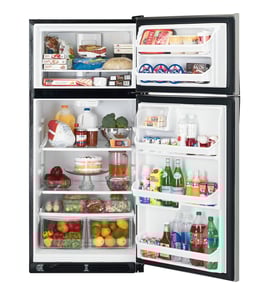



What is a top mount refrigerator?
A top-mount refrigerator (also called a top-freezer refrigerator) has the freezer compartment on top and the fresh-food section below. Your Kenmore model 11171219612 uses this layout, which keeps frozen items up high and everyday refrigerated items at a comfortable reach.
How the top-mount layout works
A top-mount design cools both compartments using the same sealed refrigeration system; airflow and temperature controls balance how much cooling goes to the freezer versus the refrigerator.
Common characteristics include:
- Freezer on top, refrigerator below
- Two separate doors (one for each compartment)
- Air vents that move cold air from the freezer area into the fresh-food section
- Temperature controls that affect both sections
- Optional ice maker on some versions
What this means for space and installation
Top-mount refrigerators are popular because they fit well in many kitchens and keep the freezer at eye level.
| Feature | What you get with top-mount |
|---|---|
| Storage layout | Frozen foods above, fresh foods below |
| Service access | Many routine items (lights, shelves, door bins) are easy to reach |
| Cooling behavior | Freezer tends to run coldest; fridge relies on airflow from freezer |
For model-specific features, control locations, and care instructions for Kenmore 11171219612, use the owner's manual.
Why it matters
Knowing you have a top-mount refrigerator helps with everyday use and troubleshooting. For example, if the refrigerator section is warm but the freezer is cold, the issue is often airflow (blocked vents, frost buildup, or a fan problem) rather than a total loss of cooling.
If you ever see a display code, use the model-family reference in Kenmore 111 model top freezer refrigerator error codes.
Last updated: February 2026
What water filter fits my Kenmore fridge?
For Kenmore top-mount refrigerator model 11171219612, the correct water filter is the one specified for your exact model and filter housing style (internal cartridge vs. inline). The fastest way to match it is to confirm the filter type and replacement procedure shown in the owner's manual.
How to identify the right filter for model 11171219612
Use these checks to avoid ordering the wrong cartridge:
- Look for a filter label inside the fresh food compartment (often near the filter head or upper corner)
- Check the old filter for a printed model or replacement code
- Confirm whether your refrigerator uses an internal twist-in/push-in filter or an external inline filter on the water line
- If you have an ice maker, confirm the water supply is connected and the filter is part of that circuit
- Match by model number 11171219612 first, then by the filter code
What to expect (common Kenmore filter setups)
Kenmore refrigerators commonly use one of these setups; your exact configuration depends on how your 11171219612 was equipped.
| Setup type | Where you’ll find it | What it affects | Typical replacement sign |
|---|---|---|---|
| Internal cartridge filter | Inside refrigerator compartment | Water dispenser and/or ice maker | Slow flow, bad taste/odor |
| Inline water filter | On the water line behind the refrigerator or under sink | Ice maker and/or dispenser | Reduced ice production, slow fill |
| No filter installed | No filter head present | Ice maker only (if equipped) | Sediment in ice, odor issues |
Replacement tips that prevent leaks and low flow
- Shut off the household water supply before removing an inline filter
- After installing a new filter, flush several gallons of water (or discard the first few batches of ice)
- If flow stays weak, check for a kinked water line or a partially closed shutoff valve
- Replace filters on a regular schedule; most refrigerator water filters are changed about every 6 months in normal use
Why it matters
Using the correct filter for Kenmore 11171219612 helps protect the water inlet valve and ice maker fill system from sediment restriction, and it keeps water taste and odor consistent.
Related help
If you’re seeing a display code or performance issue tied to filtration or ice production, use our Kenmore 111 model top freezer refrigerator error codes guide to narrow down the cause.
Last updated: February 2026
What's the average lifespan of a Kenmore refrigerator?
Kenmore refrigerators typically last 12 to 15 years with normal household use. With consistent care (clean condenser coils, good door seals, stable temperatures), many units run longer; heavy use, poor airflow, and neglected maintenance shorten life. For model 11171219612, follow the care and safety guidance in the owner's manual.
Typical lifespan and what affects it
A refrigerator’s service life is mostly driven by heat management and sealing. These factors have the biggest impact:
- Condenser coil cleanliness (dirty coils run hotter and stress the compressor)
- Door gasket condition (air leaks cause long run times and frost)
- Room temperature and ventilation (tight cabinets trap heat)
- Defrost system health (frost buildup blocks airflow)
- Usage habits (frequent door openings, overpacking)
What “end of life” usually looks like
These symptoms often show up as a refrigerator approaches the end of its typical lifespan:
- Food temperatures swing even after adjusting controls
- Compressor runs almost constantly
- Frost builds up quickly in the freezer
- Water puddles appear under or inside the unit
- Doors do not close firmly or seals look warped
Quick maintenance schedule (simple, high impact)
| Task | How often | Why it matters |
|---|---|---|
| Clean condenser coils | Every 6 to 12 months | Reduces compressor heat and run time |
| Check door gaskets with a paper test | Every 3 months | Prevents warm air leaks and frost |
| Keep vents clear (do not block airflow) | Ongoing | Maintains even cooling |
| Level the refrigerator so doors self-close | As needed | Helps sealing and reduces moisture |
Safety note for servicing
This model uses flammable refrigerant (R600a). We recommend avoiding DIY work that involves sealed-system tubing; follow the safety warnings and service guidance in the owner's manual.
Why it matters
Knowing the typical lifespan helps you decide when maintenance is worth doing now (often yes) versus when recurring cooling problems point to a bigger reliability issue.
Last updated: February 2026





