Owner’s manual


What is the capacity of Whirlpool LER4634JQ1?
The Whirlpool LER4634JQ1 dryer’s capacity is not stated in the model-specific documentation we have for this exact model, including the LER4634JQ1 dryer manual. Capacity can vary by version within a model family, so we recommend confirming it from the rating label or official specs tied to your unit.
How to confirm capacity on your exact LER4634JQ1
Use these quick checks to verify the correct cubic-foot rating for your specific dryer.
- Check the model and serial number label (typically on the door opening or cabinet area).
- Look for a spec line that lists “capacity” or “cu. ft.”
- If you have the original sales paperwork, capacity is often listed there.
- Compare your model number exactly (LER4634JQ1) and any additional identifiers on the label.
- If you are planning a repair, use the model number to match parts and diagrams first.
Capacity vs. what it affects
Even if you do not know the exact cu. ft. number, capacity mainly impacts load sizing and drying performance.
| What you’re doing | Why capacity matters | What to do |
|---|---|---|
| Drying bulky items | Overloading reduces tumbling and airflow | Dry fewer items per load |
| Troubleshooting long dry times | Larger loads need more airflow and heat | Clean lint screen and check venting |
| Replacing wear parts | Not capacity-related, but common on this model | Match parts by model number |
Related parts that commonly come up (not capacity-specific)
If you’re researching this model because of a repair (for example, belt replacement), these are common wear items for Whirlpool dryers like the LER4634JQ1:
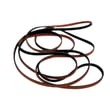
- Dryer drum belt 341241 (drum turns)
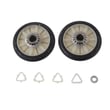
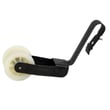
- Drum support components (rollers, shafts, idler pulley)
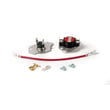
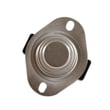
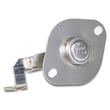
- Heating circuit safety parts (thermal fuse, thermostats)
Why it matters
Knowing the correct capacity helps you avoid overloading, improves drying efficiency, and can reduce issues like long dry times and overheating caused by restricted airflow.
Last updated: January 2026
What is the average lifespan of a whirlpool dryer?
We can’t confirm an “average lifespan” specifically for Whirlpool model LER4634JQ1 from the model’s official documentation because the use and care information focuses on safe operation, venting, and maintenance rather than a years-of-service estimate. In general, lifespan varies most with venting, load habits, and upkeep.
What we can confirm for LER4634JQ1 (maintenance that impacts longevity)
The LER4634JQ1 use & care manual emphasizes airflow and lint control as key to safe, efficient drying. Those same items also help reduce heat stress on components.
- Clean the lint screen before or after each load
- Keep the area around the exhaust opening free of lint and dust
- Use a heavy metal vent (avoid plastic or foil)
- Keep the vent path as straight as possible; avoid crushed or kinked ducting
- Clean the exhaust vent periodically (at least every 2 years, more often with heavy use)
Practical “lifespan” guidance (what usually ends a dryer’s service life)
Most dryers don’t fail because the cabinet wears out; they fail when a few common wear or heat-related parts start needing repeated service.
| What drives wear | What you may notice | Typical next step |
|---|---|---|
| Restricted venting and overheating | Long dry times, hot cabinet | Clean/shorten venting, check thermostats/fuses |
| Drum drive wear | Squealing, thumping, drum not turning | Inspect belt, rollers, idler |
| Electrical issues | Intermittent heat, won’t start | Check power supply, switches, timer |
Parts that commonly affect performance on this model
If your LER4634JQ1 starts squealing, thumping, or the drum stops turning, a common wear item is the belt. The compatible replacement is the dryer drum belt 341241.
- Belt wear: drum won’t tumble or you may smell rubber
- Roller/idler wear: squeal, rumble, thump
- Overheating protection trips: dryer runs but won’t heat until repaired
Why it matters
When airflow is restricted, the dryer can run hotter and longer, which increases stress on the heating circuit and safety thermostats. Good venting and lint control typically reduce drying time and help prevent repeat breakdowns.
Last updated: January 2026
What is the most common problem with whirlpool dryers?
For the Whirlpool LER4634JQ1 dryer, we cannot identify a single “most common” failure from model-specific documentation alone because the use & care manual focuses on operation, maintenance, and troubleshooting steps rather than ranking failures. In practice, the most frequent customer complaints across Whirlpool dryers are long dry times (airflow) and noise (drum support and belt system).
Most common issues we see (and what to check first)
Start with the basics in the troubleshooting section of the LER4634JQ1 dryer manual.
- Long dry times or no heat: clean the lint screen, confirm strong airflow at the outside vent hood, and check for crushed or kinked venting.
- Noise, thumping, squealing: inspect the belt path, idler pulley, and drum support components.
- Won’t start: verify power (electric dryers often use two breakers/fuses), door fully closed, and the start switch is pressed with a cycle selected.
- Overheating or shutting off: address vent restrictions first; overheating can open safety devices.
Parts that often relate to these symptoms on LER4634JQ1
If troubleshooting points to a failed component, these are common wear or safety parts used on this model.
| Symptom | Likely area | Example compatible part |
|---|---|---|
| Squeal, rumble, thump | Drum support and belt drive | Dryer drum belt 341241 or dryer repair kit 4392065 |
| Dryer runs but heat cuts out or stops | Overheat protection | Dryer thermal fuse WP3392519 or dryer thermal cut-off fuse kit 279816 |
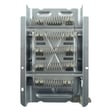
| No heat (electric) | Heating circuit | Dryer element 279838 |
Why it matters
Airflow problems (lint screen and venting) can cause long dry times, overheating, and repeat failures of thermostats or fuses. Catching belt and support wear early helps prevent a sudden no-tumble breakdown.
Last updated: January 2026