Owner’s manual
 Error Codes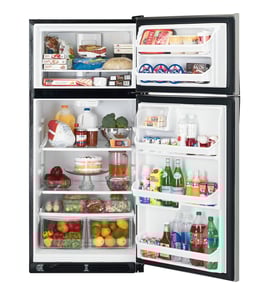


What is the top part of a refrigerator called?
On the Kenmore 79579402210 top-mount refrigerator, the top section is the freezer compartment. It’s the colder compartment designed to keep foods frozen and, on many models, it also houses the ice maker and the main cold-air supply for the fresh-food section (refrigerator).
In a top-mount design, the freezer is more than storage; it helps cool the refrigerator section below.
- Keeps food at freezing temperatures for long-term storage
- Sends cold air down to the refrigerator section through vents
- Helps maintain stable temperatures when vents are not blocked
- Often contains the ice maker (if equipped)
For model-specific layout and airflow details, use the owner's manual.
| Section | Typical temperature | Main purpose | Common items |
|---|---|---|---|
| Freezer (top) | 0°F | Frozen storage, ice production | Frozen foods, ice |
| Refrigerator (bottom) | 37°F | Fresh-food cooling | Dairy, produce, leftovers |
Knowing the top compartment is the freezer helps with troubleshooting. For example, if the freezer is cold but the refrigerator is warm, the issue is often restricted airflow (blocked vents, overpacked shelves) or a cooling-air circulation problem.
- Keep packages from blocking freezer and refrigerator air vents
- Wait 24 hours after changing temperature settings before adjusting again
- Avoid overpacking; air needs space to circulate
- Keep doors closing fully to prevent warm air leaks
Last updated: February 2026
Where is the model number located on a Kenmore refrigerator?
On Kenmore refrigerator model 79579402210, the model and serial number are printed on an identification label inside the fresh food (refrigerator) compartment. Look along the interior liner, typically on a side wall near the crisper area or where shelves mount; confirm the exact spot in the owner's manual.
- Open the refrigerator (not the freezer) door and look at the inside walls first.
- Check the left and right interior liner surfaces at eye level and mid level.
- Look near the crisper drawers and the frame area where the drawers slide in.
- Scan around shelf support rails and the side wall near the front opening.
- Use a flashlight; the label can be small and easy to miss.
The identification label usually lists both numbers you need for parts and service:
| Item on label | What it’s used for |
|---|---|
| Model number | Matching the correct parts list for your exact refrigerator |
| Serial number | Identifying production details when troubleshooting or ordering |
Kenmore model numbers can look similar across different refrigerator versions. Using the exact model number from the interior label helps us match the right Kenmore 795 top-mount refrigerator parts (like a door switch, shelf, or water inlet valve) and avoid ordering the wrong fit.
Last updated: February 2026
What's the average lifespan of a Kenmore refrigerator?
Kenmore refrigerators typically last 12 to 15 years on average. For your Kenmore 79579402210 top-mount refrigerator, regular maintenance (cleaning condenser coils, keeping door seals tight, and maintaining airflow) is what most directly determines whether you land closer to 12 years or push beyond 15.
Most refrigerators fall into a fairly consistent life range, but day-to-day conditions make a big difference.
- Typical lifespan: 12 to 15 years
- Often lasts longer when: coils are kept clean, doors seal well, temperatures are set correctly
- Often fails sooner when: condenser is clogged with dust, doors are opened frequently, airflow vents are blocked
- Usage factors: warm kitchens and heavy use increase compressor run time
- Maintenance factors: neglected cleaning and worn gaskets increase wear
Use this as a simple routine for the 79579402210.
- Vacuum and brush condenser coils regularly (dust buildup makes the compressor work harder)
- Keep air vents inside the fridge and freezer unblocked so cold air can circulate
- Confirm doors close fully; clean and inspect door gaskets for gaps or tears
- Set temperatures, then allow 24 hours for temps to stabilize after changes
- Keep the unit level to reduce vibration and stress on components
This helps decide when it is worth investing in parts.
| If your refrigerator is... | Usually makes sense to... |
|---|---|
| Under 8 years old | Repair common wear items and keep it running |
| 8 to 12 years old | Repair if the issue is isolated (fan, switch, valve, icemaker) |
| 12 to 15 years old | Repair if cost is reasonable and cooling system is healthy |
| Over 15 years old | Replace unless the repair is minor and performance is strong |
A refrigerator that runs longer than normal (often caused by dirty coils, warm room temps, or frequent door openings) puts extra hours on the compressor and fans. Reducing run time and keeping airflow clear is the most practical way to extend service life.
For model-specific care, cleaning, and troubleshooting steps, follow the owner's manual.
Last updated: February 2026
Why is my Kenmore refrigerator leaking underneath?
On Kenmore refrigerator model 79579402210, leaking underneath is usually caused by defrost water not draining correctly (a clogged or frozen defrost drain) or by water collecting in the defrost drain pan faster than it can evaporate during humid conditions. Use the steps below to pinpoint the source. See the owner's manual for the model’s care, cleaning, and troubleshooting guidance.
- Look for water inside the fresh food section (especially on the back wall or under crisper drawers); this often points to a defrost drain restriction.
- Check the drain pan underneath; some water dripping into the pan during defrost is normal, but overflow indicates a drainage or evaporation issue.
- Confirm the refrigerator is level (slightly higher in front is typical); poor leveling can let water run forward and out.
- Inspect door gaskets for dirt or stickiness; warm, humid air entering can increase condensation and defrost water.
- If you have an ice maker or water dispenser, check for slow drips at the supply connection and tubing.
- Unplug the refrigerator.
- Remove items and shelves as needed to access the rear bottom area inside the refrigerator where the drain opening is located.
- Flush the drain with warm water (a turkey baster works well) until it flows freely.
- If needed, use a soft pipe cleaner to loosen debris (avoid sharp tools that can puncture plastic).
- Recheck the drain pan after the next defrost cycle.
If the leak seems tied to water use (ice maker filling or dispenser use), focus on fittings and the inlet valve.
| Symptom | Most likely area | What to do next |
|---|---|---|
| Puddle appears after ice maker cycles | Water inlet valve or tubing | Inspect connections; replace worn fittings |
| Slow drip even when not dispensing | Water inlet valve | Test for seepage; replace valve if it won’t fully close |
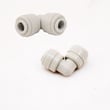
| Leak at a push-in connection | Tube fitting | Reseat tubing; replace fitting if it won’t seal |
Helpful model-matched parts to consider if you find a water supply leak:
Water under the refrigerator can damage flooring and also signals airflow or drainage conditions that can lead to frost, odors, or inconsistent temperatures. Fixing the drain path and stopping small water-supply drips prevents repeat leaks.
Last updated: February 2026