Owner’s manual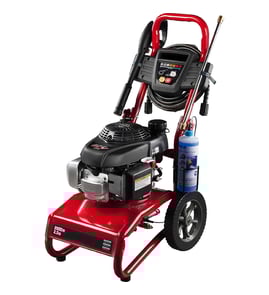





Why does my gas pressure washer have no pressure?
If your Craftsman gas pressure washer model 580752620 has no pressure, the most common causes are air trapped in the pump, a restricted water supply (clogged inlet screen or kinked hose), or a spray tip/wand issue. Purging the pump with water flowing often restores normal pressure; see the owner's manual for the exact startup steps.
Quick fixes to try first (in order)
- Turn ON the garden hose fully; confirm supply water is under 100°F.
- Disconnect the spray tip; squeeze the trigger to run water through the wand.
- Press the red button on the gun (if equipped) and hold the trigger to purge air.
- Check the water inlet screen at the garden hose connection; clean debris.
- Inspect the high-pressure hose for kinks, cuts, bulges, or leaks.
- Reconnect the spray tip and test again.
What to check if pressure is still low or zero
Water supply and inlet screen
A weak water supply or a clogged inlet screen can starve the pump and cause no pressure.
Hose, gun, wand, and spray tip
A damaged hose or a partially blocked spray tip can dump pressure before it reaches the nozzle.
Pump air and contamination
Air in the pump is a frequent reason for “no pressure,” especially after storage or reconnecting hoses. Purging clears air and impurities from the pump system.
Symptoms and likely causes
| What you notice | Most likely cause | What to do |
|---|---|---|
| No pressure right after hookup | Air trapped in pump | Purge pump with water on and trigger held |
| Pressure surges/pulses | Restricted inlet or clogged tip | Clean inlet screen; clear/replace tip |
| Water leaking at hose fittings | Loose connection or worn seal | Tighten fittings; inspect for damage |
| Hose swells or sprays water | Hose failure | Replace high-pressure hose immediately |
Why it matters
Running a gas pressure washer with poor water flow or trapped air can reduce cleaning performance and can shorten pump life. Keeping the inlet screen clean and purging air before starting helps protect the pump and maintain rated pressure.
For broader troubleshooting steps, we also recommend our guide: solving pressure washer problems. If you need replacement parts for your 580752620, you can start with the parts list for this model or search by model number on Sears PartsDirect.
Last updated: February 2026
What kind of gas goes in a Craftsman 3000 PSI pressure washer?
For the Craftsman 580752620 gas pressure washer, we recommend clean, fresh, unleaded gasoline rated at least 87 octane (87 AKI, 91 RON). Gasoline with up to 10% ethanol (gasohol) or up to 15% MTBE is acceptable; do not use E85 and do not mix oil into the gasoline (this is a 4-cycle engine). See the owner's manual for the full fuel and safety instructions.
Fuel requirements for model 580752620
Use fuel that meets these basics:
- Clean, fresh, unleaded gasoline
- Minimum 87 octane (87 AKI, 91 RON)
- Up to 10% ethanol (E10) is OK
- Up to 15% MTBE is OK
- Add fuel stabilizer if the unit will sit in storage
What to avoid (prevents hard starting and fuel-system damage)
These fuel choices commonly cause starting and performance problems:
- E85 or other unapproved high-ethanol fuels
- Old gas (especially fuel stored for months in a vented can)
- Mixing oil into the gas
- “Mystery blends” from mixed containers (gas plus solvents or additives)
Quick checklist before you start
Fuel is only one part of getting reliable pressure and easy starts:
- Check engine oil level before starting
- Connect the garden hose and turn water ON before running the pump
- Purge air from the pump by squeezing the trigger with water on
- Use a proper water supply (at least 20 PSI and more than 3.3 GPM)
Storage guidance (why stabilizer matters)
If you store the pressure washer between uses, stabilizer helps prevent gum and varnish that can clog the carburetor.
| How long until next use | What we recommend |
|---|---|
| Same day to 1 week | Fresh 87+ octane fuel is typically fine |
| 2 to 4 weeks | Add fuel stabilizer when filling |
| 1 month or longer | Stabilize fuel and follow the storage steps in the manual |
Why it matters
Using the correct gasoline helps the engine run smoothly, protects the fuel system, and reduces no-start and surging issues that can make a pressure washer feel weak even when the pump and spray tips are fine.
Last updated: February 2026
Are Craftsman gas pressure washers any good?
Yes; Craftsman gas pressure washers like model 580752620 are a solid choice for typical home cleaning when they are used and maintained correctly. They deliver strong cleaning performance, but long life depends on routine care, correct setup, and avoiding common misuse that can damage the pump, hoses, and engine.
What “good” looks like for the 580752620
We see the best results when owners focus on safe operation, correct spray-tip use, and basic maintenance.
- Use the pressure washer outdoors only and keep exhaust away from doors and windows.
- Keep at least 5 ft. of clearance on all sides (including overhead) to reduce fire risk.
- Avoid damaging surfaces; high-pressure spray can break glass and harm fragile items.
- Do not run the unit with broken or missing parts or without protective covers.
- Do not exceed rated pressure or tamper with governed speed.
For model-specific operating and safety details, use the owner's manual.
Common issues owners run into (and what usually causes them)
Many “quality” complaints come from a few repeat problems that are often preventable.
- Won’t start or runs rough: stale fuel, dirty air filter, spark plug issues
- Loses power under load: restricted air filter, fuel delivery problems
- Leaks or low pressure: worn seals, inlet/outlet valve issues, unloader valve problems
- Hose wear or vibration: pulling the unit by the hose, loose fasteners, missing mounts
Helpful DIY troubleshooting paths:
Quick comparison: performance vs. durability drivers
| What you care about | What helps most | What hurts most |
|---|---|---|
| Cleaning power | Correct spray tip selection, steady water supply | Clogged tip, air leaks, worn valves |
| Reliability | Fresh fuel, clean air filter, proper storage | Old fuel, running dry, freezing damage |
| Pump life | Correct pressure regulation, no bypassing safety devices | Overpressure, running with leaks |
Why it matters
A gas pressure washer can feel “great” on day one because pressure is high, but improper treatment can shorten its life quickly. Following the safety and setup steps in the manual protects the pump, engine, and accessories, and helps you get consistent PSI and flow.
Parts note for this model
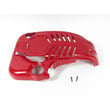
If your unit has damaged or missing protective housing, replace it before operating. For this model, we list the briggs & stratton pressure washer engine cover 792342. You can also find additional replacement parts by model number on Sears PartsDirect.
Last updated: February 2026
What is the PSI of a gas-powered pressure washer?
For gas-powered pressure washers, PSI varies by model; many units run roughly 2,000 to 4,000 PSI. For the Craftsman 580752620 specifically, the operator documentation lists a maximum outlet pressure of 2,800 PSI. See the owner's manual for the exact rating and operating limits.
PSI ranges you will commonly see
Gas pressure washers cover a wide range because pump design, engine size, and nozzle selection all affect pressure.
- Light to medium duty: 2,000 to 2,800 PSI (typical for home cleaning)
- Medium duty: 2,900 to 3,400 PSI
- Heavy duty: 3,500 to 4,000+ PSI
- Commercial units: can reach 5,000 PSI (less common for homeowners)
What your Craftsman 580752620 is rated for
Based on the product specifications in the documentation, this model is rated at:
| Spec | Craftsman 580752620 rating |
|---|---|
| Max outlet pressure | 2,800 PSI |
| Max flow rate | 2.5 GPM |
| Water supply temperature | Not to exceed 100°F |
Why your “working PSI” may feel lower than the rating
Even with a 2,800 PSI max rating, real-world pressure at the surface can drop depending on setup and conditions.
- Spray tip size and wear (a worn tip lowers pressure)
- Hose length and restrictions
- Unloader valve adjustment or wear
- Air in the pump after storage (purge air before use)
- Water supply: this model needs a strong supply; the manual calls for more than 3.3 GPM and at least 20 PSI at the pressure washer end of the garden hose
Why it matters
Choosing the right PSI helps you clean faster without damaging surfaces. Higher PSI is not always better; matching PSI and spray tip to the job reduces streaking, etching, and overspray.
If you are shopping for replacement parts that affect pressure or performance, start with the parts list for model 580752620, or search by model on Sears PartsDirect.
Last updated: February 2026
Is it worth repairing a pressure washer?
Yes. For a Craftsman 580752620 gas pressure washer, repair is worth it when the problem is a wear item, a leak, or routine maintenance. Replace the unit when the pump or engine has major internal damage and the total repair cost is about half the price of a comparable new washer.
Quick repair vs. replace checklist
Repair is the better choice when:
- The engine runs but pressure is low, surging, or inconsistent
- You have leaks at fittings, the gun, or hose connections
- The inlet screen is clogged or O-rings are worn
- A tune-up (oil, spark plug, air filter) restores performance
Replace is the better choice when:
- The pump is cracked, seized, or heavily scored internally
- The engine smokes heavily or has low compression
- Multiple major components are failing at the same time
What we recommend checking first on model 580752620
Use the owner's manual steps that prevent unnecessary pump and engine damage:
- Verify engine oil is at the proper level
- Confirm hose connections are tight and the high-pressure hose is not kinked or cut
- Turn on the water and squeeze the trigger to purge air from the pump before starting
- Use a proper water supply (not to exceed 100°F)
Cost-to-value guide
| Situation | Usually worth repairing? |
|---|---|
| Leaks, clogged inlet screen, worn seals | Yes |
| Engine losing power under load | Often |
| Unloader or check valve problems | Often |
| Pump or engine replacement | Sometimes |
Parts and DIY help
If a protective cover is broken or missing, replace it before continued use; for this model we list the briggs & stratton pressure washer engine cover 792342. For troubleshooting, use solving pressure washer problems.
Why it matters
Running with restricted water flow, leaks, or poor maintenance shortens pump life and can overheat the engine; quick checks often turn a “replace it” decision into an affordable repair.
You can order parts from the parts list for model 580752620, or search by model number on Sears PartsDirect.
Last updated: February 2026