Installation guide
 Owner’s manual



What does F4 mean on a Whirlpool dishwasher?
On a Whirlpool dishwasher like model DU915PWSS0, F4 most often points to a drain problem (the dishwasher is not pumping water out as expected). Clearing a drain restriction and then resetting the control typically gets the unit running again; confirm the exact meaning in the DU915PWSS0 owner’s manual.
What to check first (fast, no parts)
- Press Cancel/Drain and listen for the drain pump; you should hear steady pumping.
- Verify the door is closed tightly and latched; a poor latch can interrupt operation.
- Check the house breaker or fuse if the dishwasher seems dead or stops unexpectedly.
- Confirm the water supply valve is on (a fill issue can look like a drain issue later in the cycle).
- Inspect the sink drain/disposer connection and make sure the dishwasher drain path is not blocked.
Drain-related causes and likely fixes
| What you notice | Most likely cause | What we do next |
|---|---|---|
| Water left in bottom after cycle | Clogged drain path or restricted hose | Check hose routing and blockage; replace hose if damaged |
| Hums but drains slowly | Partial restriction or weak pump | Clear obstruction; consider pump/motor diagnosis |
| Stops mid-cycle with beeping | Control senses a fault condition | Reset and re-test; check latch and drain function |
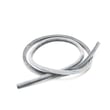
If you find kinks, splits, or internal buildup in the drain line, replacing the hose is a common repair for this symptom on many Whirlpool dishwashers; use the model-matched dishwasher drain hose WP3374077 when applicable.
How we reset it after correcting the issue
Use the reset steps in the how to reset a Whirlpool dishwasher guide, then run a short cycle and confirm the unit drains at the end.
Why it matters
A true F4 drain fault can leave dirty water in the tub, cause repeated stopping and beeping, and can strain the pump motor over time. Fixing the drain path first is the quickest way to restore normal washing and drying performance.
Last updated: February 2026
What model of Whirlpool dishwasher do I have?
Your Whirlpool dishwasher’s model number is printed on the model and serial number label inside the door area. For Whirlpool DU915-series units like model DU915PWSS0, the label is typically on the inner door edge or along the tub frame when you open the door; match the exact characters shown.
Where to find the model and serial number label
Check these common spots first (door open):
- Along the left or right inner door edge
- On the tub frame just inside the door opening
- Near the top or side of the door opening where the gasket meets the tub
- Occasionally on the side wall of the tub near the front
If you see multiple numbers, use the one labeled Model (not the serial).
What the model number looks like (and why it matters)
For this Whirlpool dishwasher family, the model number is a short code like DU915PWSS0. Getting the exact model number matters because it determines the correct parts list, diagrams, and repair instructions in the DU915PWSS0 owner's manual.
Model vs. serial number
| Item | What it tells you | Example format |
|---|---|---|
| Model number | Which design and parts fit | DU915PWSS0 |
| Serial number | Build sequence/date coding | Letters and numbers |
Tips to read the label correctly
Use these quick checks so you record it accurately:
- Copy the model number exactly, including the last digit (often a revision like “0”)
- Use uppercase letters when writing it down
- Take a clear photo before ordering parts
- If the label is worn, wipe it gently with a damp cloth and re-check under bright light
If you still cannot locate the label
Use the DU915PWSS0 installation guide to confirm typical label locations and door/tub access points for this series; it helps when the dishwasher is tightly installed under the counter.
Last updated: February 2026
Why is my Whirlpool dishwasher leaking from the bottom?
A bottom leak on your Whirlpool dishwasher model DU915PWSS0 is usually caused by a leaking drain path (hose or clamps), a fill problem at the inlet valve, or a leak at the pump area. We start by checking for suds, loose connections, and cracked hoses, then move to seals and pump components. See the DU915PWSS0 installation guide for drain hose and clamp setup details.
Quick checks that fix many bottom leaks
- Turn off power at the breaker and shut off the water supply before inspecting.
- Pull the toe panel and look for the first wet spot (front corners, center, or left/right side).
- Check for oversudsing (using hand soap or too much detergent can cause leaks).
- Confirm the dishwasher is level and secured; shifting can stress hoses and seals.
- Inspect the drain hose routing and connections for drips.
Most common leak sources on DU915PWSS0
| Where you see water | Likely cause | What to inspect first |
|---|---|---|
| Front bottom edge | Door seal not sealing, door not closing square | Dishwasher door seal WPW10509257, door alignment |
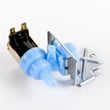
| Left front or left side | Fill leak | Valve-inlt W10844024 and its hose connection |
| Center bottom under tub | Drain or pump area leak | Dishwasher drain hose WP3374077, clamps, pump area |
| Near spray arm area | Spray arm hardware leaking or loose | Dishwasher spray arm nut WP8268873, spray arm seating |
What we recommend inspecting (in order)
- Detergent and suds: Use only automatic dishwasher detergent; high suds can push water out of places that normally stay dry.
- Door sealing surface: Wipe the tub lip clean; check the seal for tears, flattening, or gaps.
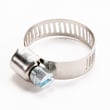
- Drain hose and clamps: Look for splits, pinholes, or a loose clamp at either end of the hose.
- Inlet valve area: Check for slow drips during fill and for mineral tracks around fittings.
- Spray arm and seals: Make sure the spray arm spins freely and hardware is snug.
Why it matters
A leak from the bottom can damage flooring and cabinets, and it can also trip safety devices or cause the dishwasher to stop mid-cycle. Fixing the first small drip (hose, clamp, or seal) often prevents a larger pump or motor issue later.
Last updated: February 2026