Error Codes



What model is my Kenmore 59676053701 refrigerator?
Your refrigerator’s model is 59676053701 (Kenmore Elite bottom-mount). To confirm it on the appliance, match the number on the model and serial tag to 59676053701; that tag is typically inside the fresh food section or behind the lower drawers.
On Kenmore bottom-mount refrigerators like model 59676053701, the tag is usually in one of these spots:
- Inside the refrigerator compartment on a side wall (often near the crisper area)
- On the wall behind the lower crisper drawer (remove the drawer to look)
- Along the door frame when the refrigerator door is open
- Behind the toe grille (kick plate) at the bottom front (if your unit has one)
- Less commonly, inside the freezer compartment on a side wall
The tag normally lists both a model number and a serial number.
| Label item | What it does | Example for your unit |
|---|---|---|
| Model number | Identifies the exact refrigerator design for parts fit | 59676053701 |
| Serial number | Identifies your specific unit and production run | Varies |
We use the full model number to match the correct Kenmore parts and diagrams for your refrigerator. Even one digit off can change which electronic control board, light switch, door gasket, or drawer rail fits.
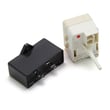
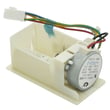
If you are ordering parts after you confirm the model tag, common examples on this model page include the refrigerator electronic control board WPW10503278 and the evaporator motor WPW10128551.
- Wipe the label gently with a damp cloth and dry it; glare and dust can hide digits
- Take a phone photo with the flash off, then zoom in
- Copy the model number exactly as printed (no spaces)
Last updated: February 2026
What is the average lifespan of a Kenmore 59676053701 refrigerator?
A Kenmore Elite bottom-mount refrigerator like model 59676053701 typically lasts 10 to 15 years. With consistent maintenance (cleaning condenser coils, keeping door gaskets sealing, and maintaining airflow), many units reach the upper end of that range before major repairs are needed.
Most refrigerators in this class land in the 10 to 15 year window; the biggest swing factors are heat load, cleanliness, and how hard the sealed system has to work.
Common factors that shorten lifespan:
- Dirty condenser coil causing high compressor temperatures
- Torn or warped door gaskets letting warm air and moisture in
- Overpacked compartments blocking vents and airflow
- Frequent door openings or warm food loads
- Power surges affecting controls and motors
These habits reduce compressor run time, prevent frost issues, and help temperatures stay stable.
- Vacuum and brush the condenser area regularly
- Keep 1 to 2 inches of clearance for airflow around the cabinet (typical)
- Confirm doors close fully and don’t bounce open
- Keep vents inside the refrigerator and freezer unobstructed
- Listen for new fan noises and address them early
If cooling becomes inconsistent, lights act up, or you hear abnormal fan noise, these are common service items for this model.
| Symptom | Common area | Example part on this model |
|---|---|---|
| Temps drift, odd behavior | Controls | Refrigerator electronic control board WPW10503278 |
| Warm fridge, weak airflow | Evaporator fan | Evaporator motor WPW10128551 |
| Frost buildup, warm temps | Defrost system | Refrigerator defrost bi-metal thermostat WPW10165425 |
| Door not sealing well | Door seal | Gasket, fz d WPW10436247 |
Once a refrigerator is past about 10 years, small efficiency losses (dirty coils, weak door seals, struggling fans) can add up to higher run time and more wear on the compressor. Staying ahead of airflow and sealing issues is the simplest way to protect the most expensive components.
Last updated: February 2026
What is the problem with the bottom freezer refrigerator?
Bottom-freezer refrigerators like Kenmore model 59676053701 are not “bad” by design, but they commonly develop issues tied to airflow and sealing: warm air leaks from worn door gaskets, frost buildup restricts the evaporator, and the unit runs longer to keep the freezer cold while the fresh-food section is opened frequently.
- Worn or warped door gasket: moisture, frost, or a “suction” that feels weak; temperatures drift.
- Frosted-over evaporator area: freezer warms, fresh-food section warms, fan noise changes.
- Weak evaporator fan airflow: uneven temps, items freezing in the fridge, or warm spots.
- Dirty condenser area: longer run times, poor cooling, hotter cabinet sides.
- Control or sensor issues: inconsistent cycling, temps that do not match settings.
- Gasket test: close a dollar bill in the door; it should resist pulling out all the way around.
- Listen for the evaporator fan: when the door is closed, you should typically hear a steady fan sound.
- Look for frost patterns: heavy frost on the back freezer panel often points to a defrost problem.
- Clean condenser area: remove dust buildup so heat can dissipate.
- Confirm door alignment: a freezer drawer that does not fully close can mimic a bad gasket.
| Symptom | Likely system | Example part for 59676053701 |
|---|---|---|
| Frost buildup, warming temps | Defrost system | Refrigerator defrost bi-metal thermostat WPW10165425 |
| Warm fridge, weak airflow | Evaporator fan system | Evaporator motor WPW10128551 |
| Random temp swings | Controls | Refrigerator electronic control board WPW10503278 |
| Frost or moisture at door edge | Door sealing | Gasket, fz d WPW10436247 |
Bottom-mount designs rely on strong airflow between compartments and tight door seals. When a gasket leaks or frost blocks airflow, the refrigerator compensates by running longer, which accelerates wear on fans, controls, and the cooling system.
Last updated: February 2026
What are the common problems with Kenmore 59676053701 refrigerators?
Common problems we see with the Kenmore Elite bottom-mount refrigerator model 59676053701 are weak or uneven cooling, frost buildup from defrost issues, water leaks, interior light problems, and unusual fan noise. Many of these symptoms trace back to airflow, defrost components, or an electronic control issue such as the refrigerator electronic control board WPW10503278.
- Refrigerator warm, freezer OK (or vice versa): restricted airflow, evaporator fan issue, or frost-clogged evaporator
- Frost on the back wall or heavy ice buildup: defrost system problem (heater circuit, thermostat, or control)
- Buzzing, rattling, or grinding noise: fan blade interference, worn fan motor, or vibration from the cabinet/coil area
- Water under crisper drawers or on the floor: clogged/iced drain, door not sealing, or condensation from poor airflow
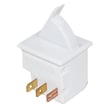
- Lights not working or staying on: door switch or socket issue such as the refrigerator light switch W11396033 or refrigerator light socket W11447232
- Confirm temperatures: set fresh food to about 37°F and freezer to about 0°F.
- Clean condenser area: dust buildup reduces cooling and can increase noise.
- Listen for fans: you should typically hear a steady fan sound when the unit is running.
- Check door sealing: look for gaps, torn gasket areas, or doors that do not close smoothly.
- Look for frost patterns: heavy frost suggests a defrost or airflow problem.
| Symptom | Common part to check | Example part on this model |
|---|---|---|
| Warm temps, poor airflow | Evaporator fan motor | Evaporator motor WPW10128551 |
| Frost buildup | Defrost thermostat | Refrigerator defrost bi-metal thermostat WPW10165425 |
| Lights act up | Door/light switch | Refrigerator light switch W11384469 |
| Noisy fan area | Fan blade | Refrigerator fan blade W10156818 |
Cooling and defrost problems usually get worse over time: airflow restrictions raise temperatures, increase run time, and can lead to food spoilage. Catching a failing fan motor, defrost thermostat, or control issue early helps restore stable temperatures and reduces strain on the sealed system.
Last updated: February 2026