Owner’s manual
 Error Codes


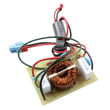
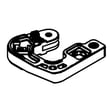
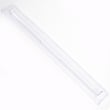
Why is ice forming in the bottom of my Samsung fridge?
Ice at the bottom of a Samsung RF28HDEDTSR refrigerator almost always comes from water that cannot drain during defrost; it refreezes into a sheet of ice. The most common causes are a clogged/iced drain path, warm humid air leaks at the doors, or airflow issues around the evaporator cover.
Quick checks that fix most “ice on the bottom” problems
- Make sure both fresh food doors and the freezer drawer close fully and evenly.
- Inspect the door gaskets for gaps, tears, or areas that do not seal.
- Clear food packages from vents so air can circulate normally.
- If you see water under the crisper or ice in the freezer floor, suspect the defrost drain.
- After cleaning, monitor for 24 to 48 hours to confirm the issue is gone.
What to do (safe DIY steps)
- Unplug the refrigerator.
- Remove the freezer drawer/bins and look for a solid ice layer on the freezer floor.
- Melt the ice with a hair dryer on low (keep heat moving; do not overheat plastic).
- Flush the drain hole with hot water using a turkey baster until it flows freely.
- Clean and dry the door seals; close the doors and confirm a tight seal.
For model-specific access steps and panel removal details, follow the RF28HDEDTSR owner's manual.
Parts that are commonly involved
If the drain keeps icing up or you see recurring puddles, these parts are often related:
| Symptom you notice | Most likely area | Example part for this model |
|---|---|---|
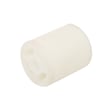
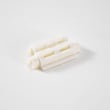
| Ice sheet on freezer bottom | Drain path icing/clog | Refrigerator drain cap DA67-01301A |
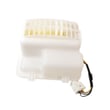
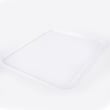
| Frost buildup, fan noise, weak airflow | Evaporator cover/fan area | Samsung refrigerator fresh food evaporator cover assembly DA97-12608A |
| Doors not sealing, moisture inside | Door gasket/seal | Refrigerator door gasket DA97-13015E |
Why it matters
When the defrost drain is restricted, defrost water has nowhere to go. It refreezes, blocks airflow, and can lead to warmer temperatures, ice maker issues, and repeated water leaks.
Related help
If ice production or the ice room is also acting up, use why your Samsung fridge stopped making ice and how to fix it to rule out fill, freezing, and airflow problems that can happen alongside drain icing.
Last updated: February 2026
Why is my Samsung fridge not making ice in the bottom freezer?
If your Samsung RF28HDEDTSR isn’t making ice, the most common causes are restricted water flow, a frozen fill path, or an ice maker that can’t cycle. Start with simple checks (ice maker ON, bin seated, freezer cold enough), then move to the fill tube, fan airflow, and ice maker components.
Quick checks first (fastest fixes)
- Confirm the ice maker is turned ON and not in a test or off mode.
- Make sure the ice bin is fully seated and not jammed with clumped ice.
- Verify the freezer is set cold enough; most units make ice best around 0°F to 5°F.
- Check for a frozen water fill tube or ice blockage at the ice maker inlet.
- Dispense water (if equipped); weak flow points to a supply or filtration restriction.
What to inspect next (most likely causes)
Water supply and freezing at the fill tube
A partially blocked filter or low household water pressure can reduce fill volume, leading to hollow cubes or no ice. A frozen fill tube or fill tube heater issue can stop fills entirely.
If you see ice buildup at the fill area, inspect the Samsung refrigerator ice maker fill tube and heater DA97-00209Z for signs of freezing, cracking, or poor heat transfer.
Airflow and temperature feedback
Poor airflow across the ice maker compartment can prevent proper freezing and cycling. Also, a bad temperature sensor can misreport temps and disrupt ice production.
- If you hear fan noise changes or see frost patterns, check the evaporator area.
- For temperature-sensing issues, a common fix is replacing a sensor such as the refrigerator temperature sensor DA32-10104N.
Symptom-to-cause guide
| What you notice | Most likely cause | What to do |
|---|---|---|
| No ice at all, water dispenses weakly | Water restriction | Check filter, supply valve, line kinks |
| Ice maker has ice clumps, won’t dump | Jammed bin or stalled module | Clear bin; inspect ice maker drive/module |
| Frost/ice around fill area | Frozen fill tube/heater issue | Inspect fill tube and heater assembly |
| Ice is slow, cubes small | Freezer too warm or low fill | Confirm temp; check water flow |
Why it matters
Ice makers depend on steady water flow, correct freezer temperature, and good airflow. Fixing restrictions and freezing at the fill path prevents repeat failures and protects components like the ice maker module and fan.
For model-specific control settings and diagnostics, use the RF28HDEDTSR manual.
Last updated: February 2026
What are the dimensions of the Samsung RF28HDEDTSR?
For the Samsung RF28HDEDTSR, the exact exterior dimensions depend on how they are measured (with handles, with hinges, doors on or removed). We use the dimension chart in the RF28HDEDTSR owner's manual to match your installation situation and confirm clearances.
How refrigerator dimensions are usually listed
Manufacturers publish multiple “WxHxD” sets; each one answers a different planning question.
- With hinges, handles, and doors (largest installed footprint)
- With hinges and doors, no handles (helps with depth-to-counter checks)
- Without hinges and doors (cabinet-only size for moving)
- Depth with doors open (aisle and island clearance)
- Required clearances (airflow and door swing)
What to measure at home (so the numbers match your space)
Use a tape measure and record in inches.
- Opening width at the front and back
- Height to the lowest overhead cabinet or trim
- Depth to the front edge of the countertop
- Space needed for door swing and freezer drawer pull-out
- Doorway and hallway widths for moving the unit
Quick reference: which dimension set to use
| If you are planning for... | Use this dimension style | Why |
|---|---|---|
| Final installed fit | With hinges, handles, and doors | Matches real-world footprint |
| Flush depth concerns | With hinges and doors, no handles | Handles often add depth |
| Moving through doors | Without hinges and doors | Smallest practical size |
Why it matters
Using the correct dimension set prevents installation problems like doors that cannot open fully, a freezer drawer that hits an island, or restricted airflow that can reduce cooling performance.
Last updated: February 2026