Installation guide
 Owner’s manual
 Error Codes



What's the average lifespan of a Maytag washer?
Most Maytag washers average 10 to 13 years of service life in normal household use; your Maytag MVWX600BW0 typically lands in that range when it is installed correctly, used with HE detergent, and kept level. For model-specific care and operating guidance, follow the owner's manual.
Typical lifespan and what changes it
A washer’s lifespan is driven more by use and maintenance than by the brand name on the lid.
- Loads per week: more cycles per week shortens life
- Overloading: strains the drive system and suspension
- Detergent choice: non-HE or too much detergent can cause excess suds and stress components
- Leveling: an unlevel washer increases vibration and wear
- Water quality: hard water can increase residue and valve issues
What “wear-out” looks like on MVWX600BW0
These symptoms often show up as the washer ages; they can be maintenance issues or signs a part is wearing.
| Symptom | Common cause | Parts that are often involved |
|---|---|---|
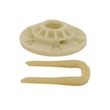
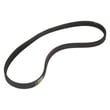
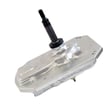
| Loud clicking/metallic noise | Unleveling, unbalanced load, drive wear | Drive system components such as the cam W10721967 or washer drive belt WPW10006384 |
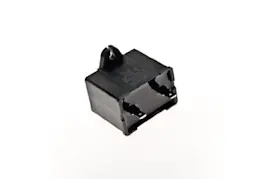
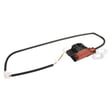
| Won’t start or stops mid-cycle | Lid not locking, control pause, power issue | Washer lid lock assembly W10404050 |
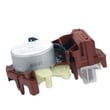
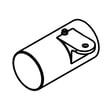
| Poor spin, clothes still wet | Drain/spin issue, load balance, drive wear | Drive components such as the washer actuator WPW10006355 |
How to help your washer reach (or beat) the average
These habits reduce stress on the motor, belt, gear case, and tub suspension.
- Use HE (High Efficiency) detergent and measure carefully
- Avoid packing the basket tight; keep loads balanced
- Keep the washer level and the feet locked (a common cause of noise and vibration)
- Run periodic cleaning cycles as described in the manual
- If suds occur, cancel and run Rinse & Spin (do not add more detergent)
Why it matters
A washer that is level, correctly loaded, and using the right detergent runs with less vibration and less drag on the drive system. That directly reduces wear on high-use parts like the belt, actuator, and cam, which helps the MVWX600BW0 reach its expected service life.
Last updated: February 2026
What is the most common problem with Maytag washer top loader?
On Maytag top-load washers like model MVWX600BW0, the most common complaint is not draining or not spinning, which leaves clothes wet at the end of the cycle. The usual causes are load balance issues, suds from non-HE detergent, a lid lock problem, or a drain restriction; the owner's manual troubleshooting section walks through the checks.
Most common symptoms and what they usually mean
- Washer won’t start or stops mid-cycle: lid not fully closed, power supply issue, or excessive suds pause
- Spin light on or clothes still wet: drain restriction, low spin speed selection, or load imbalance
- Clicking/metallic noise: washer not level, feet not locked, or load shifting
- Not enough water showing: normal sensing behavior on many top-load HE designs
- Poor cleaning or tangling: overloading, wrong cycle, or too much detergent
Quick checks we recommend first (MVWX600BW0)
- Confirm power and lid closure: the lid must be closed for the washer to run.
- Use HE detergent only: too many suds can slow or stop the washer; run Rinse & Spin to clear suds.
- Fix load balance: redistribute items evenly around the washplate; avoid tightly packing.
- Check drain flow: look for small items caught in the pump area and make sure the drain hose is not kinked.
- Level the washer: all feet must contact the floor and jam nuts should be tight (installation setup matters).
Parts that commonly solve “won’t spin/drain” complaints
If the basic checks above don’t help, these model-compatible parts are frequent fixes:
| Symptom | Common part to inspect/replace | Why it matters |
|---|---|---|
| Lid won’t lock, won’t start, stops | Washer lid lock assembly W10404050 | The washer may not run or spin if it can’t confirm the lid is locked |
| Agitation/spin issues, shifting problems | Washer actuator WPW10006355 | Controls shifting between agitate and spin modes |
| Weak/no spin, burning rubber smell | Washer drive belt WPW10006384 | Transfers motor power to the drive system |
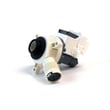
| Loud operation, poor spin performance | Washer tub suspension rod assembly W10780044 | Stabilizes the tub; worn rods cause shaking and off-balance events |
Why it matters
When a top-load washer can’t drain within the expected time or can’t reach proper spin, it protects the load by reducing or stopping spin. That prevents damage, but it also leaves clothes wet and can make cycles seem “stuck.”
Last updated: February 2026
What is the capacity of the Maytag MVWX600BW0?
The Maytag MVWX600BW0 is a 27-inch top-load washer with a 3.6 cu. ft. capacity. That capacity is the tub volume the washer is designed around; your best real-world load size depends on fabric type, absorbency, and how freely items can move during the wash cycle (see the owner's manual).
What “3.6 cu. ft.” means for everyday loads
Use capacity as a guide, then load by feel so clothes can circulate.
- Load loosely to about 3/4 full for most mixed loads
- For bulky items (comforters, blankets), load fewer pieces so the basket can balance
- Keep the top layer below the tub ring so the lid closes and the load can tumble
- If the basket struggles to spin or takes a long time to ramp up, the load is typically too heavy or too dense
Quick load guidance (typical)
These are practical examples for a 3.6 cu. ft. top-load washer like the MVWX600BW0.
| Load type | Typical fill level | Common result if overloaded |
|---|---|---|
| Everyday mixed laundry | About 1/2 to 3/4 full | Poor cleaning, off-balance spin |
| Towels/denim | About 1/2 full | Long spin ramp-up, vibration |
| Bulky bedding | Fewer large items, loose | Won’t balance, may stop spinning |
Why it matters
Correct loading helps the washer agitate and spin properly, which improves cleaning, reduces out-of-balance shaking, and can prevent extra wear on drive components such as the belt and cam.
Related parts that can be affected by chronic overloading
If the washer frequently struggles to spin or makes drive noises, these model-compatible parts are commonly involved in diagnosis and repair.
Last updated: February 2026