Owner’s manual
 Error Codes


What is the first thing to check when a refrigerator stops cooling?
For Kenmore Elite refrigerator model 79572063113, the first thing we check when it stops cooling is power and airflow: confirm the unit has power, the temperature controls were not changed, and air vents are not blocked. These quick checks solve many “no cool” complaints.
Quick first checks (fast, no tools)
- Make sure the refrigerator is plugged in and the outlet has power.
- Check the house breaker or GFCI if the outlet is dead.
- Verify the temperature settings were not accidentally raised.
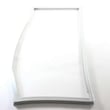
- Confirm both doors close fully and the gaskets seal all the way around.
- Look for blocked vents inside the fresh food and freezer sections (avoid packing items tight against vents).
- Listen for the evaporator fan and compressor; a sudden silence can point to a control or power issue.
What to check next if power and settings are OK
If the lights are on but cooling is weak, we move to common airflow and heat removal causes.
| Symptom | Most likely area to inspect | What it affects |
|---|---|---|
| Freezer cold, fridge warm | Airflow/ducting between sections | Cold air not reaching fresh food |
| Both sections warm, compressor runs a lot | Dirty condenser area or restricted airflow | Heat cannot leave the system |
| Frost buildup on back freezer panel | Defrost system | Airflow blocked by ice |
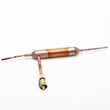
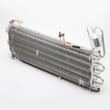
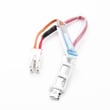
Model-matched parts that often relate to “not cooling” symptoms include the refrigerator condenser coil ACG73645004, refrigerator evaporator assembly ADL73341411, and the refrigerator defrost sensor assembly 6615JB2005R.
Why it matters
A refrigerator cools by moving heat out of the cabinet. A simple issue like a door not sealing, blocked vents, or poor condenser airflow can stop cooling even when major components (like the compressor) are still working.
Helpful reference
Use the 79572063113 owner's manual for the exact control locations, recommended temperature settings, and model-specific operating checks.
Last updated: January 2026
What size is Kenmore refrigerator model 79572063113?
Kenmore Elite refrigerator model 79572063113 is a bottom-mount style refrigerator; most units in this class are about 33 inches wide, 30 to 34 inches deep, and 67 to 70 inches tall, with roughly 22 to 23 cubic feet of capacity. For the exact dimensions for your unit, use the 79572063113 owner's manual.
Typical size you can plan around
These are the most common planning dimensions for a 33-inch Kenmore Elite bottom-mount refrigerator like model 79572063113:
- Width: about 33 inches
- Height: about 67 to 70 inches
- Depth (cabinet): about 30 to 34 inches
- Depth (with handles): often 1 to 3 inches deeper than the cabinet
- Capacity: typically about 22 to 23 cu. ft.
How to measure your refrigerator correctly
Measure with a tape measure and record to the nearest 1/8 inch.
- Measure width at the widest point (often the hinge side or door edges)
- Measure height from floor to the top of the hinge cover
- Measure depth in two ways: cabinet only, then to the front of the handles
- Check door swing clearance so doors can open fully
- Confirm rear clearance for airflow and the water line
Quick reference table
| Measurement | What to measure | What to expect |
|---|---|---|
| Width | Left edge to right edge | ~33 in. |
| Height | Floor to top hinge cover | ~67 to 70 in. |
| Depth | Back to front (cabinet) | ~30 to 34 in. |
| Depth (handles) | Back to front of handles | Cabinet + ~1 to 3 in. |
| Capacity | Interior volume | ~22 to 23 cu. ft. |
Why it matters
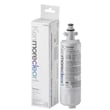
Correct sizing prevents installation problems like doors hitting walls, drawers not clearing, or poor cooling from restricted airflow. It also helps you choose compatible accessories and parts (for example, the correct refrigerator water filter 9690 AGF80300801 for water and ice quality).
Last updated: January 2026
What are the common problems with Kenmore Elite refrigerators?
Common problems on the Kenmore Elite 79572063113 bottom-mount refrigerator include warm temperatures (often airflow or sealed-system related), frost buildup from defrost or door-seal issues, water leaks from a clogged drain or water line, and dispenser or ice maker failures. We use the same checks technicians start with because they pinpoint the cause fast.
Most common symptoms and what usually causes them
- Not cooling or weak cooling: dirty condenser area, failed fan, or a sealed-system issue (compressor, evaporator, refrigerant)
- Frost or ice buildup: defrost sensor failure, door not sealing, or frequent door openings
- Water under the refrigerator or in drawers: defrost drain restriction, cracked tubing, or a loose connection
- Ice maker not making ice: low water flow, frozen fill tube, or ice maker module failure
- Bad tastes or odors: overdue filter changes or food odors trapped in the cabinet
Quick checks we recommend (safe DIY)
- Set temps to typical targets: 37°F fresh food and 0°F freezer; allow 24 hours to stabilize.
- Make sure vents are not blocked by food packages (airflow problems mimic “not cooling”).
- Inspect door closing and gasket contact all the way around.
- Replace maintenance filters on schedule: water filter about every 6 months, air filter about every 6 months (typical).
- If the unit is noisy, note when it happens (start-up, defrost, dispensing) to narrow the system.
Parts that commonly solve these issues on model 79572063113
| Problem area | Common fix | Example part for this model |
|---|---|---|
| Water tastes slow flow | Replace water filter | Genuine Kenmore refrigerator water filter 9690 AGF80300801 |
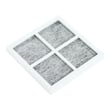
| Odors in fresh food section | Replace air filter | Refrigerator air filter ADQ73214408 |
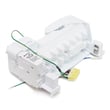
| Ice maker not producing | Replace ice maker assembly | Refrigerator ice maker assembly AEQ73110203 |
| Frost/defrost problems | Test/replace defrost sensor | Refrigerator defrost sensor assembly 6615JB2005R |
Why it matters
Catching airflow, filter, and door-seal problems early prevents temperature swings that spoil food and reduces strain on major components like the compressor.
Helpful references
- Use the 79572063113 owner's manual for temperature settings, filter locations, and model-specific operating checks.
- For display or diagnostic codes, follow Kenmore 795 model bottom freezer refrigerator error codes.
Last updated: January 2026
Why is my Kenmore Elite refrigerator leaking water out of the bottom?
Water leaking from the bottom of your Kenmore Elite refrigerator model 79572063113 is typically caused by a clogged or frozen defrost drain or a leak in the water supply path to the dispenser or ice maker. Clearing the drain and fixing any tubing leaks usually stops the puddle.
Most common causes to check
- Defrost drain clogged or iced over: Defrost water can’t reach the drain pan and spills into the cabinet.
- Water tubing leak: A cracked line or loose fitting can drip and run down to the base.
- Ice maker fill seep: A small leak at the fill tube or connection can track to the bottom.
- Door not sealing: Extra frost can overwhelm the drain during defrost.
- Drain pan out of position: Water misses the pan and ends up on the floor.
Quick troubleshooting steps
- Unplug the refrigerator and pull it out enough to inspect behind and underneath.
- Identify the water:
- Clear water: defrost drain or supply line.
- Sticky water: spill inside the fresh food section.
- Check the water line path for wet fittings, rub-through, or cracks; replace damaged line with refrigerator water tubing MJU62070602.
- Clear a defrost drain clog: melt visible ice with warm air (low heat) and flush the drain with hot water until it flows freely.
- Inspect door sealing: confirm the gasket contacts the cabinet all the way around.
What the symptoms usually mean
| What you see | Most likely cause | Best next step |
|---|---|---|
| Puddle after defrost, no dispenser use | Defrost drain clogged/frozen | Clear drain and remove ice |
| Leak only when dispensing water | Tubing or fitting leak | Inspect line; replace if cracked |
| Water at freezer front with frost inside | Door seal issue | Clean/reshape gasket; replace if torn |
Why it matters
Bottom leaks can damage flooring and create hidden ice buildup that restricts airflow, causing warmer temperatures and longer compressor run time.
For model-specific access and safety notes, use the 79572063113 owner's manual.
Last updated: January 2026