Owner’s manual
 Error Codes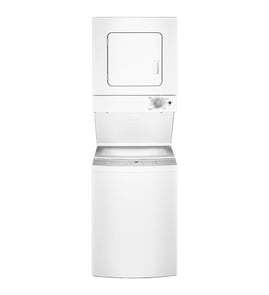


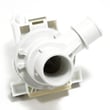
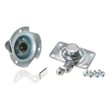
How to remove front panel of Kenmore washer?
On the Kenmore 2661532210 stacked laundry center, the washer front access area is typically released after the top is opened and any retaining screws or spring clips are removed. We recommend following the exact sequence in the 2661532210 owner's manual to avoid bending panels or damaging wiring.
Before you start (safety and prep)
- Unplug the laundry center from the wall outlet.
- Turn off both water supply valves.
- Protect the floor with a towel or cardboard.
- Keep a small container for screws.
- Take a quick photo of each step so reassembly is easy.
Common removal steps (most Kenmore laundry centers)
- Remove the control console fasteners (rear screws or end-cap screws, depending on design).
- Release the top panel: lift the top after removing screws or popping the spring clips.
- Remove the lower/front access panel screws (often along the bottom edge or inside the front lip).
- Tilt and lift the panel off the locating tabs.
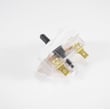
- If a harness or switch is attached, disconnect the wire connector by the locking tab (do not pull on wires).
What you might be removing (and why)
| Panel/area | What it exposes | Why you remove it |
|---|---|---|
| Lower front access panel | Drain pump, hoses, wiring | Clearing clogs, pump replacement |
| Full front panel (if equipped) | Tub, motor, belt area | Deeper service work |
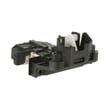
| Top panel | Lid switch/lock area, mounting points | Accessing clips and fasteners |
Why it matters
Front panels can be easy to warp if they are pulled before all screws and clips are released. Following the model-specific order also helps prevent broken tabs and pinched harnesses.
Related help
If the washer is locked up or showing a fault, use the Kenmore 417 laundry center -washer error codes guide to narrow the problem before disassembly.
Last updated: February 2026
Where to find the model number on a Kenmore laundry center?
On Kenmore stacked laundry center model 2661532210, the model number is printed on a rating label attached to the washer section. Most commonly, you’ll find it under the washer lid on the top frame, or on the cabinet near the lower side edge.
Most common label locations to check
- Under the washer lid: lift the lid and look along the top rim of the opening (front or side of the frame)
- Inside the washer cabinet: check the left or right side panel near the bottom edge
- Behind the front access panel (if your unit has one): the label can be on the inner frame
- Back of the unit: sometimes the rating label is on the rear panel near the power cord
What the label looks like (and what to write down)
The rating label usually includes several identifiers. We recommend recording these exactly:
| Label item | Why it matters | Example format |
|---|---|---|
| Model number | Ensures parts fit your exact laundry center | 2661532210 |
| Serial number | Helps date the unit and confirm production run | Letters and numbers |
| Electrical info | Useful for troubleshooting and safe service | Volts/amps |
Tips to avoid mix-ups when ordering parts
- Match the full model number exactly, including any extra digits.
- If the label is worn, use a flashlight and take a close-up photo to zoom in.
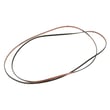
- Use the model number when checking diagrams and ordering common wear items like a dryer drum belt WE03X29897.
Why it matters
Kenmore laundry centers often have similar-looking cabinets across multiple series. Using the exact model number (like 2661532210) prevents ordering the wrong lid lock, drive belt, control board, or dryer parts.
For model-specific label illustrations and additional identification details, check the 2661532210 owner's manual.
Last updated: February 2026
What is the average lifespan of 2661532210?
A Kenmore stacked laundry center like model 2661532210 typically lasts 13 years with normal household use and routine maintenance. Keeping airflow clear for the dryer and avoiding washer overloads are the biggest factors in reaching that lifespan.
Typical lifespan and what affects it
Most laundry centers fail early due to heat stress in the dryer section or mechanical wear in the washer section.
- Clean the lint screen every load and keep the exhaust vent clear
- Do not overload the washer; heavy loads strain the drive belt and motor
- Level the unit to reduce vibration and tub wear
- Use the right water level and detergent amount to reduce residue buildup
- Address new noises quickly (squeal, thump, grinding)
Common wear items that can shorten lifespan
If these parts wear out, the unit may still be worth repairing because they are normal service items.
| Symptom | Likely area | Example part for 2661532210 |
|---|---|---|
| Dryer drum not turning, burning rubber smell | Belt drive | Dryer drum belt WE03X29897 |
| Dryer squeals or thumps | Drum support/glides | Dryer drum bearing kit WE25M40 |
| Washer will not spin or agitate correctly | Washer drive system | Washer drive belt WH01X20436 |
Why it matters
Knowing the average lifespan helps you decide whether to repair or replace. On a 2661532210 laundry center, replacing a belt, bearing, lid lock, or switch often restores reliable operation and extends service life for years.
Where to confirm care and maintenance steps
For model-specific cleaning, loading, and operating guidance, follow the maintenance section in the 2661532210 owner's manual.
Last updated: March 2026