Installation guide
 Owner’s manual
 Error Codes


Where is the model number on a Kenmore side by side refrigerator?
On Kenmore side-by-side refrigerator model 10652272201, the model number is printed on the model and serial number label located on the inside wall of the refrigerator (fresh food) compartment. Use that label to record the full model and serial number for parts lookup and service reference (see the 10652272201 owner's manual).
- Open the refrigerator (fresh food) door, not the freezer door
- Look along the inside side walls of the fresh food compartment
- Check near the upper area where labels are easiest to spot
- Find the label that lists both model and serial information
- Write down the model number exactly as shown (including all digits)
Most Kenmore labels include both identifiers together. Use this quick guide:
| Item on label | What it’s used for | Example format |
|---|---|---|
| Model number | Matching the correct parts list and diagrams | 10652272201 |
| Serial number | Identifying production details for service records | Letters plus numbers |
Using the exact model number from the inside-compartment label prevents ordering the wrong refrigerator parts (for example, an ice maker, water inlet valve, or thermostat that looks similar but fits differently). It also helps you confirm the correct installation clearances and electrical requirements listed in the manual.
Last updated: February 2026
How many cubic feet is my Kenmore refrigerator by model number?
For Kenmore model 10652272201, the exact cubic-foot capacity is listed on the model’s rating information (not something you can reliably calculate from a couple of outside measurements). Use the capacity spec in the 10652272201 owner's manual so you get the correct number for your specific configuration.
We recommend checking these spots first because they match the factory spec for your refrigerator:
- The capacity specification in the 10652272201 owner's manual
- The model and serial label inside the fresh food compartment (typically on an inside wall)
- Product record information you wrote down at purchase (model, serial, purchase date)
Measuring exterior height, width, and depth and converting to cubic feet does not equal usable storage capacity. Exterior measurements include insulation, cabinet structure, and non-storage spaces.
Common reasons the math is off:
- Insulation thickness reduces interior volume
- The freezer divider wall takes up space
- Shelves, bins, and the ice maker area reduce usable space
- Door thickness and door bins are not counted the same way as interior cavity volume
- Some models have different interior layouts under the same overall cabinet size
| What you’re calculating | What it represents | Good for | Not good for |
|---|---|---|---|
| Exterior “box” volume (H x W x D) | Outside cabinet size | Fit planning in a space | Determining cubic-foot rating |
| Rated capacity (manufacturer spec) | Usable interior storage volume | Comparing refrigerator sizes | Estimating install clearance |
Using the rated cubic-foot capacity helps you compare refrigerators accurately and choose correct accessories and storage expectations. For installation planning, we recommend following the clearance guidance in the installation guide so airflow and door swing are correct.
Last updated: February 2026
How long do Kenmore side by side refrigerators last?
Most Kenmore side-by-side refrigerators last about 15 years with normal household use and basic upkeep. For your Kenmore 10652272201, consistent maintenance (especially keeping airflow clear and the unit clean) is what most directly affects real-world lifespan; see the care and cleaning guidance in the owner's manual.
A side-by-side refrigerator usually follows this pattern:
| Age of refrigerator | What’s common | What we recommend |
|---|---|---|
| 0 to 5 years | Mostly routine care | Keep temps set correctly; clean condenser area |
| 6 to 10 years | Wear items start showing up | Watch for ice maker and water dispenser issues |
| 11 to 15 years | More frequent repairs | Replace failing parts early to protect food temps |
| 16+ years | Higher risk of major failures | Compare repair cost vs. replacement value |
These steps prevent overheating, poor cooling, and premature compressor wear:
- Clean dust from the condenser area at least once per year (twice per year if you have pets).
- Keep proper ventilation clearance around the cabinet; the manual calls out 1/2 inch at the sides and top, and extra space at the back if you have an ice maker water line.
- Keep door gaskets clean so doors seal and open smoothly.
- Avoid overpacking; blocked air vents cause warm spots and longer run times.
- Replace failed cooling or defrost components promptly to prevent frost buildup and temperature swings.
A refrigerator that runs hot, can’t breathe, or has air leaks runs longer and harder. That increases energy use, stresses the sealed system, and shortens the service life even if the thermostat settings look correct.
If you’re troubleshooting poor cooling, no ice, or water issues on model 10652272201, these are common repair areas:
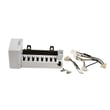
- Ice production problems: ice maker assembly 4317943
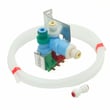
- Water not dispensing or no ice fill: refrigerator inlet valve W10408179
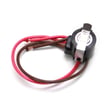
- Defrost-related icing and warm temps: refrigerator defrost bi-metal WPW10225581
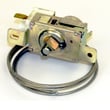
- Temperature control concerns: refrigerator thermostat WP2198202
Last updated: February 2026
What are the most common problems with Kenmore refrigerators?
The most common problems we see on Kenmore refrigerators like model 10652272201 are poor cooling, water or ice dispenser issues, ice maker problems, leaks, and unusual noises. These usually trace back to airflow restrictions, defrost system trouble, or water supply and filtration issues described in the owner's manual.
- Not cooling or weak cooling: dirty condenser coils, evaporator fan issues, frost buildup from a defrost problem
- Ice maker not making ice: clogged or incorrectly installed water filter, water supply/shutoff valve issues, frozen fill path
- Water dispenser dripping or leaking: air in the water lines after filter changes, ice stuck holding the chute door open
- Bad-tasting or smelly ice: old ice, unwrapped food odors, dirty bin or freezer interior
- Clicking, buzzing, or rattling noises: fan blades contacting ice, loose items, condenser fan or evaporator fan concerns
- Confirm the controls are set correctly (freezer and fresh food temps).
- Check doors close and seal fully; warm air leaks drive frost and poor cooling.
- If ice or water is slow, flush the dispenser after any filter change to clear air.
- Look for ice blocking the dispenser chute or ice clumps in the bin.
- Inspect the home water line for kinks and verify the shutoff valve is fully open.
If the basic checks point to a component failure, these model-matched parts are common fixes:
| Problem area | What fails most often | Example part for 10652272201 |
|---|---|---|
| Ice maker not producing | ice maker module or assembly | Ice maker assembly - refrigerator ice maker by whirlpool 4317943 |
| No water to ice maker/dispenser | inlet valve not opening | Refrigerator inlet valve W10408179 |
| Frost buildup, warm temps | defrost thermostat (bi-metal) | Refrigerator defrost bi-metal WPW10225581 |
Cooling, ice, and leak complaints often share the same root causes: restricted airflow (fans and frost) or restricted water flow (filter, valve, or supply line). Fixing the underlying cause prevents repeat failures and food temperature swings.
Last updated: February 2026
How to clean the coils on a Kenmore side by side refrigerator?
On Kenmore side-by-side refrigerator model 10652272201, cleaning the condenser coils means safely removing dust and lint so the refrigerator can transfer heat properly and run efficiently. We recommend unplugging the refrigerator first, then cleaning the coil area and reinstalling the base grille when finished (see the 10652272201 owner's manual).
- Unplug the refrigerator (or disconnect power at the breaker).
- Pull the refrigerator out far enough to work safely.
- Remove the base grille at the bottom front (many Kenmore side-by-sides snap off).
- Vacuum loose dust using a crevice tool.
- Brush the coils and surrounding area with a coil brush, then vacuum again.
- Clean the floor area under and behind the unit; dust there gets pulled back onto the coils.
- Reinstall the base grille, push the refrigerator back carefully, then restore power.
- Coil brush (soft bristles)
- Vacuum with crevice tool
- Flashlight
- Nonflammable mild cleaner for nearby surfaces (avoid spraying directly into electrical areas)
- Avoid abrasive pads and harsh cleaners on plastic parts and liners
Dirty condenser coils restrict airflow and heat transfer, which makes the compressor run longer and can lead to warmer temperatures, higher energy use, and more wear on cooling components.
| What you notice | What it usually means | What to do next |
|---|---|---|
| Refrigerator still runs a lot | Doors opened often or controls not set for conditions | Recheck temperature settings in the 10652272201 owner's manual |
| Poor cooling after cleaning | Airflow still restricted or internal frost issue | Check for blocked vents; inspect for heavy frost on the evaporator cover |
| Loud fan noise | Dust near fan area or fan issue | Inspect fan area; if needed, review evaporator fan diagnostics in how to fix your evaporator cooling fan |
If cleaning the coils does not improve performance, these model-compatible parts are commonly involved in cooling and airflow issues:
- Refrigerator condenser fan W10181323 (moves air across the condenser)
- Refrigerator thermostat WP2198202 (helps regulate temperature)
- Refrigerator run capacitor WPW10662129 (supports compressor starting)
Last updated: February 2026