Owner’s manual
 Error Codes


How wide is a 25.6 cubic foot refrigerator?
A 25.6 cubic foot refrigerator is typically about 36 inches wide. For the GE GSE23GSECCSS, the installation dimensions shown in our owner's manual indicate a 36-inch cabinet opening width for the 25 cu ft class, which matches the common 36-inch standard for full-size refrigerators.
Typical width ranges you’ll see
Most 25 to 27 cu ft refrigerators fall into one of these width groups:
- 33 inches: narrower full-size models (often 22 to 24 cu ft)
- 36 inches: most common for 25 to 27 cu ft models
- 42 inches: built-in style models (less common)
What the manual shows for this GE model
The installation section for 25 cu ft class models lists a 36-inch width and shows standard clearance guidance for airflow and hookups.
| Spec (typical install) | Common value for 25.6 cu ft class | What to plan for |
|---|---|---|
| Cabinet opening width | 36 in | Measure the tightest doorway too |
| Side clearance | 1/8 in | Helps with fit and door swing |
| Top clearance | 1 in | Improves ventilation |
| Back clearance | 1/2 to 1 in | Space for cords and water line |
Why it matters
Width is only part of “will it fit.” Door swing, handles, and the path into your kitchen can be the real limiting factors. For example, the manual notes that if an entrance is less than 38 inches wide, the doors may need to be removed to move the refrigerator in.
Quick measuring checklist
- Measure the cabinet opening width at the front and back
- Measure the narrowest doorway/hallway on the delivery path
- Account for door swing clearance near walls or islands
- Leave space for the water line if you use the ice maker/water dispenser
Last updated: February 2026
What does the number 23 signify?
On the GE GSE23GSECCSS side-by-side refrigerator, the “23” is the approximate capacity class in cubic feet (about a 23 cu. ft. refrigerator). GE also groups installation specs by size class, and this model falls under the “Models 22, 23, 25, 26, 27 & 29” side-by-side family in the documentation.
What “23” means for fit and installation
Capacity class helps predict overall size and clearance needs. For GE side-by-side models in this size group, the manual lists typical installation clearances and shows example dimensions for 23 cu. ft. configurations.
- Use the “23” class to estimate cabinet opening needs before moving the refrigerator.
- Plan for airflow space at the sides, top, and back.
- Confirm your exact cutout and door-swing space before final placement.
- Keep the room temperature in the recommended range so cooling performance stays stable.
For the exact specs and the configuration that matches your unit, use the owner's manual.
Typical clearances and example dimensions (from the manual)
These values are shown in the installation section for the 23 class and related models.
| Item | Typical value shown | Why it matters |
|---|---|---|
| Side clearance | 1/8 in | Prevents rubbing and supports airflow |
| Top clearance | 1 in | Helps ventilation and easier install |
| Back clearance | 1/2 in to 1 in | Room for airflow, water line, cord |
| Example width | 36 in | Helps confirm cabinet opening |
| Example depth | 24 in (cabinet depth reference) | Helps plan counter/cabinet fit |
Why it matters
If you are replacing an older refrigerator or remodeling, knowing “23” is a capacity class (not a code or error) helps you choose a comparable size and avoid installation surprises like tight clearances, poor air circulation, or door interference.
Last updated: February 2026
How to reset GE refrigerator control board?
For the GE GSE23GSECCSS side-by-side refrigerator, the most reliable “reset” for the electronic control board is a power reset: unplug the refrigerator (or switch off the breaker) for about 1 to 5 minutes, then restore power. This clears many temporary control glitches and exits showroom mode.
Quick reset steps (recommended)
- Unplug the refrigerator or turn off the circuit breaker.
- Wait 1 to 5 minutes.
- Restore power.
- Wait up to 5 minutes for the compressor to attempt a restart (a brief delay is normal).
- Confirm the temperature controls are not set to OFF (controls set to OFF stop cooling but do not remove electrical power).
For model-specific control behavior and settings, use the owner's manual.
If the display is on but cooling is off
On some GE models, setting the temperature controls to the warmest setting until the display flashes OFF stops cooling. If that happened:
- Raise cooling by setting both compartments to a colder setting.
- Give the refrigerator about 24 hours to stabilize temperatures after changing settings.
- Make sure food packages are not blocking air louvers (air tower/air tunnel) inside the compartments.
What to expect after a reset
| What you notice | What it usually means | What to do |
|---|---|---|
| Clicking sounds | Relays on the control board activating | Normal during startup |
| No cooling for ~30 minutes | Unit may be in a defrost cycle | Wait for defrost to end |
| Compressor doesn’t start right away | Restart delay can be up to ~5 minutes | Wait, then recheck temps |
When a reset is not enough
If the refrigerator still will not cool, the issue is often a failed sensor, fan, or control component rather than a “stuck” board. Common parts involved in temperature and cooling complaints include:
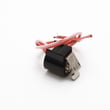
- GE profile refrigerator temperature sensor WR55X10025 (bad readings can cause poor cooling)
- Refrigerator evaporator fan motor WR60X10307 (no airflow through the evaporator)
- Refrigerator electronic control board WR55X24347 (control and relay problems)
Why it matters
A power reset restores normal logic after a brief outage or electronic glitch, but it will not fix a failed temperature sensor, evaporator fan motor, or control board. Checking settings first prevents unnecessary parts replacement.
Last updated: February 2026
Are GE side by side refrigerators good?
Yes. GE side-by-side refrigerators like model GSE23GSECCSS are a solid choice for everyday use because they typically deliver consistent cooling, easy access to both fresh food and freezer sections, and convenient features like an ice maker and water dispenser. For your model’s specific features and care tips, use the GSE23GSECCSS owner's manual.
What “good” usually means for a side-by-side refrigerator
A good side-by-side refrigerator balances temperature control, storage flexibility, and reliability. Here’s what we see most often with GE side-by-side designs:
- Strong organization: adjustable shelves and door bins make it easier to fit tall items and meal prep containers.
- Convenient access: freezer items are at eye level, not stacked deep like many bottom-freezer models.
- Steady temperatures: side-by-sides commonly hold stable temps when airflow paths are kept clear.
- Water and ice convenience: dispenser systems are popular, but they depend on good water flow and regular filter changes.
- Noise expectations: fans, ice maker cycling, and water valve operation can be noticeable, especially in quiet kitchens.
Quick checks that keep performance “good” over time
These simple habits prevent many common complaints (warm temps, slow ice, weak dispenser flow):
- Replace the water filter on schedule; a restricted filter can reduce water flow and ice production.
- Purge air after installing a new filter to reduce sputtering at the dispenser.
- Keep vents inside both compartments unblocked so cold air can circulate.
- Clean dust from the condenser area periodically to help the compressor run efficiently.
- Confirm doors seal fully; poor sealing causes temperature swings and moisture issues.
Parts that commonly affect satisfaction (water, ice, and cooling)
If performance drops, these are frequent “make it good again” parts for this model family:
| Symptom | Common cause | Example part on this model page |
|---|---|---|
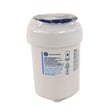
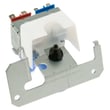
| Weak water flow or slow ice | Clogged filter or inlet issue | GE refrigerator water filter MWFP or refrigerator water valve WR57X33326 |
| Temps fluctuate or food freezes | Sensor or airflow control issue | GE profile refrigerator temperature sensor WR55X10025 |
| Warm fridge or freezer, fan noise | Evaporator fan problem | Refrigerator evaporator fan motor WR60X10307 |
Why it matters
A side-by-side can be “good” for many years when airflow stays open and the water system is maintained. On GE models, the water filter setup is especially important because the dispenser and ice maker are designed to run with a filter installed (or a bypass plug, as described in the manual).
Last updated: February 2026
What is the most common problem with a GE refrigerator?
The most common GE refrigerator issue is not cooling properly, and on the GE GSE23GSECCSS it is often tied to airflow, a defrost problem, or a control or sensor input that is out of range. We recommend starting with temperature settings and basic checks in the owner's manual.
Most common symptoms we see (and what they usually point to)
- Refrigerator or freezer too warm: restricted airflow, dirty condenser area, evaporator fan issue, or defrost system trouble
- Strange noises: evaporator fan blade hitting ice, worn fan motor, or normal compressor cycling
- Ice maker not working: water supply issue, clogged filter, frozen reservoir, or inlet valve problem
- Water dispenser not dispensing: dispenser lock enabled, air in the line after filter change, frozen reservoir, or clogged filter
- Water leaking or puddles: clogged defrost drain, door left open, or ice chute issues
- Door not closing or beeping: door left open, gasket sticking, or alignment issues
- Interior light not working: bulb burned out or power issue
Quick checks first (fastest wins)
- Confirm the doors seal and close fully; the unit can beep when a door is left open.
- Give temperatures time to stabilize after changes; many models need up to 24 hours.
- If water was just affected by a filter change, run the dispenser for about 3 minutes to clear air and reduce spurting.
- If the dispenser is not working, check whether the dispenser is LOCKED (hold LOCK for 3 seconds on many GE models).
Parts that commonly solve these problems on GSE23GSECCSS
| Symptom | Common part to check | Example from this model |
|---|---|---|
| Warm temps, erratic cooling | Temperature sensing | GE profile refrigerator temperature sensor WR55X10025 |
| No water, slow water, poor ice | Water filtration | GE refrigerator water filter MWFP |
| No water to dispenser/ice maker | Inlet valve | Refrigerator water valve WR57X33326 |
| Warm freezer, noise, poor airflow | Evaporator fan | Refrigerator evaporator fan motor WR60X10307 |
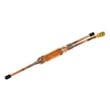
| Frost buildup, warming | Defrost protection | Refrigerator defrost bi-metal thermostat WR50X10065 |
Why it matters
Cooling and water issues can cascade: poor airflow or a defrost failure raises temperatures, which can also reduce ice production and cause unusual fan noise. Starting with the simplest checks helps avoid replacing parts that are still good.
Last updated: February 2026