Owner’s manual
 View engine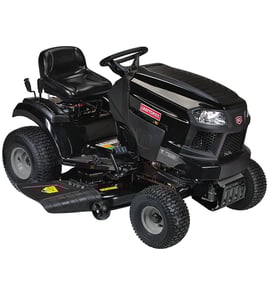


What model engine is the Husqvarna YTH20K46-96043027700?
The Husqvarna lawn tractor model YTH20K46-96043027700 uses the YTH20K46 tractor platform; the operator documentation for this model does not list a specific engine model name/number in the excerpts provided. For the exact engine identification, we use the engine’s ID label (on the engine shroud or valve cover area) and match it to the parts listing in the yth20k46 operator’s manual.
How to identify the exact engine model on your tractor
We use the engine’s manufacturer ID tag because the same tractor model can be built with different engine variants.
- Park on a flat surface, set the parking brake, remove the key, and let the engine cool.
- Raise the hood and locate the engine ID label (commonly on the blower housing, valve cover, or near the starter).
- Write down the model, type, and code (or spec) exactly as shown.
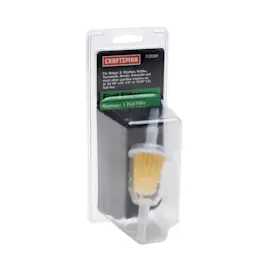
- Use that information to confirm the correct tune-up parts (spark plug, air filter, fuel filter) and any engine-specific diagrams.
- Keep the ID info with your records for future belt, starter, and electrical troubleshooting.
Quick specs we can confirm for this model
From the YTH20K46 documentation, we can confirm several engine-related service specs even without the engine model number.
| Spec | Value (YTH20K46) | Why you use it |
|---|---|---|
| Fuel capacity | 3 gallons | Helps plan run time and storage prep |
| Fuel type | Regular unleaded (E10 max) | Prevents fuel-related running issues |
| Oil type | SAE 10W30 (above 32°F), SAE 5W30 (below 32°F) | Protects engine across temperatures |
| Oil capacity | 64 oz (1.89 L) | Prevents overfill or low-oil damage |
| Spark plug gap | 0.030 in | Supports easier starting and smooth running |
Why it matters
Ordering the wrong engine parts is one of the most common causes of repeat no-start and poor-running problems. Using the engine ID label ensures the correct ignition, fuel, and maintenance parts for your exact build.
Related troubleshooting help
If you are asking because the tractor will not crank or start, we use these step-by-step resources:
- Riding lawn mower engine clicks but doesnt turn over video
- Riding lawn mower engine spins but wont start video
Last updated: February 2026
What size yard is the YTH20K46-96043027700 good for?
The Husqvarna YTH20K46-96043027700 is a 46-inch riding lawn tractor designed for typical homeowner mowing; it’s a strong fit for medium to large yards where a riding mower makes sense, and it’s commonly used on about 1 to 2 acres depending on terrain, obstacles, and grass conditions. For operating and mowing guidance specific to this tractor, use the owner's manual.
What affects the “right” yard size
Acreage is only part of the story. These factors usually matter more than the number on paper:
- Obstacles: lots of trees, beds, and tight gates favor a smaller, more maneuverable mower
- Terrain: hills and rough ground reduce comfortable mowing speed
- Grass type and height: thick or overgrown grass takes more time and may require double-cutting
- Cut height choice: this model’s cutting height range is approximately 1 to 4 inches
- How often you mow: frequent mowing lets you move faster and reduces clumping
Quick sizing guide (practical rule of thumb)
Use this as a realistic starting point for the YTH20K46-96043027700:
| Yard size | Typical fit | What you’ll notice |
|---|---|---|
| Under 1/2 acre | Usually oversized | More time trimming around obstacles than mowing |
| 1/2 to 1 acre | Good fit | Efficient mowing with manageable trimming |
| 1 to 2 acres | Ideal range | Best balance of speed and cut quality |
| Over 2 acres | Possible, but slower | Longer mow times; efficiency depends on layout |
Tips to get the best results on larger yards
If you’re mowing closer to the upper end of the range, these practices help cut time and improve cut quality:
- Keep blades sharp and the deck clean underneath
- Mow before grass exceeds about 6 inches; if it does, mow twice (first pass higher, second pass to finish)
- Set cutting height for conditions (many lawns look best around 2-1/2 inches in cool seasons and over 3 inches in hot months)
- Level the deck and set gauge wheels correctly to reduce scalping
Why it matters
Matching mower size to yard conditions prevents bogging, uneven cutting, and excessive wear on belts, pulleys, and deck components. A properly set cutting height and mowing schedule also improves lawn health and reduces the need for rework.
Last updated: February 2026
Is it worth replacing a lawn mower engine?
Yes, replacing the engine on your Husqvarna YTH20K46-96043027700 lawn tractor is worth it when the tractor’s deck, transaxle, and frame are still solid and you are also willing to catch up on overdue maintenance. If the tractor has multiple major issues (drive problems, severe deck damage, chronic electrical faults), putting money into an engine usually does not pay off.
Quick decision checklist
- Deck and spindles are in good shape (no cracks, no severe rust-through, no repeated spindle failures).
- Transaxle drives smoothly (no slipping, whining, or loss of drive when hot).
- Electrical system is reliable (starting issues are not caused by widespread wiring damage).
- You can do the swap or have a clear labor plan (engine replacement labor can exceed the engine cost).
- You will follow the maintenance schedule after the swap (oil, air filter, belts, blades).
What to inspect first (before spending on an engine)
Use the maintenance and troubleshooting guidance in the owner's manual to evaluate the tractor’s overall condition.
| Area to check | What “good” looks like | What’s a red flag |
|---|---|---|
| Mower deck | Straight, not cracked, lifts/levels correctly | Cracks, bent shell, won’t level |
| Blade drive system | Belts track correctly, pulleys spin freely | Belt keeps jumping, frozen idler |
| Starting system | Strong crank, clean terminals | Clicks/no crank, heavy corrosion |
| Cooling/airflow | Screen and fins stay clean | Overheating from clogged fins |
Costs that commonly show up with an engine replacement
Even with a new engine, these wear items often need attention to make the tractor cut and drive correctly:
- Blade drive belt: replace if glazed, stretched, or slipping (see drive v-belt 584453101).
- Ground drive belt: replace if the tractor hesitates or the belt is cracked (see lawn tractor ground drive belt, 1/2 x 94-in 592855201).
- Idler pulley: replace if noisy, wobbly, or seized (see Husqvarna lawn tractor idler pulley 532194327).
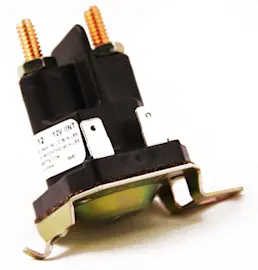
- Starter circuit parts: a click-no-start symptom often points to battery/terminals/solenoid (see lawn tractor starter solenoid 582042802).
Why it matters
An engine swap only pays off when the rest of the machine can reliably support it. The manual’s schedule emphasizes basics like clean cooling fins, clean air filter, proper oil service, and checking V-belts; skipping those items is a common reason engines fail early.
Last updated: February 2026