Owner’s manual
 Error Codes



What is the part number of the Samsung RF28HMEDBSR water filter?
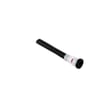
For the Samsung RF28HMEDBSR refrigerator, the water filter part number listed for this model is DA29-00019A. Use that part number when ordering a replacement filter and when confirming fit for your exact refrigerator configuration in the RF28HMEDBSR owner's manual.
On this model page, the replacement Refrigerator water filter is shown as:
- Part number: DA29-00019A
- Part name: Refrigerator water filter
You can order it from the parts list for your model, or search by model number on Sears PartsDirect.
To avoid ordering the wrong refrigerator water filter, we recommend:
- Match the refrigerator model number to RF28HMEDBSR (from the rating label inside the fresh food section).
- Confirm the filter part number on the listing: DA29-00019A.
- Check whether your filter is installed in the fresh food compartment (common on Samsung French door units).
- Replace the filter if water flow is slow, ice production drops, or the filter indicator is on.
- After installing, flush water through the dispenser (typically several minutes) to clear air and carbon fines.
Most Samsung refrigerators follow the same general pattern after a filter change.
| Task | What to do | What you should see |
|---|---|---|
| Install new filter | Seat and lock the filter fully | No leaks at the housing |
| Flush the system | Dispense water for several minutes | Steady flow, no sputtering |
| Reset filter light | Use the control panel reset method | Filter indicator turns off |
For step-by-step guidance, use how to replace the water filter in a Samsung refrigerator.
Using the correct DA29-00019A filter helps maintain normal water dispenser flow, supports ice maker performance, and reduces the chance of leaks caused by an improperly fitting cartridge.
Last updated: February 2026
What is the difference between force defrost FD and RD?
On Samsung model RF28HMEDBSR, RD (refrigerator defrost) runs a defrost cycle aimed at the fresh food (refrigerator) evaporator, while FD (forced defrost) is a broader service defrost used to melt heavier frost and clear ice-related issues across more of the cooling and ice-making system. For exact button sequences and display behavior, use the RF28HMEDBSR owner's manual.
- RD (refrigerator defrost): Targets frost on the refrigerator-side evaporator coil; use it when the fresh food section is warming up or airflow is restricted by frost.
- FD (forced defrost): A deeper, service-style defrost; use it when you need to clear stubborn ice buildup that can affect cooling, airflow, and ice production.
- Normal defrost: Happens automatically during regular operation; RD and FD are typically used for troubleshooting or service.
Use this quick guide:
| Symptom you are trying to fix | Try this first | Why |
|---|---|---|
| Fresh food section warming, freezer still OK | RD | Focuses on the refrigerator evaporator where frost can block airflow |
| Ice maker area freezing up or ice production stopped | FD | More aggressive defrost helps clear ice that can bind moving parts and airflow |
| Heavy frost after a door was left open | FD | Clears widespread frost faster than waiting for normal cycles |
| You are diagnosing a defrost problem | RD, then FD | Helps narrow whether the issue is localized or more system-wide |
If RD or FD temporarily helps but the problem returns, we typically look for a failed sensor, thermostat, fan, or control issue. Common parts for RF28HMEDBSR include:
- Refrigerator protector DA47-00243C (defrost bi-metal thermostat style component)
- Refrigerator temperature sensor DA32-10104N (temperature feedback for proper defrost timing)
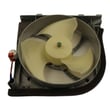
- Refrigerator ice maker evaporator fan DA97-12540A (airflow through the ice maker area)
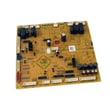
- Refrigerator main power control board DA92-00591A (controls defrost logic and loads)
Using the right defrost mode saves time and prevents repeat icing. RD is best for a refrigerator-side frost restriction; FD is best when ice buildup is affecting multiple areas such as airflow paths and the ice maker.
For ice-maker-specific troubleshooting steps that pair well with FD, use why your Samsung fridge stopped making ice and how to fix it. If you need to order any replacement parts shown for this model, use the parts list for RF28HMEDBSR or search by model on Sears PartsDirect.
Last updated: February 2026
What is the most common problem with Samsung refrigerators?
The most common problems we see on Samsung refrigerators like model RF28HMEDBSR are cooling issues and ice maker troubles. These usually come from restricted airflow due to frost buildup, a weak evaporator fan, defrost-sensing problems, or water supply restrictions that reduce ice and water output.
- Fresh food section warms up while the freezer stays cold
- Frost or ice buildup on the back wall or around vents
- Ice maker stops producing ice or makes small, hollow cubes
- Loud fan noise, buzzing, or rattling (often from ice contacting the fan area)
- Water dispenser flow slows down
- Set temperatures to 37°F (refrigerator) and 0°F (freezer)
- Make sure vents are not blocked by food packages
- Confirm doors close fully and gaskets seal all the way around
- If you hear fan noise changes, look for frost buildup that can interfere with airflow
| Symptom | Likely system | Example part for RF28HMEDBSR |
|---|---|---|
| Warm fridge, frost buildup | Defrost control/sensing | Refrigerator protector DA47-00243C |
| Temps swing or error related to sensing | Temperature feedback | Refrigerator temperature sensor DA32-10104N |
| No ice or slow fill | Water supply to ice maker | Refrigerator water inlet valve DA62-04027A |
| Slow water flow | Filtration restriction | Refrigerator water filter DA29-00019A |
Cooling and ice maker problems often share the same root cause: poor airflow or poor water flow. Fixing the underlying issue prevents food spoilage, repeat icing, and ongoing ice maker failures.
For model-specific error displays, operating modes, and care steps, use the RF28HMEDBSR owner's manual. If you need additional parts beyond the list for this model, search by model number on Sears PartsDirect.
Last updated: February 2026