


What's the average lifespan of a Maytag washer?
Most Maytag washers average 10 to 13 years of service life with normal household use and basic maintenance. For your Maytag LAT9304AAL, lifespan depends most on load size, how often you run it, and whether wear items (like belts and lid switches) are replaced when symptoms first show up.
Typical lifespan ranges (what to expect)
| Washer type | Typical lifespan | Notes |
|---|---|---|
| Standard top-load (belt-drive and similar) | 10 to 13 years | Common Maytag range with routine care |
| Heavy use (large family, daily loads) | 7 to 10 years | Faster wear on drive and suspension parts |
| Light use (few loads per week) | 13+ years | Best results with good leveling and cleaning |
What shortens a washer’s life fastest
- Overloading (stresses the drive system and tub bearings)
- Unbalanced loads (increases vibration and bearing wear)
- Running with a slipping belt (heat and glazing damage)
- Ignoring lid-switch issues (cycle interruptions and repeated restarts)
- Hard water and detergent buildup (can affect fill, drain, and agitation performance)
Maintenance that adds years
- Keep loads at a comfortable fill level; clothes should tumble and move freely.
- Level the washer so it does not rock; vibration accelerates wear.
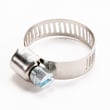
- Inspect hoses and clamps for seepage; replace clamps if they no longer hold tension.
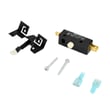
- If the washer will not spin or stops when the lid is moved, test/replace the lid switch (see lid switch W10820036).
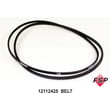
- If you hear squealing or the basket struggles to spin, check the drive belt (see v belt, driv 12112425).
Why it matters
Catching wear symptoms early usually prevents secondary damage. For example, replacing a worn belt or a failing lid switch promptly can help protect the motor, timer, and tub components from extra strain.
Last updated: February 2026
What is the most common problem with a Maytag washer?
The most common Maytag washer problem is a no-spin or no-drain condition. On the Maytag LAT9304AAL, this is often tied to a safety switch issue, a worn drive belt, or a timer-related failure that stops the wash cycle from advancing.
Quick checks we recommend first
- Make sure the lid closes firmly and the washer “clicks” into lid-closed position.
- Redistribute the load; an off-balance load can stop or limit spinning.
- Verify the drain hose is not kinked or pushed too far down the standpipe.
- Listen for the motor: a running motor with no spin points to a belt or drive issue.
- If the cycle stalls and never advances, suspect the timer or lid switch circuit.
Parts that commonly cause no-spin/no-drain on this model
If the washer fills and agitates but will not spin or drain, these are the most common part-related culprits for LAT9304AAL:
| Symptom | Most likely area | Example part for this model |
|---|---|---|
| Won’t spin, acts “dead” when lid is open | Lid safety circuit | Lid switch W10820036 or washer lid switch WP207166 |
| Motor runs but basket won’t spin | Belt/drive | V belt, driv 12112425 |
| Cycle won’t advance through steps | Timer/control | Washer timer WP22001255 |
Why it matters
A washer that cannot spin leaves clothes soaking wet and can overheat the motor or wear the drive system faster. Catching a failing lid switch or belt early usually prevents bigger repairs.
When to stop and use a pro
We recommend a service technician if you see burning smells, repeated breaker trips, or water leaking near wiring.
Last updated: February 2026
Where can I order Maytag washing machine parts?
You can order replacement parts for your Maytag LAT9304AAL washer by matching your symptom to the correct component (lid switch, belt, timer, hoses) and then purchasing the exact part by ID. For common no-start and no-spin issues, the lid switch and drive belt are frequent fixes.
Best way to order the right part
- Confirm the full model number is LAT9304AAL from the appliance label.
- Identify the failure symptom (won’t start, won’t spin, won’t fill, leaks, noisy).
- Choose the matching part category (electrical, drive system, water system).
- Order by part ID to avoid look-alike parts.
- If multiple versions exist, compare your original part’s markings and mounting style.
Common parts customers order for this model
| Symptom | Part to check first | Example part ID |
|---|---|---|
| Won’t start or stops when lid opens | Lid switch | Lid switch W10820036 |
| Won’t spin or agitates weakly | Drive belt | V belt, driv 12112425 |
| Cycle timing is erratic or won’t advance | Timer | Washer timer WP22001255 |
| Leaks at hose connections | Hose clamp | Hose clamp WP285655 |
Tips to avoid wrong-part returns
- Match the part ID (not just the part name) when ordering.
- For electrical parts (like a lid switch), unplug the washer and inspect the connector style.
- For drive parts (like a belt), check for glazing, cracking, or stretching before ordering.
- For leak repairs, inspect hoses and clamps together; a worn clamp can mimic a bad hose.
Why it matters
Ordering by the exact LAT9304AAL model and the correct part ID helps ensure proper fit, correct wiring connections, and reliable washer performance after the repair.
Last updated: February 2026
Is it worth fixing a Maytag washer?
Yes, it’s usually worth fixing a Maytag washer when the repair is a common wear item and the total cost stays under about half the price of a comparable replacement. For the Maytag LAT9304AAL, repairs like a lid switch, belt, or hose clamp often restore reliable operation without the cost of a new washer.
Quick way we decide: repair vs. replace
- Repair when the problem is intermittent stopping, no spin with lid open, squealing, or minor leaks.
- Replace when the tub area is severely worn, the machine is rusted through, or multiple major failures stack up.
- Repair when you can confirm a single failed part and the rest of the washer is solid.
- Replace when repair costs approach 50% or more of a similar new washer.
- Repair when you like this older-style Maytag’s simple mechanical design and it otherwise runs smoothly.
Common “worth it” fixes on LAT9304AAL
These are frequent, straightforward repairs that often make financial sense:
- Lid won’t start or stops mid-cycle: lid switch W10820036
- Lid switch symptoms on some builds: washer lid switch WP207166
- Burning rubber smell, weak spin, or squeal: v belt, driv 12112425
- Small leak or loose hose connection: hose clamp WP285655 or water clamp WP596669
Typical cost and effort comparison
| Repair type | What you notice | Typical DIY difficulty | Typical “worth it” rating |
|---|---|---|---|
| Lid switch | No spin/agitate, won’t run | Easy | High |
| Drive belt | Squeal, poor spin | Medium | High |
| Hose clamp | Drips, seepage | Easy | High |
| Motor | Hums, won’t run, overheats | Hard | Medium |
Why it matters
A targeted repair keeps a dependable washer in service and avoids the higher cost of replacement. On the LAT9304AAL, many failures are mechanical wear parts (switches, belts, clamps) that are relatively affordable compared to replacing the entire unit.
Before you buy parts
- Unplug the washer and shut off water.
- Confirm symptoms (no spin vs. no drain vs. no fill).
- Inspect for obvious wear: belt glazing, loose clamps, broken lid switch actuator.
- If you’re testing electrical parts, use safe meter practices: how to use a multimeter to test electrical parts video
Last updated: February 2026


