Error Codes


How to identify a Kenmore washer model?
To identify your Kenmore washer model, we look for the model/serial tag on the machine and match the full model number exactly as printed (for example, 11092590100). On most Kenmore washers, the tag is under the lid on top-loaders, inside the door opening on front-loaders, or on the back panel.
Check these common locations first:
- Top-load washer: under the lid, around the tub opening
- Front-load washer: inside the door opening, along the door frame
- Any style: back panel near the power cord, or near the control console
- Sometimes: behind the lower access panel (if equipped)
Kenmore model numbers are usually a long string of numbers, often starting with 110 on many Whirlpool-built Kenmore washers. Copy the model number exactly, including all digits.
| What to capture | Example | Why it matters |
|---|---|---|
| Model number | 11092590100 | Ensures parts diagrams and fit are correct |
| Serial number | (varies) | Helps confirm production series for some parts |
| Type | Top-load or front-load | Narrows down parts and troubleshooting |
The model number is how we match the correct replacement parts for your exact washer design. Even small model-number differences can change the agitator, drive system, water inlet valve, or drain pump used.
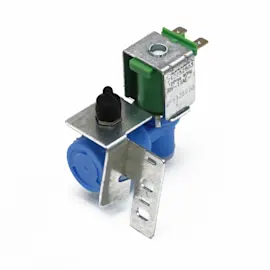
If you are ordering parts for Kenmore 11092590100, common examples on this model include the inlet valve 285805 and water pump WP3363394.
- Use the full model number, not just the first 3 digits
- Don’t rely on the lid label marketing name (it is not the model number)
- If the tag is worn, use a flashlight and take a photo to zoom in
Last updated: February 2026
Is it worth repairing a Kenmore washing machine?
Yes, repairing a Kenmore washer is worth it when the fix addresses a common wear part and the total repair cost stays well below the price of a comparable new washer. For Kenmore model 11092590100, many frequent problems are solved with straightforward parts like a coupling, water pump, or clutch.
Use this checklist to make a clear call before you spend money:
- If the washer fills, drains, and powers on, repairs are usually cost-effective.
- If the tub is leaking from the center or the machine is rusted through, replacement is usually the better value.
- If the issue is no agitation or no spin, a drive-related repair is often worth doing.
- If the washer won’t drain, a pump or drain restriction is often a solid repair.
- If multiple major systems are failing at once (drive, tub, electrical), replacement usually wins.
These are typical fixes that often restore normal washing and spinning without replacing the whole machine:
- No agitation / weak agitation: Agitator dog 80040 or agitator cam 285748
- No spin / loud grinding during spin: Clutch 285785 or coupling 285753A
- Won’t drain / water left in tub: Water pump WP3363394
- Off-balance shaking: Washer suspension spring WP63907
| Symptom | Most likely area | Example part to check |
|---|---|---|
| Motor runs but washer won’t agitate/spin | Drive connection | Coupling |
| Washer drains slowly or not at all | Drain system | Water pump |
| Spins poorly, smells hot, or slips | Spin drive | Clutch |
| Top agitator not moving well | Agitator mechanism | Agitator dog |
A targeted repair on a proven platform like the Kenmore 11092590100 often restores performance for years, especially when you replace the specific wear part causing the symptom instead of guessing. That keeps downtime and repeat repairs to a minimum.
Last updated: February 2026
What is the average lifespan of a Kenmore washer?
A Kenmore washer typically lasts 10 to 15 years. For your Kenmore 11092590100 top-load washer, reaching the high end of that range usually comes down to load size, water quality, and keeping wear items in good shape (especially the drive and drain components).
- Overloading strains the drive system and suspension.
- Unbalanced loads increase wear on the clutch, drive block, and basket support.
- Hard water can shorten the life of the inlet valve and cause buildup.
- Drain restrictions make the pump work harder and can lead to leaks.
- Small leaks left unchecked can damage bearings and the gearcase area.
If performance changes, these model-compatible parts are often involved:
| Symptom | Likely wear area | Example part for this model |
|---|---|---|
| Agitator “slips” or won’t move clothes well | Agitator drive | Agitator dog 80040 |
| Washer won’t spin or makes a burning/rubbing smell | Spin/drive engagement | Clutch 285785 |
| Won’t drain or leaves water in tub | Drain system | Water pump WP3363394 |
| Slow fill or no fill | Water supply control | Inlet valve 285805 |
- Keep loads below the top of the basket and distribute items evenly.
- Use the right amount of HE detergent (too much can cause residue and odors).
- Periodically run a hot wash with a washer cleaner to reduce buildup.
- Check fill hoses for bulges and replace aging hoses before they leak.
- If draining slows, inspect the drain path and pump area before continued use.
Washer failures that end a machine’s life are often “cascade” problems: a small drain issue can stress the motor and coupling, and repeated out-of-balance spinning can wear the clutch and suspension. Catching symptoms early usually keeps repair costs reasonable.
Last updated: February 2026
What is the most expensive part to replace on a washing machine?
On the Kenmore 11092590100 washer, the most expensive repairs are typically major drive and tub components such as the gear case/transmission area, the drive motor, or the outer tub. These jobs often cost the most because the parts are high-priced and labor time is significant.
These are the repairs that usually drive the highest total cost (part plus labor):
- Gear case or transmission-related components (common on many top-load designs)
- Drive motor replacement
- Outer tub replacement (especially if the tub is damaged or leaking)
- Timer or control replacement (less common than mechanical drive issues on older top-loaders)
- Basket and drive system repairs when multiple wear parts are needed
Here are several higher-cost parts available for this model that commonly relate to “big ticket” repairs:
| Repair area | Example part for this model | Why it gets expensive |
|---|---|---|
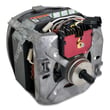
| Drive system | Washer drive motor WP3352287 | Motor cost is high; access and reassembly add labor |
| Tub system | Outer tub 3361596 | Major teardown; seals and related parts often involved |
| Gear case area | Pinion 3360629 | Drive-train work is time-consuming; multiple components interact |
| Controls/timing | Tmr 60 q6 WP3946475 | Electrical diagnosis plus part cost |
We use these checkpoints to decide if a repair is a “major” one:
- Part cost is over $150 to $300
- The washer must be tipped back or the cabinet removed
- The repair involves the tub, drive tube, clutch, or gear case area
- There are symptoms of multiple worn parts (noise plus poor spin plus leaks)
- The washer is older and has repeated issues
The “most expensive part” is often not just the single part price; it is the combination of a high-cost component (like a motor or tub) plus the labor and any related wear parts needed to complete the repair correctly.
Last updated: February 2026