Installation guide
 Owner’s manual


How can I tell what KitchenAid model I have?
For a KitchenAid undercounter dishwasher, the most reliable way to identify your exact model is to read the model/serial tag on the dishwasher itself, then match that number to your parts list and documentation. For this page, the model is KUDS30IXSS8 (KitchenAid).
We recommend checking these common locations first:
- Along the top or side edge of the door (visible when you open the door)
- On the inner door frame near the tub opening
- On the side of the tub just inside the door
- Occasionally behind the toe-kick/lower access panel area
Use the exact characters from the tag (letters and numbers) and keep them in the same order.
Once you have the model number, use it to pull the correct instructions and parts diagrams. For this dishwasher model, use the KUDS30IXSS8 owner's manual and the KUDS30IXSS8 installation guide.
| Appliance type | Typical model tag format | Example |
|---|---|---|
| Undercounter dishwasher | Letters and numbers (no spaces) | KUDS30IXSS8 |
KitchenAid dishwashers often have similar-looking racks, pumps, and seals across multiple models. Using the exact model number helps ensure the replacement part fits and the installation steps match your wiring and cabinet opening requirements.
If you are ordering rack or door hardware, confirm the model first because small design changes can affect fit:
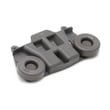
- Upper rack adjusters (example: dishrack adjuster kit (W10712394) - dishwasher rack component by whirlpool W10712394)
- Dishrack wheels and stops
- Door hinge and balance components
- Drain hose routing and connection style
Last updated: January 2026
What is the most common problem with a KitchenAid dishwasher?
The most common KitchenAid dishwasher problems are poor cleaning (food left on dishes) and drain-related issues (water left in the bottom). On KitchenAid model KUDS30IXSS8, these symptoms usually trace back to wash circulation, filtration, or draining components, plus basic setup items like water supply and a fully latched door.
- Dishes come out dirty: restricted spray, clogged filter area, or weak wash circulation
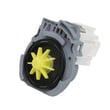
- Water won’t drain: drain path restriction or a failing drain pump
- Won’t start: door not fully latched, power issue, or control problem
- Leaks: door seal, drain hose routing, or loose water connection
- Long cycles: normal on many newer-style designs; 2 to 3 hours per load is common
Use these checks before replacing anything; they solve a large share of “common problems.”
- Confirm the water supply is turned on
- Verify the door closes tightly and latches
- Check the breaker/fuse if the dishwasher is dead
- Start a short cycle and confirm water enters the tub within the first couple minutes
- Look under the sink for a kinked or blocked drain hose
For model-specific operating and setup details, follow the steps in the KUDS30IXSS8 installation guide.
If the symptom matches, these are frequent repair paths for this model:
| Symptom | Common part to inspect/replace | What it does |
|---|---|---|
| Water left in tub | Dishwasher drain pump WPW10348269 | Pumps water out to the drain |
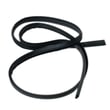
| Leaking at bottom of door | Dishwasher door seal, lower WPW10497235 | Helps seal the door to prevent drips |
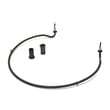
| Poor drying or cool water | Dishwasher heater W10703867 | Heats water and supports drying |
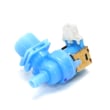
| Slow fill or no fill | Dishwasher water inlet valve WPW10327249 | Lets water into the dishwasher |
Most “common” dishwasher complaints are really flow problems: not enough clean water moving through the spray system, or dirty water not leaving the tub. Fixing the root cause improves cleaning, reduces odors, and helps prevent repeat clogs and leaks.
Last updated: January 2026
What is the average lifespan of a KitchenAid dishwasher?
Most KitchenAid dishwashers last 10 to 14 years on average. For your KitchenAid KUDS30IXSS8 undercounter dishwasher, lifespan depends most on water quality, how often it runs, and routine care like keeping the wash system clean and ensuring proper installation per the KUDS30IXSS8 installation guide.
A dishwasher’s service life is mainly driven by heat, water, and moving parts (pump, motor, seals, racks).
- Hard water speeds up mineral buildup on the heater and internal passages
- Heavy daily use adds wear to the circulation system and door components
- Poor draining strains the drain pump and can leave residue behind
- Overloading stresses racks, adjusters, and wheels
- Skipped rinse aid can reduce drying performance and increase spotting buildup
These steps are simple and make a real difference over time.
- Clean the interior and remove debris from the sump area regularly
- Use rinse aid to improve drying and reduce hard-water deposits
- Run hot water at the sink before starting a cycle (helps cleaning performance)
- Load so spray arms can rotate freely and water can reach all surfaces
- Fix small rack issues early (broken wheels or adjusters can lead to bigger damage)
| What you’re seeing | Most common cause | What we usually check first |
|---|---|---|
| Not draining | Clog or failing pump | Drain hose routing and dishwasher drain pump WPW10348269 |
| Poor drying | Low heat or no rinse aid | Rinse aid use and heater operation |
| Rack won’t adjust or rolls poorly | Worn rack hardware | Dishrack adjuster kit W10712394 and wheels |
Knowing the typical lifespan helps you decide when maintenance is worth it versus when a major repair (like a motor or control) may not be the best long-term value.
Last updated: January 2026
Is it worth fixing a KitchenAid dishwasher?
Fixing a KitchenAid dishwasher like model KUDS30IXSS8 is worth it when the problem is a single, repairable failure (drain, fill, heat, door balance) and the total repair cost stays well below the price of a comparable replacement. If multiple major systems are failing, replacement is usually the better value.
- Repair cost vs. replacement cost: If the repair is under about 50% of replacement, repair usually makes sense.
- Age and condition: Dishwashers typically last about 10 years; if yours is near or past that and needs a major repair, replacement often wins.
- Type of failure: A leak, no-drain, or no-fill issue is often a straightforward fix; repeated electrical/control issues can get expensive.
These are frequent “single-point” failures that can restore normal operation:
- Not draining: check the drain path and consider a drain pump like dishwasher drain pump WPW10348269.
- Not filling: verify the water supply is on; a failed inlet valve can be the cause (example part: dishwasher water inlet valve WPW10327249).
- Poor drying or no heat: heating circuit issues can involve the heater (example part: dishwasher heater W10703867).
- Door dropping open or not staying balanced: door balance hardware can wear (example part: dishwasher door balance link 8194001).
Use the same basic “no-start/no-run” checks we see in the installation instructions:
- Confirm the breaker/fuse is good.
- Make sure the door is fully closed and latched.
- Verify the cycle is set to start.
- Confirm the water supply is turned on.
For model-specific operating and cycle details, use the KUDS30IXSS8 owner's manual.
| Situation | Usually best choice | Why |
|---|---|---|
| One clear failure (drain, fill, heat, door balance) | Repair | High chance of a lasting fix |
| Multiple symptoms across systems | Replace | Costs add up quickly |
| Near 10 years old and needs a major assembly | Replace | Better long-term value |
| Newer unit, good condition, minor part | Repair | Lowest total cost |
A dishwasher repair is most “worth it” when it restores reliability. If you fix one failed component and the rest of the unit is solid, you avoid the cost and hassle of replacement while keeping a KitchenAid undercounter dishwasher you already know.
Last updated: January 2026